

Automated Dialogue Replacement Explainer
Automated dialogue replacement, or ADR, is the post-production process of recording dialogue again while an actor watches the filmed performance. Despite the name, the acting is not automated. The term describes a controlled replacement workflow that developed from earlier looping methods. ADR can rescue lines affected by noise, clarify words, add material that was never captured cleanly, or support a revised edit, but it is only one option in dialogue repair.
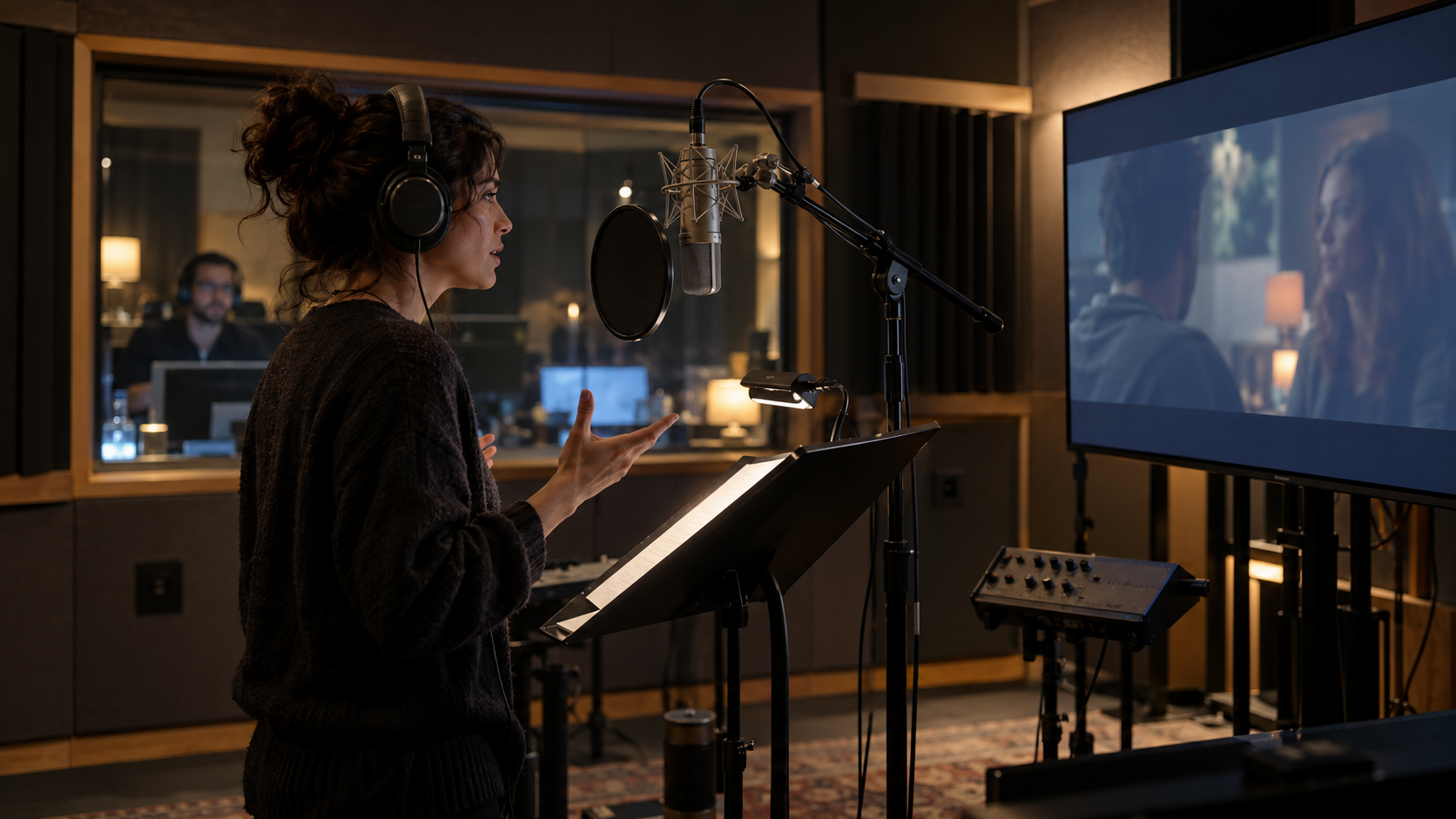
A dialogue editor first identifies moments that need attention and prepares cues with timecode, picture, and the original track. In the studio, the performer listens and watches for timing, breath, emotion, mouth movement, and physical effort. Short visual or audible guides help establish the entry. The director or ADR supervisor shapes the performance while a recording engineer captures multiple takes through microphones chosen to complement the production sound.
Synchronization is necessary but not sufficient. A technically precise line can still feel wrong if the voice lacks the energy, distance, posture, or environment of the filmed moment. Actors may recreate movement to recover breath and rhythm. Editors can select syllables from different takes and make subtle timing adjustments, but excessive manipulation can damage natural phrasing. When possible, alternate production recordings or careful noise reduction may preserve a more integrated performance.
After recording, the ADR editor cleans and aligns the chosen takes. The re-recording mixer then blends them with room tone, ambience, equalization, reverberation, perspective, effects, music, and the surviving production track. A whispered line in a tiled corridor must not sound like a dry voice booth. Localization dubbing uses some related techniques, but it replaces performance into another language and has distinct translation, casting, and cultural challenges. Good ADR is usually unnoticed because the new line appears to belong to the filmed space and moment. It should not be treated as permission to neglect sound on set: matching production acoustics and spontaneous performance can be difficult and costly. The process works best as a collaboration among actor, dialogue editor, supervisor, engineer, director, and mixer, each addressing a different part of the illusion that speech and image were captured together. A practical way to read or discuss Automated Dialogue Replacement is to begin with the basic definition and then identify the choices made in a particular example. ADR records new dialogue after filming while a performer watches and matches the original screen performance. Next, ask who sets the relevant rules, who performs the work, and which results follow from creative judgment, law, contracts, technology, budget, or production limits. Similar-looking examples can operate differently because their audience, market, format, timing, and agreements are different. Editors select and align takes, while mixers recreate the acoustic perspective with ambience and processing. It also helps to distinguish a formal industry category from an informal critical label or one organization's current practice. That separation keeps a memorable anecdote from becoming a false universal rule. Dates and territories matter: tools, distribution systems, audience behavior, and standard agreements change, while older examples can preserve assumptions that no longer apply everywhere. Because the concept sits inside a larger workflow, examine what comes before and after it, which records move between stages, and where responsibility changes hands. This broader view prevents one visible task from being mistaken for the entire system. When a claim sounds absolute, compare it with a second kind of source and look for the conditions under which the claim is true. Then trace the process from the visible result back through the less visible decisions, handoffs, and quality checks that produced it. Localization dubbing shares synchronization challenges but adds translation, casting, and cultural adaptation. Finally, compare the example with a contrasting case and note which part of the definition still holds. This method keeps the explanation grounded, highlights the people and systems behind the outcome, and leaves room for reasonable disagreement about hybrid or borderline cases.
ADR records new dialogue after filming while a performer watches and matches the original screen performance.
Cue lists identify the exact lines, timecode, reason for replacement, and picture needed for the session.
Timing, breath, posture, intensity, distance, and mouth movement all affect whether a replacement feels believable.
Editors select and align takes, while mixers recreate the acoustic perspective with ambience and processing.
ADR can repair or revise dialogue, but alternate production takes and noise reduction may preserve greater spontaneity.
Localization dubbing shares synchronization challenges but adds translation, casting, and cultural adaptation.
Explore more "Explainers"
Discover additional explainers across politics, science, business, technology, and other fields. Each explainer breaks down a complex idea into clear, everyday language—helping you better understand how major concepts, systems, and debates shape the world around us.