

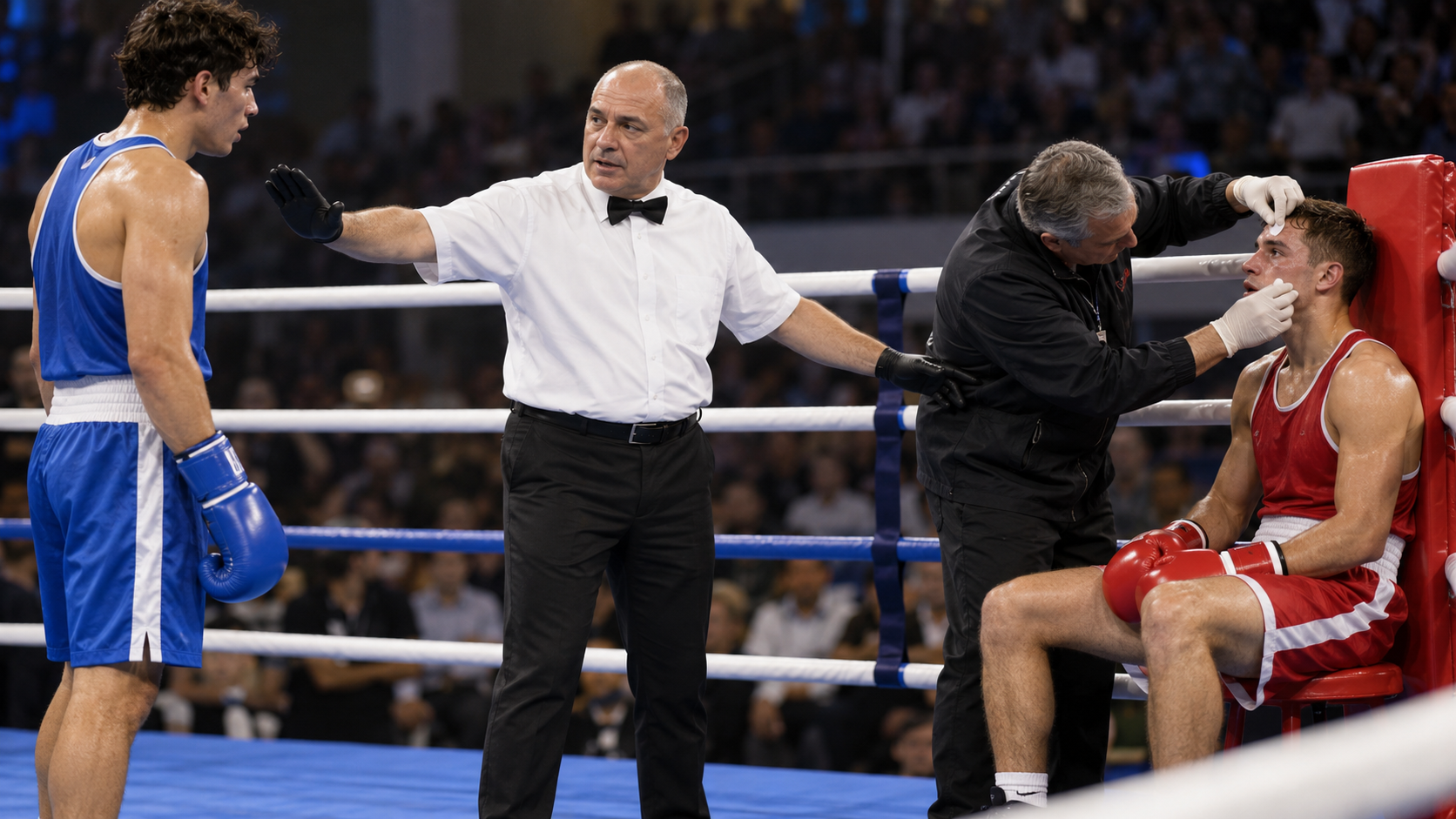
How Boxing Accidental-Foul Stoppages Are Decided Explainer
When a boxer is injured, the World Boxing referee first identifies whether the cause was a scoring blow, an intentional foul, or an unintentional foul such as an accidental clash. The non-injured boxer goes to a neutral corner while the ringside doctor evaluates whether the bout can continue.
If the doctor says the injured boxer is fit and the referee agrees, the contest resumes. If the boxer cannot continue, the cause controls the result. A stoppage from legal scoring blows is recorded differently from a stoppage caused by foul conduct.
When an unintentional foul causes the stoppage, the decision is made from the judges' scorecards under the competition rules. If the referee did not see the cause, the referee consults the five judges; a majority observation helps classify the injury as a scoring blow, intentional foul, or accidental clash.
An intentional foul that makes the opponent unable to continue can lead to disqualification. The medical assessment answers whether boxing can safely continue, while the officials' factual ruling answers why it stopped. Keeping those decisions separate protects the athlete and determines the correct sporting result.
The ringside doctor advises the referee, who decides whether to resume or terminate the bout.
The winner is determined from the judges' scorecards under World Boxing rules.
The referee asks the five judges whether they saw a scoring blow, intentional foul, or unintentional foul.
Explore more "Explainers"
Discover additional explainers across politics, science, business, technology, and other fields. Each explainer breaks down a complex idea into clear, everyday language—helping you better understand how major concepts, systems, and debates shape the world around us.