

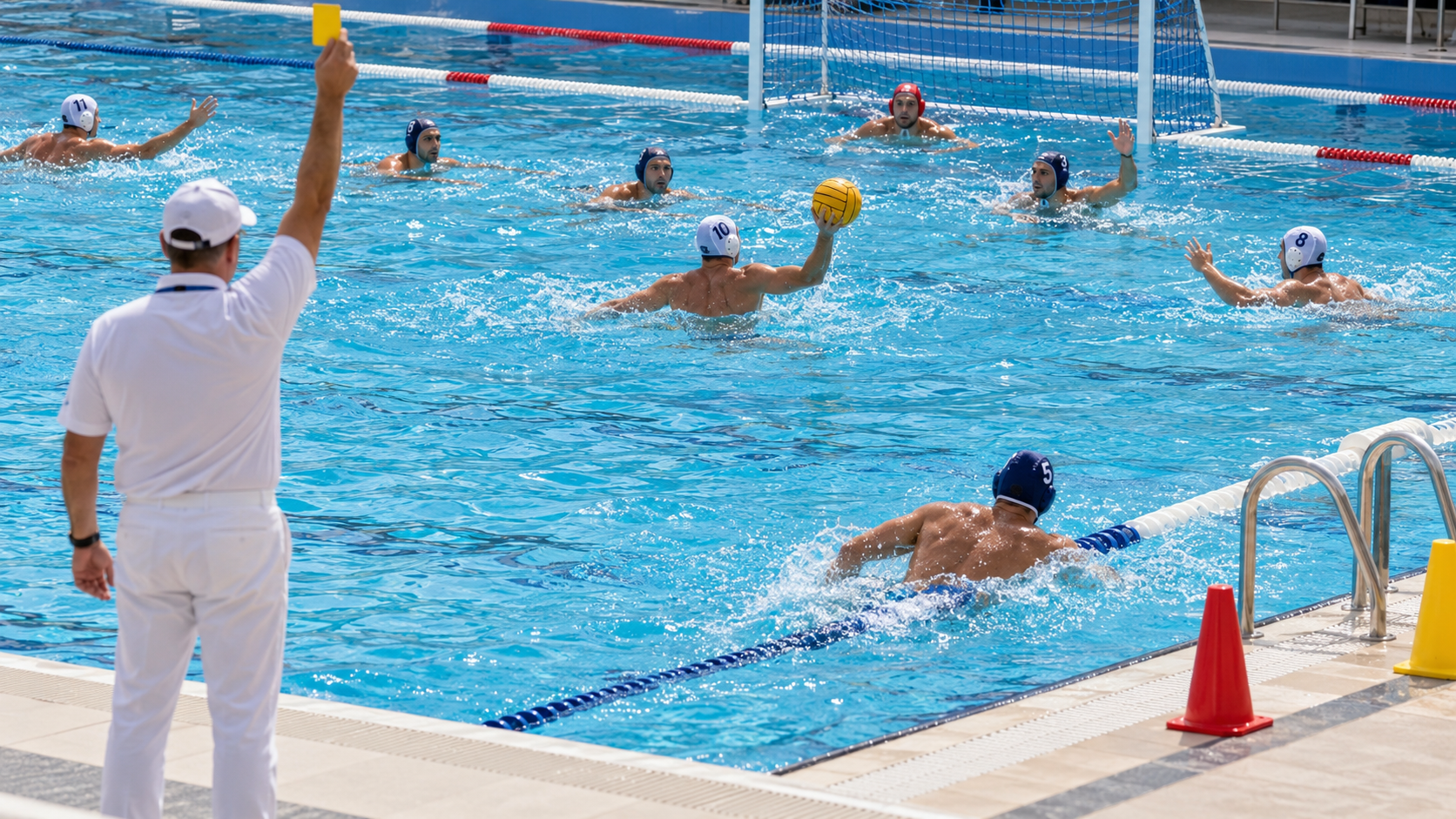
How Water Polo Exclusion Fouls Work Explainer
A water polo exclusion foul temporarily removes a player for conduct more serious than an ordinary foul, such as holding, sinking, or pulling back an opponent who is not holding the ball. The referee signals the player and cap number, and the excluded player must leave without interfering.
The player swims to the designated re-entry area nearest the team's own goal line. Re-entry becomes legal when the exclusion period expires, the opposing team scores, the defending team regains possession, or an authorized official signals another permitted return under the competition rules.
While the player is out, the attacking team has a numerical advantage and usually organizes a power-play offense. The possession clock follows the exclusion restart provisions. A substitute may enter from the re-entry area when the rules permit and the outgoing player has visibly reached it.
An excluded player who leaves the water incorrectly, interferes on the way out, or returns too early can draw an additional sanction or penalty throw. Violent action is treated much more severely, including exclusion for the remainder of the game and delayed substitution. Officials distinguish temporary tactical fouls from misconduct.
Examples include holding, sinking, or pulling back an opponent who is not holding the ball.
To the designated re-entry area nearest that player's own goal line.
At a rule-defined release event such as expiration, a goal, change of possession, or authorized signal.
Explore more "Explainers"
Discover additional explainers across politics, science, business, technology, and other fields. Each explainer breaks down a complex idea into clear, everyday language—helping you better understand how major concepts, systems, and debates shape the world around us.