

On This Day in AI: August 25, 2026
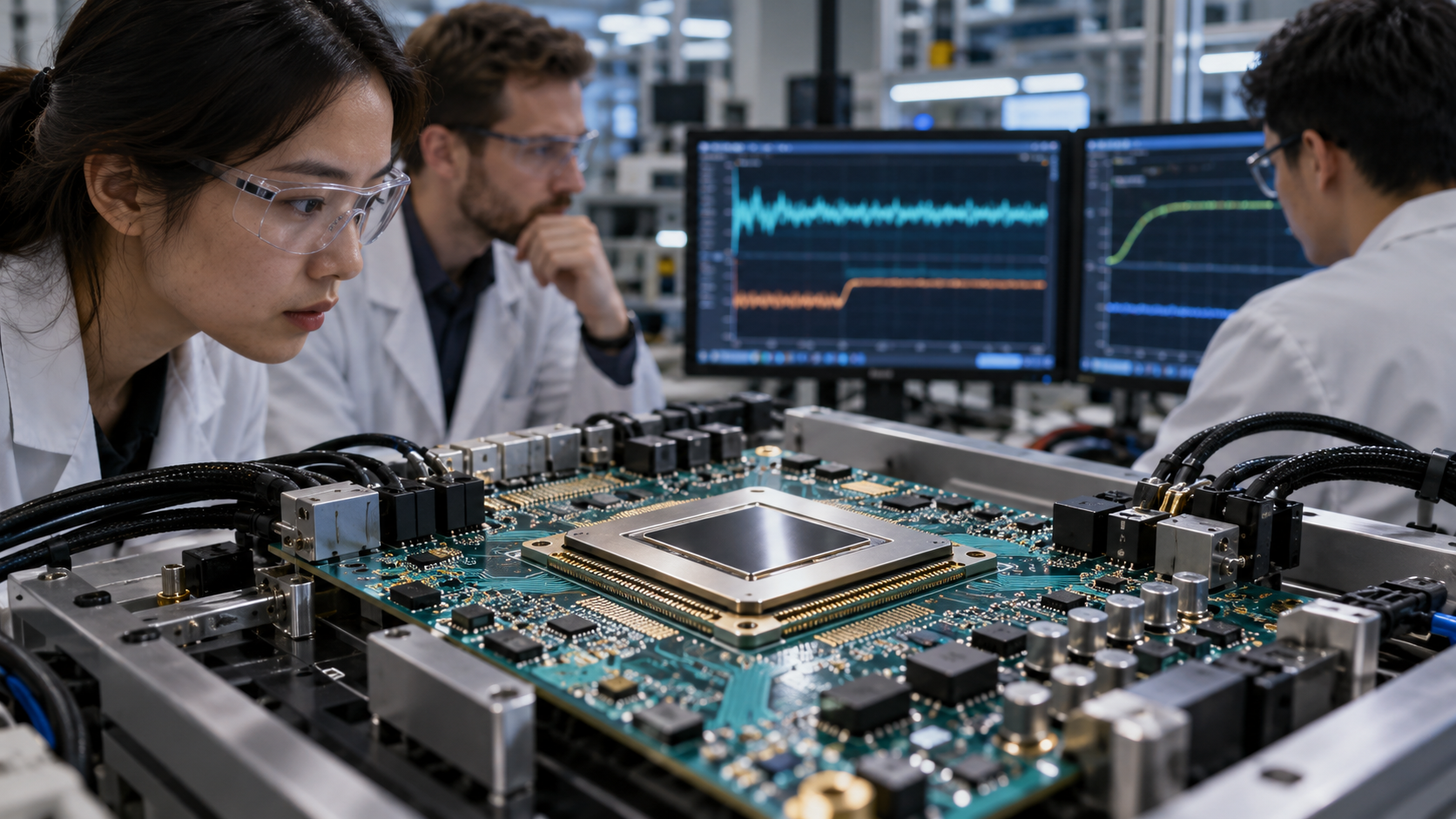
On August 25, 2026, OpenAI published early results for Jalapeño, its first custom inference chip. The company reported that the system could deliver higher throughput per unit of power while also reducing response latency across several large open models. AI laboratories had become some of the world’s largest buyers of specialized processors and were seeking greater control over cost, supply, and system design. Jalapeño represented OpenAI’s move into first-party silicon optimized around real serving workloads. The date matters because it turned a fast-moving technical, policy, or commercial development into a visible milestone that people and institutions could evaluate.
The substance of OpenAI’s first public benchmark results for the Jalapeño inference chip was as important as the headline. Tests used the public InferenceX benchmark and included gpt-oss-120b, DeepSeek R1, and Kimi K2.5. OpenAI said the chip performed efficiently across interactive and high-throughput settings and that earlier models had helped engineers design and program it. Those choices reveal what the people behind the milestone believed was necessary at the time. AI history rarely advances through one breakthrough alone; research, infrastructure, product design, governance, and access all shape what a system can become.
The immediate consequences reached beyond the organization at the center of the event. The benchmark connected model strategy with chip architecture, memory, networking, software, and power use. Custom silicon promised faster agents and lower operating cost, but it also required enormous investment and credible independent measurement. The moment also invited scrutiny, because new capabilities create new dependencies. Reliability, safety, cost, privacy, and human control determine whether an impressive demonstration becomes a trustworthy part of everyday life. Those practical limits are essential to understanding both the achievement and the response it received.
In retrospect, Jalapeño became evidence that frontier AI companies were turning into full-stack computing organizations. The results foreshadowed a multigenerational competition to co-design models and the hardware that serves them. Looking back from today’s rapidly changing AI landscape, this event belongs to a larger transition from specialized machine-learning experiments to systems embedded in ordinary products, workplaces, institutions, and public decisions. Its enduring lesson is that technical progress becomes historically significant when it changes what people can do and what society expects next. It also reminds us that every celebrated capability is shaped by the data, institutions, hardware, and human judgment surrounding it. The anniversary therefore records a turning point, not simply an announcement. Its record also helps readers compare later advances with the original moment.
OpenAI published early results for Jalapeño, its first custom inference chip. The company reported that the system could deliver higher throughput per unit of power while also reducing response latency across several large open models.
Tests used the public InferenceX benchmark and included gpt-oss-120b, DeepSeek R1, and Kimi K2.5. OpenAI said the chip performed efficiently across interactive and high-throughput settings and that earlier models had helped engineers design and program it.
The benchmark connected model strategy with chip architecture, memory, networking, software, and power use. Custom silicon promised faster agents and lower operating cost, but it also required enormous investment and credible independent measurement.
The event connected a concrete technical, commercial, or policy decision with the wider development of artificial intelligence.
Jalapeño became evidence that frontier AI companies were turning into full-stack computing organizations. The results foreshadowed a multigenerational competition to co-design models and the hardware that serves them.
Its influence can be traced through later products, research, governance, or industry practice.
Explore more of "On This Day ..."
Discover more events from the same date across news, politics, technology, sports, and other fields. Each link highlights significant moments that shaped history on different fronts.