

On This Day in Pop: June 16, 1960
On June 16, 1960, Alfred Hitchcock’s Psycho opened at the DeMille and Baronet theaters in New York. Adapted by screenwriter Joseph Stefano from Robert Bloch’s novel, the film began as a crime story about Marion Crane, played by Janet Leigh, and then violently changed direction at the Bates Motel. Anthony Perkins gave Norman Bates a nervous, sympathetic surface that made the film’s threat harder to place. Hitchcock financed the production himself, used the crew from his television series and shot in black and white, giving the movie a comparatively lean, immediate texture. Bernard Herrmann’s string score sharpened the editing of the shower sequence, but suggestion, sound and fractured images did more work than explicit gore.
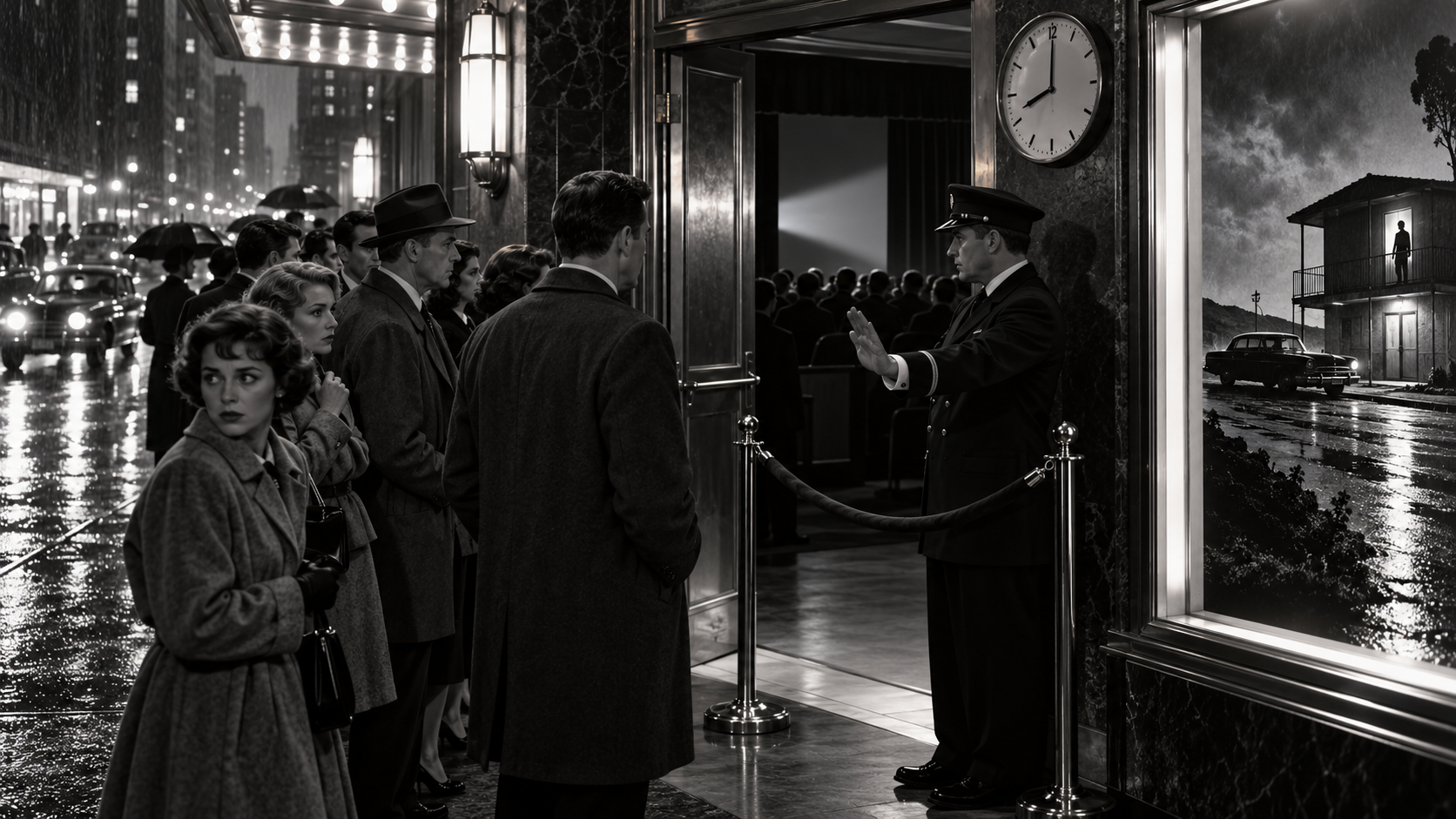
The opening mattered beyond the film because Hitchcock turned audience discipline into publicity. Theater owners were instructed not to admit latecomers, an unusual policy when patrons commonly entered continuous screenings at any point. Lobby displays, recorded messages and timed queues made waiting part of the experience while advertisements urged viewers not to reveal the ending. The campaign protected the movie’s structural surprise and helped establish the modern assumption that a feature should be watched from the beginning. Psycho also shifted horror away from distant castles and supernatural monsters toward ordinary roads, rooms and private psychology. Its modest scale showed studios that suspense and formal control could make a black-and-white thriller into a major commercial event.
The film’s influence is visible in slasher cinema, psychological thrillers, television crime, editing theory and every marketing campaign built around spoilers. It also prompted argument over violence, sexuality and the treatment of women—debates that remain essential to understanding both its artistry and its legacy. Sequels, a television prequel and Gus Van Sant’s near shot-for-shot remake demonstrated the durability of Norman Bates, while documentaries and scholarship kept returning to the shower scene’s construction. Yet Psycho is more than one sequence. Its deepest disturbance comes from the way it redirects sympathy and forces the audience to continue after the apparent protagonist is gone. New York viewers on June 16 encountered not only a shocking story but a reorganization of their role: arrive on time, watch carefully, and accept that the film may remove the ground beneath you.
Remembering psycho opens in new york on June 16 is valuable because anniversaries turn a familiar cultural object back into a specific decision, release or broadcast. The surrounding technology, business and audience conditions explain why the moment could happen then, while its later uses show that meaning never stops changing. Seen at that scale, the date is not trivia. It is a checkpoint between creation and memory: a place to separate what occurred from the legend accumulated around it and to ask why the work still attracts attention.
Psycho opened at New York's DeMille and Baronet theaters on June 16, 1960.
The moment reached audiences through the media and distribution systems of 1960, influencing how the initial response developed.
Alfred Hitchcock financed the black-and-white production and used a strict no-late-admission campaign.
Its early impact was substantial but not universal, and later retellings sometimes compressed a more complicated contemporary response.
The film's narrative turn, editing and score reshaped modern horror and audience expectations around spoilers.
Anniversary coverage continues to place Psycho Shocks New York within the broader history of popular culture while distinguishing documented evidence from later legend.
Explore more of "On This Day ..."
Discover more events from the same date across news, politics, technology, sports, and other fields. Each link highlights significant moments that shaped history on different fronts.