

On This Day in Sports: July 16, 1950
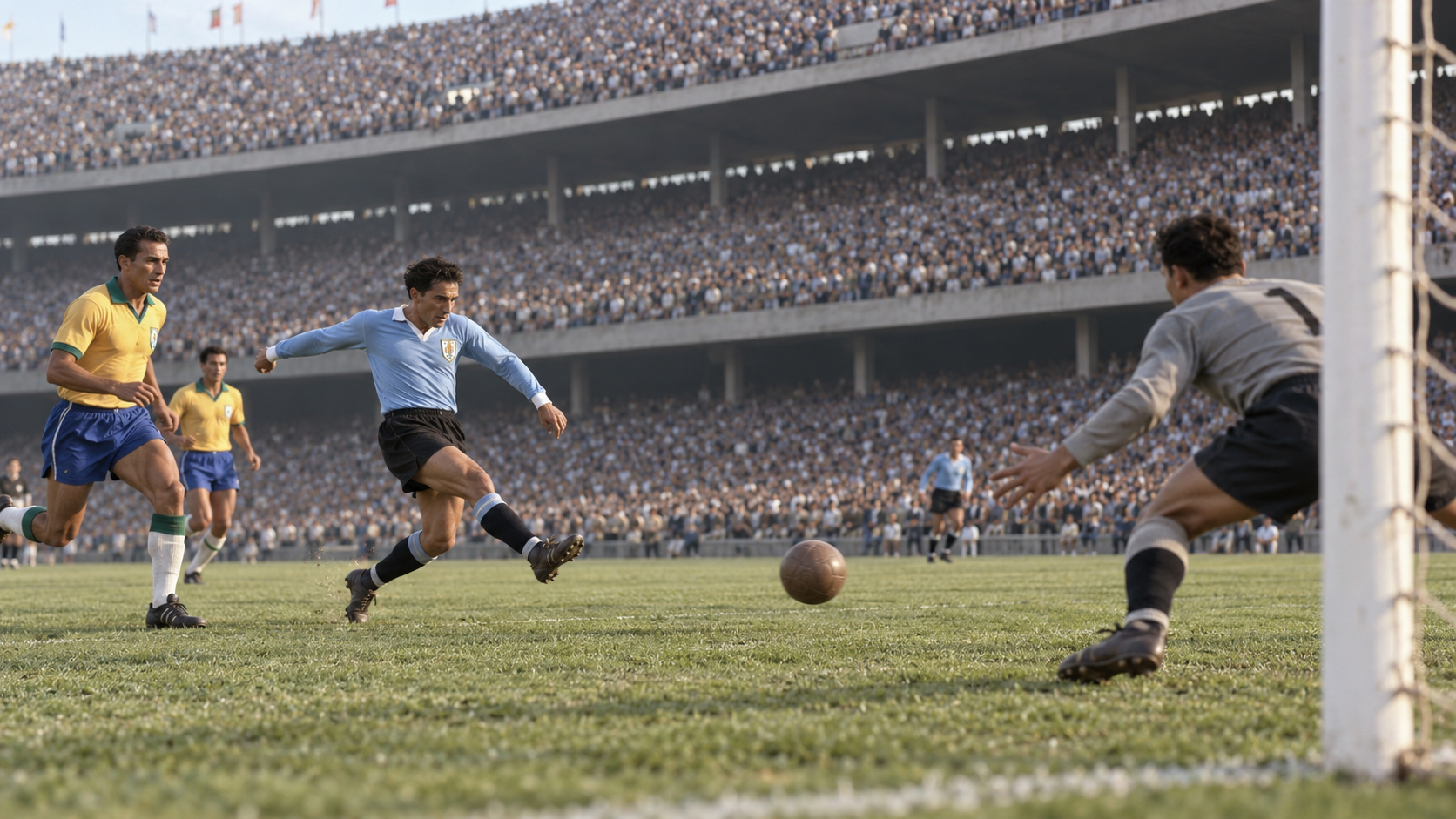
On July 16, 1950, Uruguay defeated host Brazil 2-1 at the Maracanã in Rio de Janeiro to win the 1950 FIFA World Cup. Brazil needed only a draw in the tournament’s final round, and Friaça gave the favorite an early second-half lead. Uruguay responded through Juan Alberto Schiaffino before Alcides Ghiggia scored the decisive goal. The public record fixes the central details with unusual clarity: Uruguay won 2-1. Brazil needed only a draw. Together, those facts explain why July 16, 1950 stands apart from the ordinary flow of a season and deserves to be remembered as a distinct historical moment.
The 1950 competition used a final group rather than a single championship match, but results made the Brazil-Uruguay meeting decisive. Brazil had overwhelmed Sweden and Spain and entered before an enormous home crowd expecting a first world title. Two further details help reconstruct how the achievement unfolded: Schiaffino scored the equalizer. Ghiggia scored in the 79th minute. They move the story beyond a headline by showing the pressure, setting and competitive choices that shaped the decisive action in real time.
Uruguay captain Obdulio Varela slowed the restart after Brazil’s goal and steadied his team. Ghiggia created Schiaffino’s equalizer, then beat goalkeeper Moacir Barbosa at the near post in the 79th minute. The final whistle left the vast stadium almost silent. The wider context is equally important. The match was played at the Maracanã. Uruguay claimed its second world title. Those points connect one day’s performance to a longer career, institution or rivalry and clarify why the event continued to matter after the immediate celebration had ended.
The defeat became known in Brazil as the Maracanazo and influenced national football memory for generations. Uruguay secured its second world championship after winning the inaugural event in 1930. The match remains a powerful example of how tactical composure can overturn atmosphere, expectation and apparent momentum. Seen from today, the milestone remains compelling because it joins a measurable result with the uncertainty of live competition. Nothing about the outcome was guaranteed beforehand. That combination of preparation, opportunity and execution transformed the date from another entry on the schedule into lasting sports history. It also reveals how records and championships depend on teammates, opponents, officials, venues and rules that shape the opportunity. Preserving those surrounding details helps explain both the achievement itself and the reason later generations still discuss it. The date therefore offers a useful window into how sporting excellence is created, witnessed and remembered.
Uruguay won 2-1.
Brazil needed only a draw.
Schiaffino scored the equalizer.
Ghiggia scored in the 79th minute.
The match was played at the Maracanã.
Uruguay claimed its second world title.
Explore more "On This Day in Sports"
Discover more landmark games, records, championships, and turning points from sports history. Each day revisits the athletes, teams, and moments that shaped competition and culture.