

On This Day in Pop: June 30, 1936
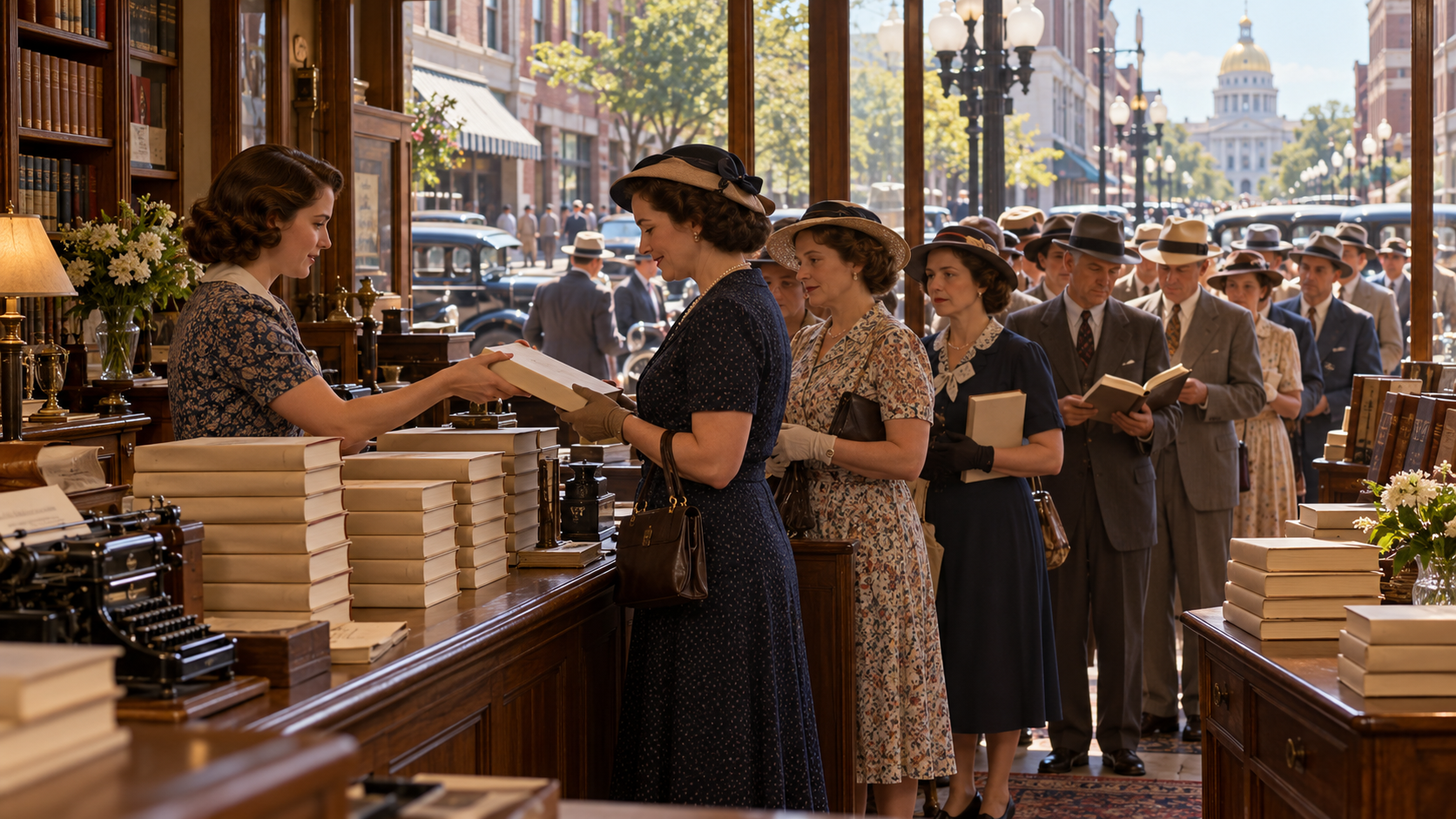
On June 30, 1936, Macmillan published Margaret Mitchell’s Gone with the Wind. The Atlanta journalist’s only novel released during her lifetime followed Scarlett O’Hara from the eve of the Civil War through defeat, Reconstruction and repeated attempts to preserve wealth and control. At more than a thousand pages, the book arrived with Book-of-the-Month Club attention and quickly became a sales phenomenon. Hundreds of thousands of copies were printed within weeks, and readers argued about Scarlett, Rhett Butler and the sweep of the story. Mitchell won the 1937 Pulitzer Prize for the novel, while David O. Selznick’s purchase of screen rights set in motion the 1939 film that would make the title even more culturally dominant.
The publication mattered because popularity amplified a version of the American South shaped by Lost Cause mythology. The novel presents white plantation society through romance and survival while minimizing slavery’s violence and rendering Black characters through stereotypes. Its narrative force and memorable protagonist helped those distortions travel farther, especially once the film supplied faces, music and monumental color images. Understanding the book’s achievement therefore requires holding form and ideology together. Mitchell created an absorbing, often ruthless portrait of a woman adapting to collapse, but the world whose loss the narrative mourns depended on enslavement. Readers and institutions have increasingly made that historical context explicit rather than treating the story as neutral nostalgia.
Gone with the Wind became one of the best-selling American novels, inspired authorized sequels and remained in print across generations. The film adaptation won major Academy Awards and gave Hattie McDaniel the first Oscar received by a Black performer, even as segregation shaped the premiere and ceremony around her. Modern screenings, editions and classroom discussions often include contextual material about slavery, Reconstruction and representation. Some audiences reject the work; others study how pleasure, myth and power reinforce one another inside popular culture. June 30 is thus not only the birthday of a bestseller. It marks the beginning of an enduring argument about who gets to narrate national trauma, how fiction can naturalize a historical viewpoint and what responsible engagement looks like when artistic influence is inseparable from harmful distortion.
Remembering gone with the wind is published on June 30 is valuable because anniversaries turn a familiar cultural object back into a specific decision, release or broadcast. The surrounding technology, business and audience conditions explain why the moment could happen then, while its later uses show that meaning never stops changing. Seen at that scale, the date is not trivia. It is a checkpoint between creation and memory: a place to separate what occurred from the legend accumulated around it and to ask why the work still attracts attention.
Macmillan published Margaret Mitchell's Gone with the Wind on June 30, 1936.
The moment reached audiences through the media and distribution systems of 1936, influencing how the initial response developed.
The novel became an immediate bestseller and won the 1937 Pulitzer Prize for Fiction.
Its early impact was substantial but not universal, and later retellings sometimes compressed a more complicated contemporary response.
Its lasting popularity is inseparable from criticism of its Lost Cause mythology and racist stereotypes.
Anniversary coverage continues to place Gone with the Wind within the broader history of popular culture while distinguishing documented evidence from later legend.
Explore more of "On This Day ..."
Discover more events from the same date across news, politics, technology, sports, and other fields. Each link highlights significant moments that shaped history on different fronts.