

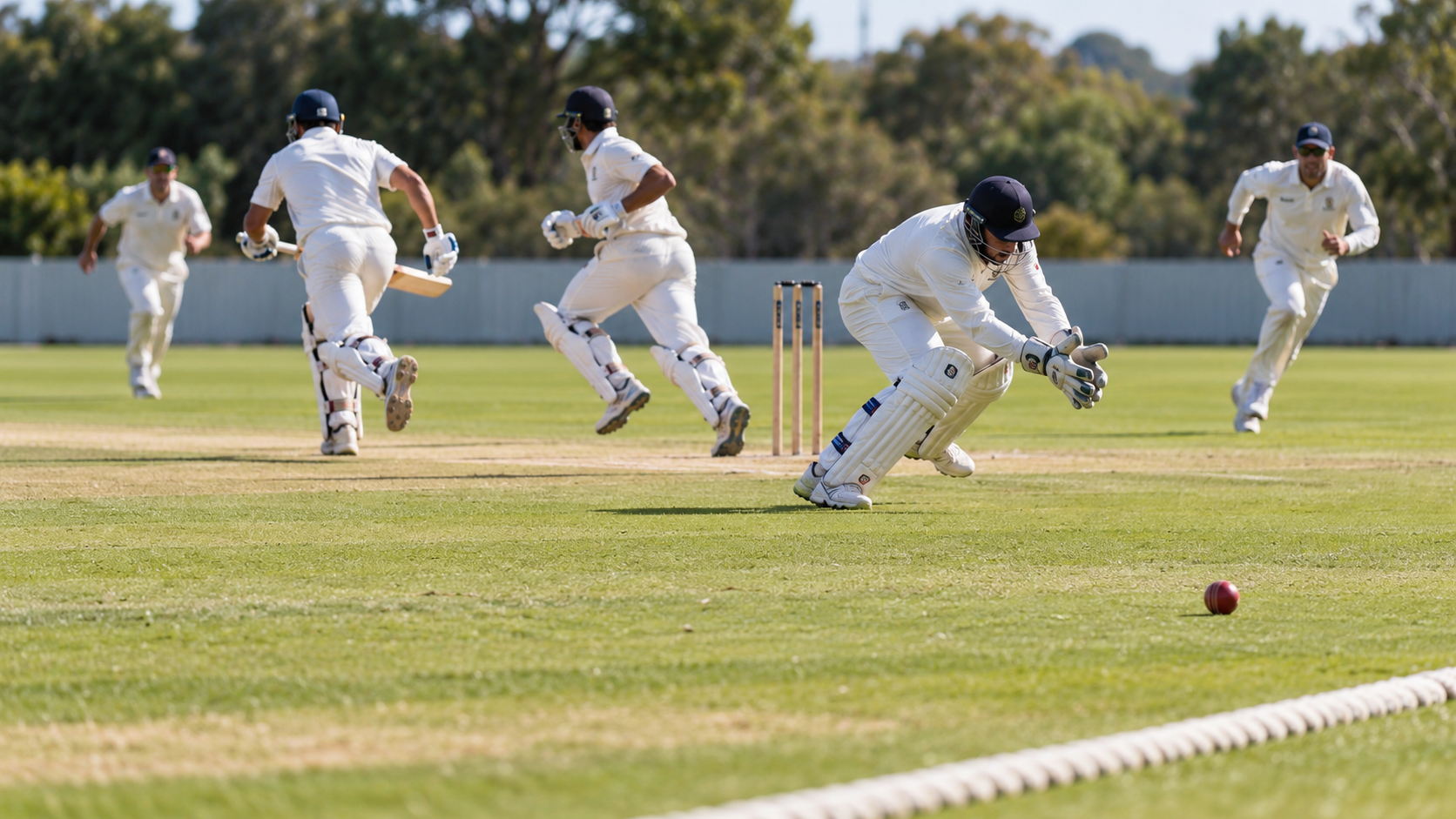
How Cricket Boundary Overthrows Are Scored Explainer
A cricket boundary overthrow occurs when a fielder's throw or other act sends the ball across or into the boundary. The batting side receives the boundary allowance, usually four runs, plus any runs already completed and, in certain cases, the run in progress.
For a throw or willful act by a fielder, the key moment is when the fielder releases or acts on the ball. Completed runs are counted, and the batters also receive the run in progress if they had already crossed at that moment. The boundary allowance is then added.
If the batters had not crossed, the unfinished run does not count. Their final ends are determined by the total number of runs awarded, which can matter for who faces the next delivery. Any short run is handled under the short-run law rather than automatically becoming valid.
The familiar description of an overthrow as simply five runs can therefore be misleading. The outcome may be larger or smaller depending on prior running, the crossing point, and local boundary value. Umpires confer on the release, crossings, completed runs, and whether the ball truly reached the boundary.
No. The total combines the boundary allowance with completed runs and any qualifying run in progress.
It is judged at the instant of the throw or willful act by the fielder.
No. A run called short remains subject to the short-run law.
Explore more "Explainers"
Discover additional explainers across politics, science, business, technology, and other fields. Each explainer breaks down a complex idea into clear, everyday language—helping you better understand how major concepts, systems, and debates shape the world around us.