

How Volleyball Service-Zone Faults Work Explainer
Indoor volleyball's service zone extends behind each end line between the short side-line extensions. The server may move freely within that width and as far back as the available free zone permits, but the takeoff and ball contact must comply with the boundary restrictions.
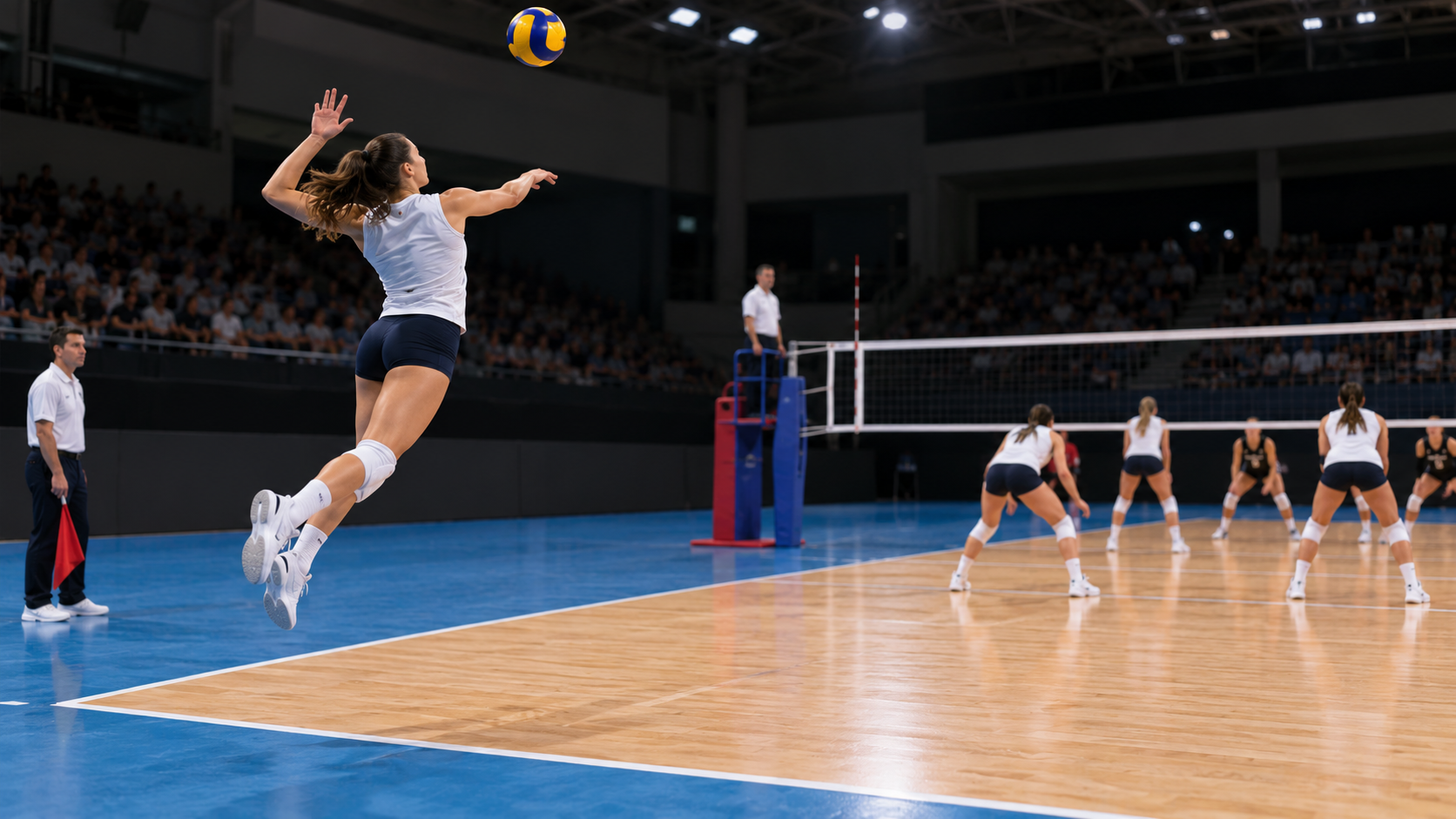
At the moment the ball is contacted for service, or at takeoff for a jump serve, the server may not touch the court, the end line, or ground outside the service zone. Touching the boundary itself counts as a fault because the lines belong to the excluded area.
A jump server may land inside the court or outside the service zone after striking the ball. What matters is the last ground contact before takeoff and the instant of service contact. Players may also begin a serving approach from within the zone and toss while moving.
The first referee watches the service action while line judges can assist with foot placement near the end line and side extensions. A service-zone fault awards the rally and next service to the opponent. The rule gives servers room for momentum without letting them shorten the court or serve from an extreme angle.
No. Touching the end line at contact or jump takeoff is a service fault.
Yes. Landing location after the ball is struck does not create the foot fault.
It spans behind the end line between the extensions of the two side lines.
Explore more "Explainers"
Discover additional explainers across politics, science, business, technology, and other fields. Each explainer breaks down a complex idea into clear, everyday language—helping you better understand how major concepts, systems, and debates shape the world around us.