

On This Day in Pop: July 22, 2005
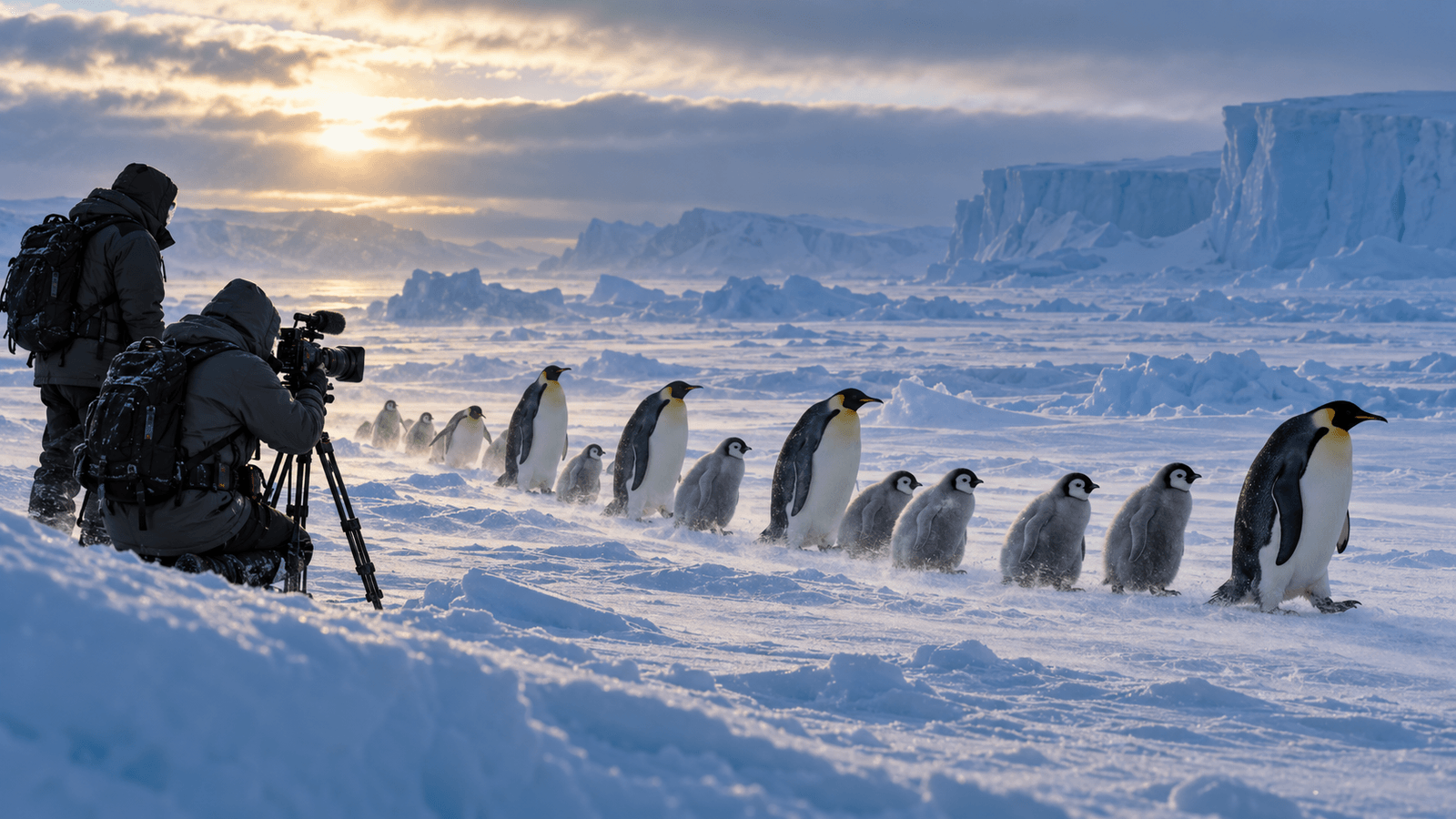
On July 22, 2005, March of the Penguins expanded into wide release across the United States. Luc Jacquet’s French documentary followed emperor penguins through an annual breeding cycle in Antarctica, where adults travel across sea ice, endure brutal winter conditions and protect a single egg. Cinematographers Laurent Chalet and Jérôme Maison spent more than a year working near the Dumont d’Urville research station to capture migrations, storms, huddles and the first movements of chicks. The American edition replaced the original dramatic voices with restrained narration by Morgan Freeman and used a different score, shaping the footage into a direct natural-history story for English-speaking family audiences.
The expansion mattered because a subtitled or specialized nature film rarely became a summer box-office phenomenon. Images of penguins passing an egg between their feet and standing through polar darkness gave viewers an intimate scale for extreme adaptation. The film’s humanized language encouraged emotional identification, but it also sparked arguments when commentators recruited penguin behavior into debates about marriage and family values. Jacquet rejected those political readings, noting that the animals’ seasonal bonds should not be treated as instructions for human society. The controversy showed how documentary narration can guide meaning even when the photographed behavior is real.
March of the Penguins became one of the highest-grossing documentaries in American theatrical history and won the Academy Award for documentary feature. It helped create demand for large-screen wildlife films and made emperor penguins central figures in popular environmental imagination. Later documentaries returned to the species with new technology and increasing attention to changing sea ice. July 22 marks the moment a difficult year of fieldwork became a mass-audience story. Its success rests on extraordinary animal behavior, but also on editing, narration and distribution choices that remind viewers nature documentaries are crafted interpretations, not windows without frames.
Remembering march of the penguins expands into wide u.s. release on July 22 is valuable because anniversaries turn a familiar cultural object back into a specific decision, release or broadcast. The surrounding technology, business and audience conditions explain why the moment could happen then, while its later uses show that meaning never stops changing. Seen at that scale, the date is not trivia. It is a checkpoint between creation and memory: a place to separate what occurred from the legend accumulated around it and to ask why the work still attracts attention. That perspective also restores the labor of collaborators, distributors and audiences whose choices helped a single event travel beyond its first setting. Cultural history becomes clearer when the remembered icon is reconnected to the systems and people that made it visible.
March of the Penguins expanded widely in U.S. theaters on July 22, 2005.
The remembered moment placed Penguins March Wide inside the technology, audience habits and creative choices of 2005. Those conditions explain why it could happen then and why contemporary reactions differed from later memory.
Its crew spent more than a year filming emperor penguins through an Antarctic breeding cycle.
Its immediate importance came from the way audiences, distributors and other creators responded. The event gained force beyond its first release or appearance as people repeated, debated and reinterpreted it.
The film became a major documentary hit and won the Academy Award for documentary feature.
Over time, the event became a reference point for later work in popular culture. Its legacy includes both the achievement itself and the changing arguments about what should be celebrated, questioned or rediscovered.
Explore more of "On This Day ..."
Discover more events from the same date across news, politics, technology, sports, and other fields. Each link highlights significant moments that shaped history on different fronts.