

On This Day in AI: January 3, 2025
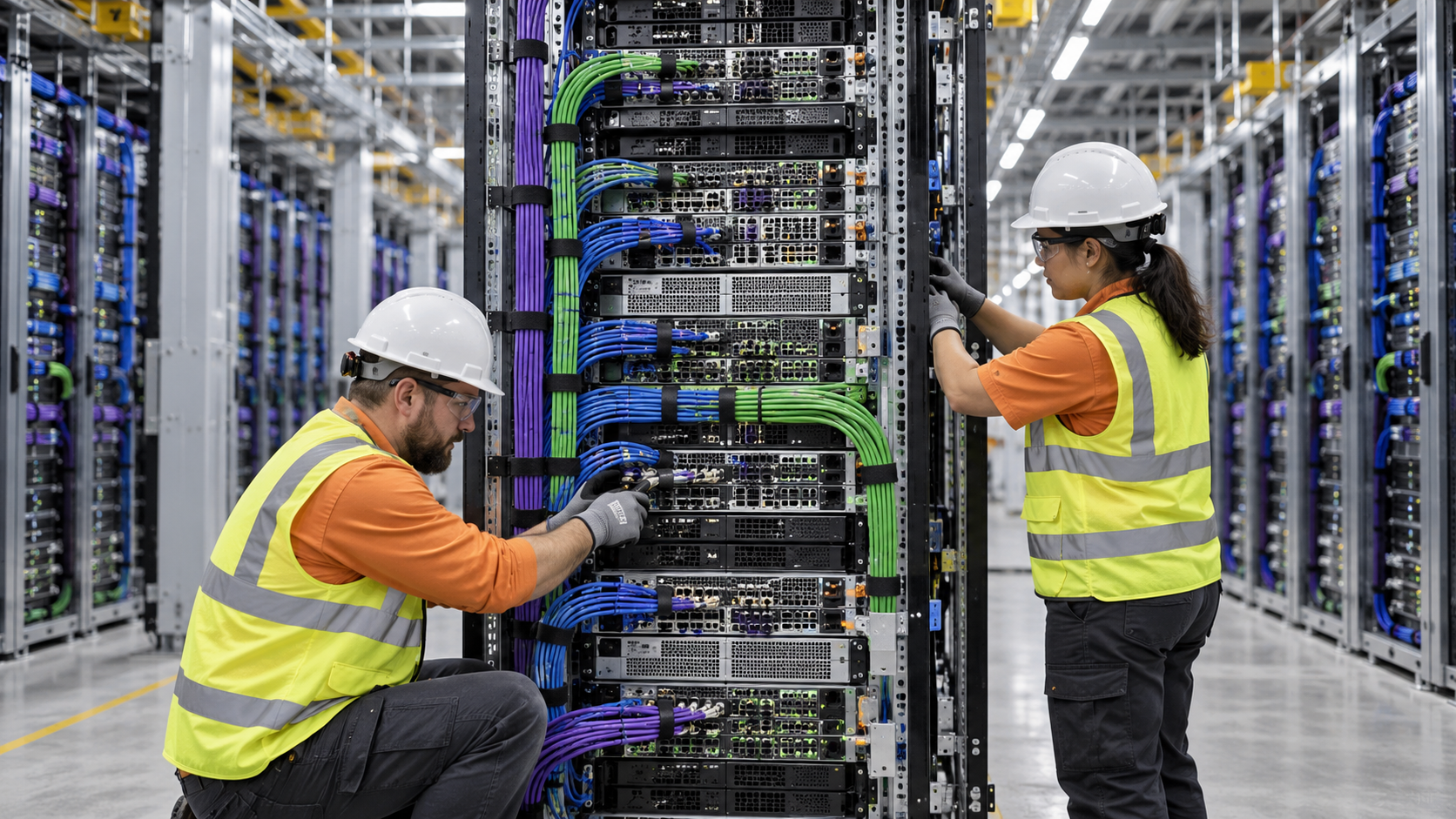
On January 3, 2025, Microsoft Vice Chair and President Brad Smith announced that the Redmond, Washington-based company was on track to invest approximately $80 billion during its 2025 fiscal year to build AI-enabled data centers. The facilities were intended to train artificial-intelligence models and run AI and cloud applications, with more than half of the planned spending directed to the United States. Disclosed in Smith’s essay on American AI competitiveness, the figure turned an abstract race for better models into a concrete measure of the buildings, chips, networks, power systems and skilled labor required to support them.
The announcement followed the rapid expansion of generative AI after ChatGPT’s 2022 debut and Microsoft’s deepening partnership with OpenAI. Large models require extensive computing clusters both during training, when systems learn statistical patterns from vast datasets, and during inference, when trained models answer users or perform tasks. Microsoft already operated Azure data centers around the world, but demand for specialized accelerators and high-speed networking was forcing cloud providers to redesign facilities for much denser workloads. Reuters reported that Microsoft’s capital spending had climbed as the company raced to add capacity while facing constraints on chips, construction schedules and electrical power.
Smith placed the $80 billion plan inside a broader policy argument. He called for public investment in scientific research, expanded AI education and workforce training, and support for exporting American technology to allied countries. The company said the United States benefited from private capital, strong universities, established chip and software companies, and a culture of innovation. Yet the pledge was not a guarantee that every proposed data center would be completed on the same timetable. Infrastructure programs depend on permits, utilities, supply chains and local acceptance, and the fiscal-year total covered a global buildout rather than one project launched on January 3.
The scale of the commitment nevertheless clarified how the economics of AI had changed. Progress was no longer driven only by new algorithms or clever research papers; it increasingly depended on industrial systems able to coordinate thousands of specialized processors, remove their heat and deliver reliable electricity. That buildout also sharpened public questions about energy demand, water use, land, grid upgrades and whether spending would generate durable returns. Microsoft’s announcement became a defining snapshot of the AI infrastructure boom: an $80 billion wager that computing capacity would be a strategic resource, and that controlling more of the physical foundation would help determine which companies and countries could develop and deploy advanced AI.
Training and serving large AI models requires dense clusters of accelerators, high-speed networking, storage, cooling and dependable electrical capacity.
Cloud data centers built for many independent workloads increasingly had to be adapted for giant synchronized jobs spanning thousands of processors.
Microsoft described a fiscal-year investment in AI-enabled data centers used to train models and deploy AI and cloud applications around the world.
More than half of the spending was planned for the United States, but the announcement did not identify one facility or guarantee every proposed project’s schedule.
The pledge showed that leadership in AI depended increasingly on physical capacity as well as model design, data and software.
It also intensified debate over electricity, water, community impacts, construction limits and whether enormous capital spending would produce sustainable returns.
Explore more of "On This Day ..."
Discover more events from the same date across news, politics, technology, sports, and other fields. Each link highlights significant moments that shaped history on different fronts.