

On This Day in AI: April 13, 2019
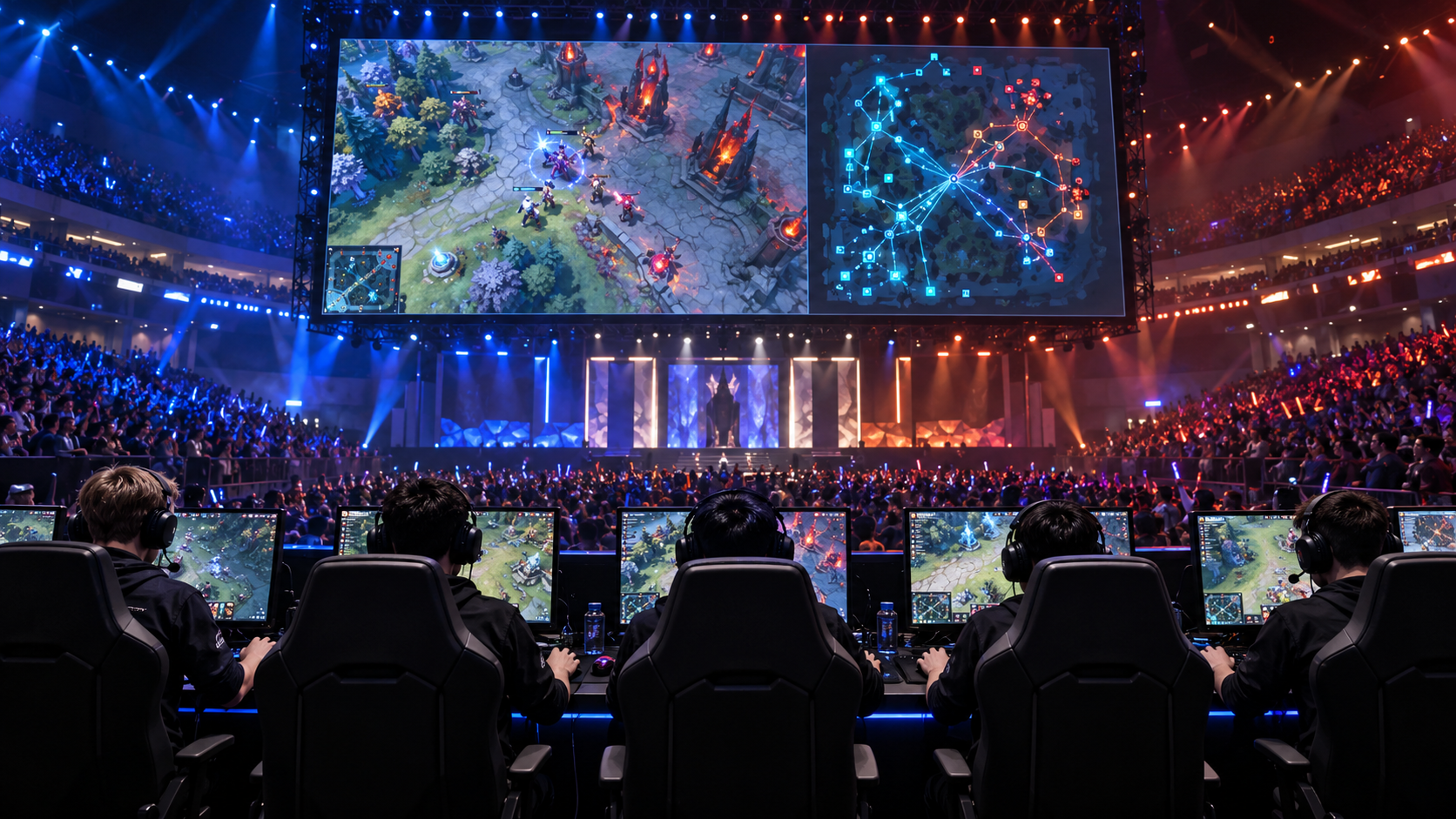
On April 13, 2019, OpenAI Five defeated reigning Dota 2 world champions OG in a live best-of-three exhibition, winning the first two games. The result was the first time an AI system had beaten world champions in a competitive esports game under a public match format. Dota 2 presents partial information, long time horizons, continuous action, teamwork, and an enormous number of possible states. Success requires five players to coordinate strategy while adapting to opponents, making the game a demanding environment for reinforcement learning. The date matters because it turned a fast-moving technical or policy development into a visible milestone that people, institutions, and researchers could evaluate.
The substance of OpenAI Five’s victory over the Dota 2 champions OG was as important as the headline. The system learned through large-scale self-play using a distributed version of proximal policy optimization. Each neural-network agent controlled one hero while sharing team information, and training accumulated the equivalent of tens of thousands of years of gameplay. Those choices reveal what the people behind the milestone believed was necessary at the time. AI history rarely advances through one breakthrough alone; research, product design, infrastructure, governance, and access all shape what a system can become.
The immediate consequences reached beyond the organization at the center of the event. The victory demonstrated that reinforcement learning could produce sophisticated team behavior in a complex, dynamic environment rather than only master board games. It also gave researchers a highly visible example of emergent coordination, adaptation, and long-horizon decision-making. The moment also invited scrutiny, because new capabilities create new dependencies. Reliability, safety, cost, privacy, and human control determine whether an impressive demonstration becomes a trustworthy part of everyday life. Those practical limits are essential to understanding both the achievement and the response it received.
In retrospect, OpenAI Five influenced later work on multi-agent systems and large-scale training infrastructure. Its importance is not that Dota was solved in every form, but that self-play and simulation created strategies capable of defeating elite humans in a domain built around uncertainty and cooperation. Looking back from today’s rapidly changing AI landscape, this event belongs to a larger transition from specialized machine-learning experiments to systems embedded in ordinary products, workplaces, institutions, and public decisions. Its enduring lesson is that technical progress becomes historically significant when it changes what people can do and what society expects next. That connection between capability and consequence gives the milestone its lasting relevance. The anniversary therefore records a turning point, not simply an announcement.
OpenAI Five defeated reigning Dota 2 world champions OG in a live best-of-three exhibition, winning the first two games. The result was the first time an AI system had beaten world champions in a competitive esports game under a public match format.
The system learned through large-scale self-play using a distributed version of proximal policy optimization. Each neural-network agent controlled one hero while sharing team information, and training accumulated the equivalent of tens of thousands of years of gameplay.
The victory demonstrated that reinforcement learning could produce sophisticated team behavior in a complex, dynamic environment rather than only master board games. It also gave researchers a highly visible example of emergent coordination, adaptation, and long-horizon decision-making.
The event connected a concrete technical, commercial, or policy decision with the wider development of artificial intelligence.
OpenAI Five influenced later work on multi-agent systems and large-scale training infrastructure. Its importance is not that Dota was solved in every form, but that self-play and simulation created strategies capable of defeating elite humans in a domain built around uncertainty and cooperation.
Its influence can be traced through later products, research, governance, or industry practice.
Explore more of "On This Day ..."
Discover more events from the same date across news, politics, technology, sports, and other fields. Each link highlights significant moments that shaped history on different fronts.