

On This Day in AI: April 27, 2016
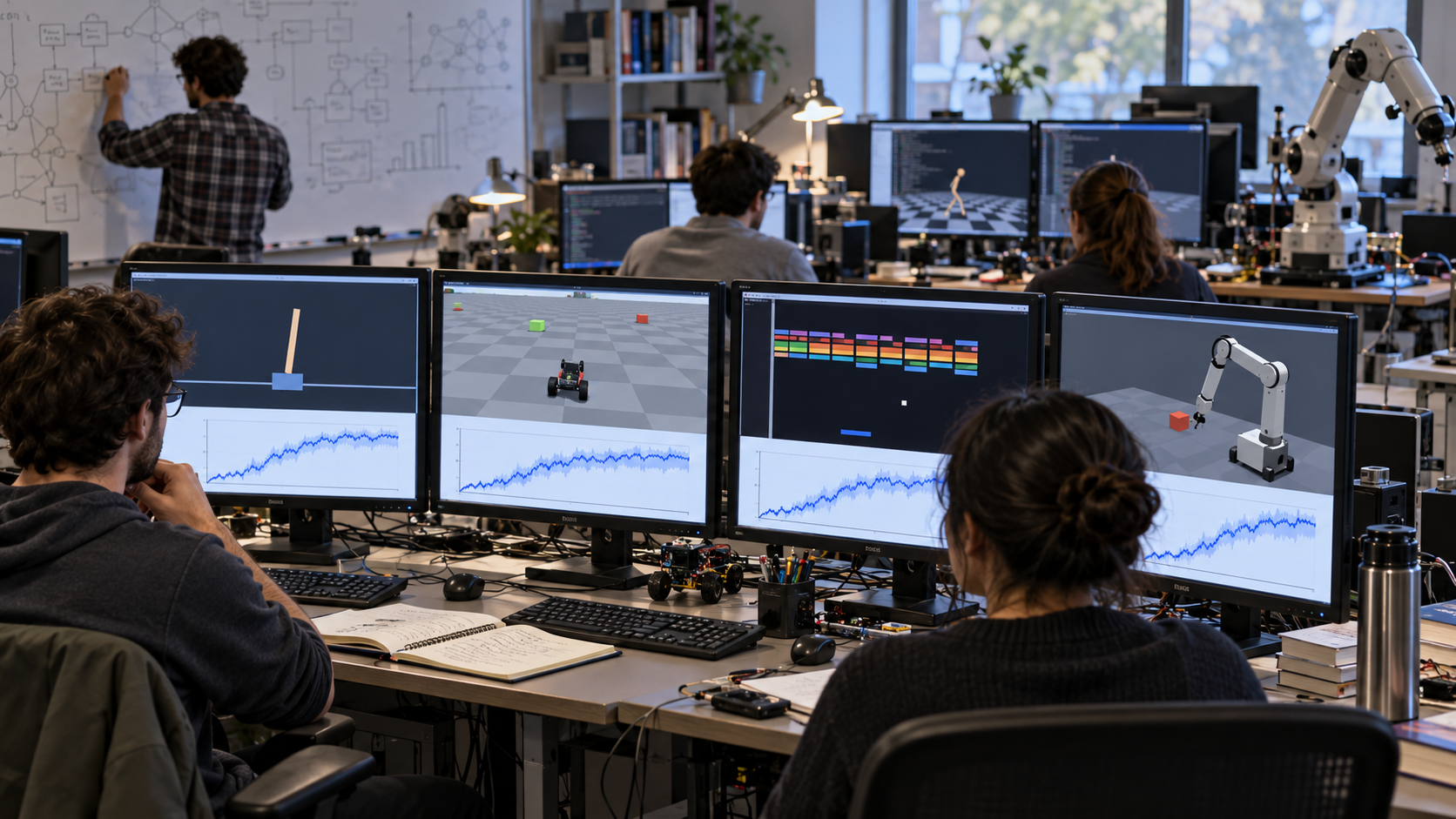
On April 27, 2016, OpenAI released the public beta of Gym, an open toolkit of environments for developing and comparing reinforcement-learning algorithms. It provided a shared interface to simulated robots, classic control problems, Atari games, and other tasks while remaining compatible with different learning frameworks. Reinforcement-learning papers often used custom environments and evaluation methods, making results difficult to reproduce or compare. Researchers needed a common testbed where an algorithm could be swapped in without rebuilding the surrounding simulator and measurement code. The date matters because it turned a fast-moving technical or policy development into a visible milestone that people, institutions, and researchers could evaluate.
The substance of the public beta release of OpenAI Gym was as important as the headline. Gym exposed observations, actions, rewards, and episode boundaries through a simple programming interface. A companion site encouraged participants to upload results and reproduce one another’s work, turning benchmark performance into a more visible and collaborative process. Those choices reveal what the people behind the milestone believed was necessary at the time. AI history rarely advances through one breakthrough alone; research, product design, infrastructure, governance, and access all shape what a system can become.
The immediate consequences reached beyond the organization at the center of the event. The toolkit became one of the most influential pieces of reinforcement-learning infrastructure. It lowered the cost of teaching, experimentation, and benchmarking and helped standardize the way researchers described the interaction loop between an agent and its environment. The moment also invited scrutiny, because new capabilities create new dependencies. Reliability, safety, cost, privacy, and human control determine whether an impressive demonstration becomes a trustworthy part of everyday life. Those practical limits are essential to understanding both the achievement and the response it received.
In retrospect, Gym supported years of research and inspired successor projects, including the maintained Gymnasium ecosystem. Its historical importance lies in proving that shared environments and interfaces can accelerate a field by making ideas easier to test, compare, reuse, and challenge. Looking back from today’s rapidly changing AI landscape, this event belongs to a larger transition from specialized machine-learning experiments to systems embedded in ordinary products, workplaces, institutions, and public decisions. Its enduring lesson is that technical progress becomes historically significant when it changes what people can do and what society expects next. That connection between capability and consequence gives the milestone its lasting relevance. The anniversary therefore records a turning point, not simply an announcement.
OpenAI released the public beta of Gym, an open toolkit of environments for developing and comparing reinforcement-learning algorithms. It provided a shared interface to simulated robots, classic control problems, Atari games, and other tasks while remaining compatible with different learning frameworks.
Gym exposed observations, actions, rewards, and episode boundaries through a simple programming interface. A companion site encouraged participants to upload results and reproduce one another's work, turning benchmark performance into a more visible and collaborative process.
The toolkit became one of the most influential pieces of reinforcement-learning infrastructure. It lowered the cost of teaching, experimentation, and benchmarking and helped standardize the way researchers described the interaction loop between an agent and its environment.
The event connected a concrete technical, commercial, or policy decision with the wider development of artificial intelligence.
Gym supported years of research and inspired successor projects, including the maintained Gymnasium ecosystem. Its historical importance lies in proving that shared environments and interfaces can accelerate a field by making ideas easier to test, compare, reuse, and challenge.
Its influence can be traced through later products, research, governance, or industry practice.
Explore more of "On This Day ..."
Discover more events from the same date across news, politics, technology, sports, and other fields. Each link highlights significant moments that shaped history on different fronts.