

On This Day in AI: April 30, 2020
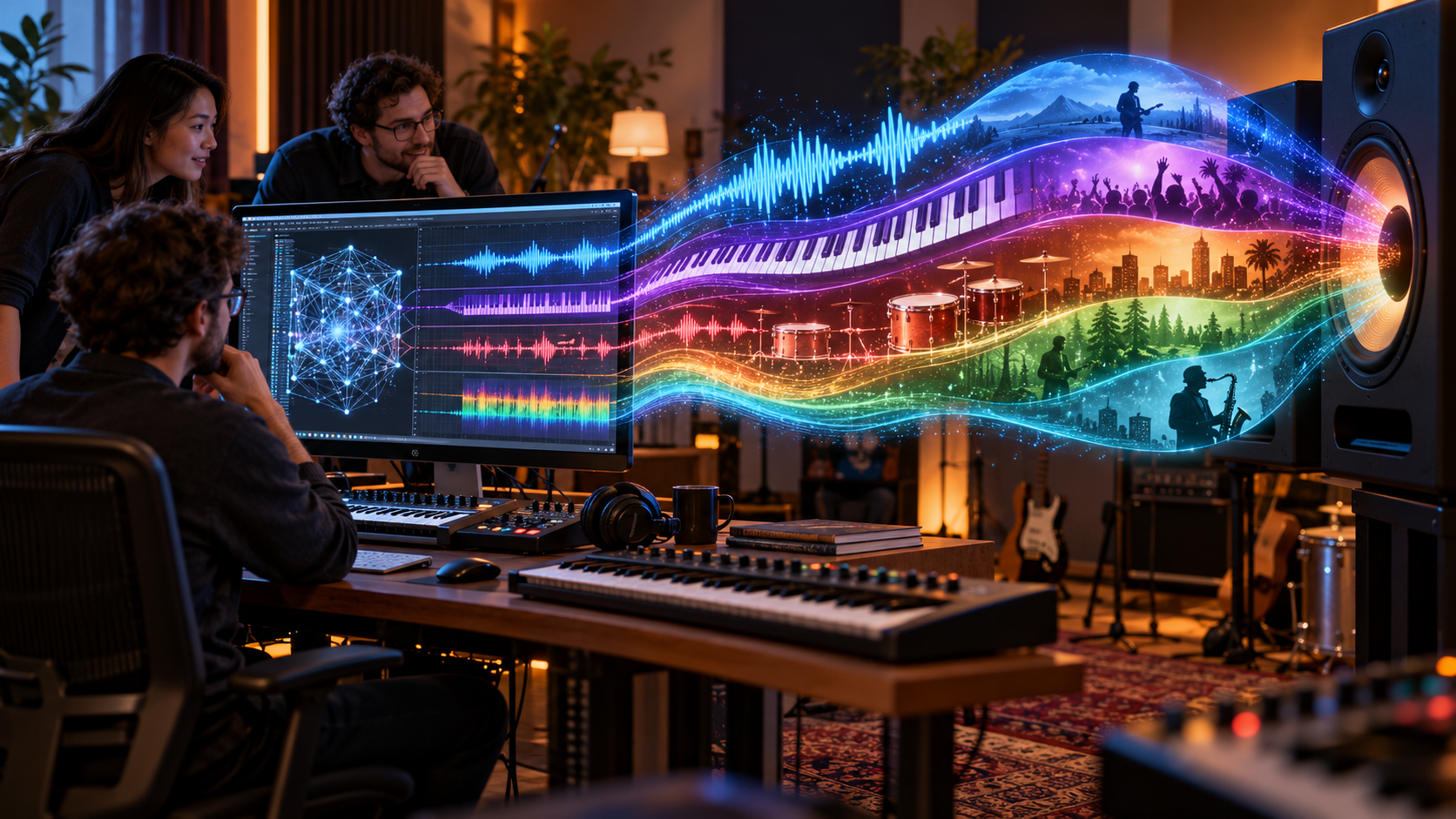
On April 30, 2020, OpenAI released Jukebox, a neural network that generated music as raw audio, including rudimentary singing, conditioned on genre, artist style, and lyrics. The system produced multi-minute samples rather than symbolic notes, capturing recognizable timbre, rhythm, and musical structure. Earlier generative music systems often worked with MIDI or short waveforms, avoiding the complexity of vocals and full-band recordings. Modeling raw audio required representing tens of thousands of samples per second while maintaining coherence over several minutes. The date matters because it turned a fast-moving technical or policy development into a visible milestone that people, institutions, and researchers could evaluate.
The substance of OpenAI’s release of the Jukebox music model was as important as the headline. Jukebox compressed audio into multiple levels of discrete codes with vector-quantized autoencoders, then trained autoregressive Transformer priors at each level. The team released model weights, code, and thousands of samples, while acknowledging slow generation and imperfect musical consistency. Those choices reveal what the people behind the milestone believed was necessary at the time. AI history rarely advances through one breakthrough alone; research, product design, infrastructure, governance, and access all shape what a system can become.
The immediate consequences reached beyond the organization at the center of the event. The project expanded the perceived scope of generative AI from text and images into recorded music. It drew attention to creative possibilities as well as questions about imitation, artist identity, training data, ownership, and the economic position of musicians. The moment also invited scrutiny, because new capabilities create new dependencies. Reliability, safety, cost, privacy, and human control determine whether an impressive demonstration becomes a trustworthy part of everyday life. Those practical limits are essential to understanding both the achievement and the response it received.
In retrospect, Later systems generated cleaner songs much faster, but Jukebox remains an important early demonstration of long-form neural audio with vocals. It foreshadowed both the capabilities and the copyright debates that would surround commercial AI music platforms. Looking back from today’s rapidly changing AI landscape, this event belongs to a larger transition from specialized machine-learning experiments to systems embedded in ordinary products, workplaces, institutions, and public decisions. Its enduring lesson is that technical progress becomes historically significant when it changes what people can do and what society expects next. That connection between capability and consequence gives the milestone its lasting relevance. The anniversary therefore records a turning point, not simply an announcement.
OpenAI released Jukebox, a neural network that generated music as raw audio, including rudimentary singing, conditioned on genre, artist style, and lyrics. The system produced multi-minute samples rather than symbolic notes, capturing recognizable timbre, rhythm, and musical structure.
Jukebox compressed audio into multiple levels of discrete codes with vector-quantized autoencoders, then trained autoregressive Transformer priors at each level. The team released model weights, code, and thousands of samples, while acknowledging slow generation and imperfect musical consistency.
The project expanded the perceived scope of generative AI from text and images into recorded music. It drew attention to creative possibilities as well as questions about imitation, artist identity, training data, ownership, and the economic position of musicians.
The event connected a concrete technical, commercial, or policy decision with the wider development of artificial intelligence.
Later systems generated cleaner songs much faster, but Jukebox remains an important early demonstration of long-form neural audio with vocals. It foreshadowed both the capabilities and the copyright debates that would surround commercial AI music platforms.
Its influence can be traced through later products, research, governance, or industry practice.
Explore more of "On This Day ..."
Discover more events from the same date across news, politics, technology, sports, and other fields. Each link highlights significant moments that shaped history on different fronts.