

On This Day in AI: May 4, 2023
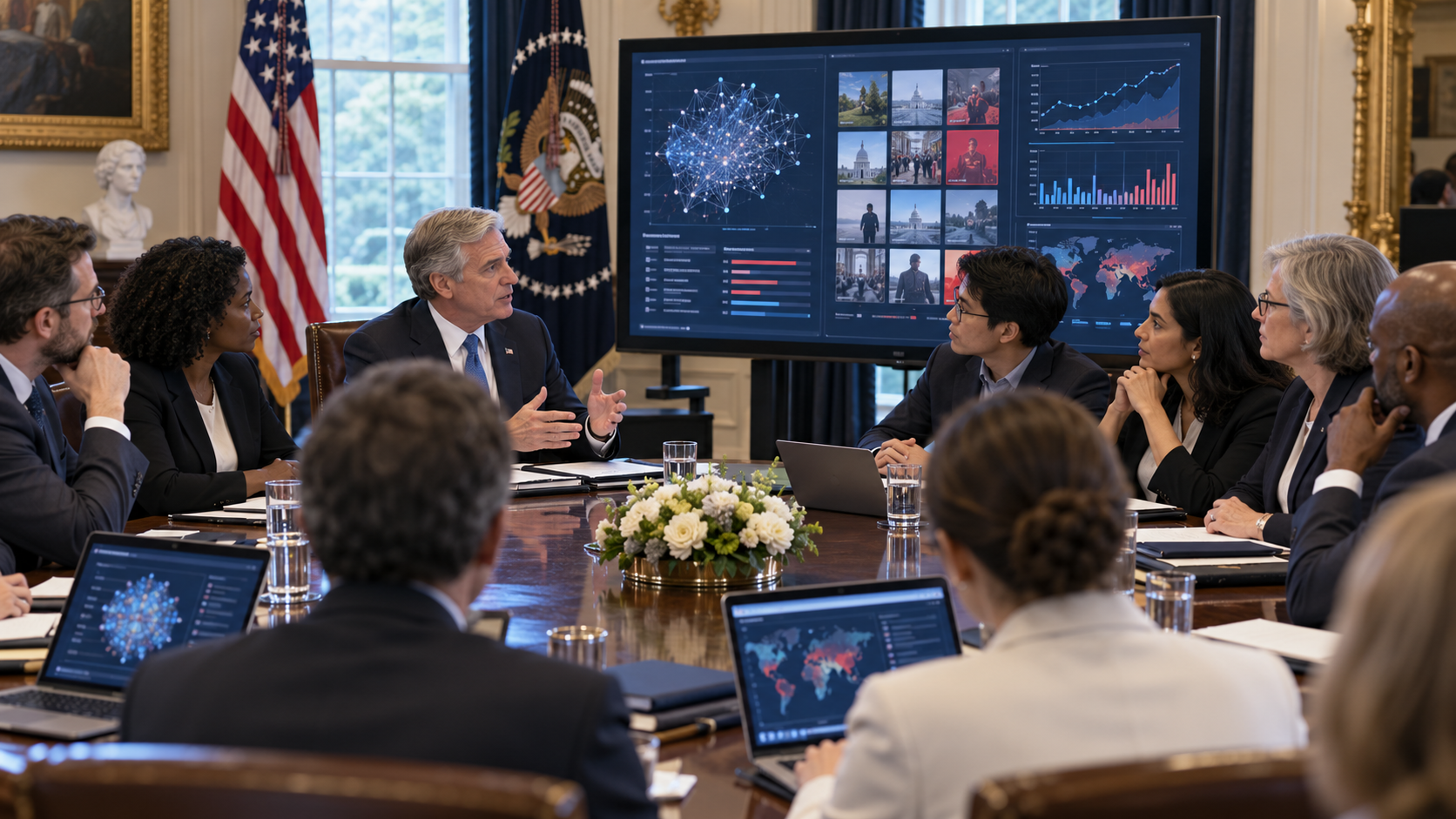
On May 4, 2023, The White House announced new federal actions intended to promote responsible AI innovation and protect people’s rights and safety. The package included $140 million for seven National AI Research Institutes and a public evaluation of leading generative systems at DEF CON. ChatGPT and other generative tools had reached mass audiences faster than many public institutions expected. Officials needed mechanisms that could test powerful systems, fund independent research, and translate broad principles such as the AI Bill of Rights into operational policy. The date matters because it turned a fast-moving technical, policy, or commercial development into a visible milestone that people and institutions could evaluate.
The substance of the White House initiative on responsible artificial intelligence was as important as the headline. The administration convened executives from major laboratories, committed the Office of Management and Budget to draft guidance for federal use, and encouraged transparent red-teaming. The planned public exercise brought together model developers, researchers, students, and community experts. Those choices reveal what the people behind the milestone believed was necessary at the time. AI history rarely advances through one breakthrough alone; research, infrastructure, product design, governance, and access all shape what a system can become.
The immediate consequences reached beyond the organization at the center of the event. The initiative placed model evaluation and government procurement at the center of the U.S. response to generative AI. It also treated responsible development as a combination of research funding, voluntary commitments, adversarial testing, and rules for public-sector use. The moment also invited scrutiny, because new capabilities create new dependencies. Reliability, safety, cost, privacy, and human control determine whether an impressive demonstration becomes a trustworthy part of everyday life. Those practical limits are essential to understanding both the achievement and the response it received.
In retrospect, Federal AI policy accelerated through later voluntary commitments, an executive order, agency standards, and international coordination. The May announcement was an early moment when the generative-AI boom produced a coordinated White House safety agenda. Looking back from today’s rapidly changing AI landscape, this event belongs to a larger transition from specialized machine-learning experiments to systems embedded in ordinary products, workplaces, institutions, and public decisions. Its enduring lesson is that technical progress becomes historically significant when it changes what people can do and what society expects next. It also reminds us that every celebrated capability is shaped by the data, institutions, hardware, and human judgment surrounding it. The anniversary therefore records a turning point, not simply an announcement.
The White House announced new federal actions intended to promote responsible AI innovation and protect people's rights and safety. The package included $140 million for seven National AI Research Institutes and a public evaluation of leading generative systems at DEF CON.
The administration convened executives from major laboratories, committed the Office of Management and Budget to draft guidance for federal use, and encouraged transparent red-teaming. The planned public exercise brought together model developers, researchers, students, and community experts.
The initiative placed model evaluation and government procurement at the center of the U.S. response to generative AI. It also treated responsible development as a combination of research funding, voluntary commitments, adversarial testing, and rules for public-sector use.
The event connected a concrete technical, commercial, or policy decision with the wider development of artificial intelligence.
Federal AI policy accelerated through later voluntary commitments, an executive order, agency standards, and international coordination. The May announcement was an early moment when the generative-AI boom produced a coordinated White House safety agenda.
Its influence can be traced through later products, research, governance, or industry practice.
Explore more of "On This Day ..."
Discover more events from the same date across news, politics, technology, sports, and other fields. Each link highlights significant moments that shaped history on different fronts.