

On This Day in AI: May 8, 2018
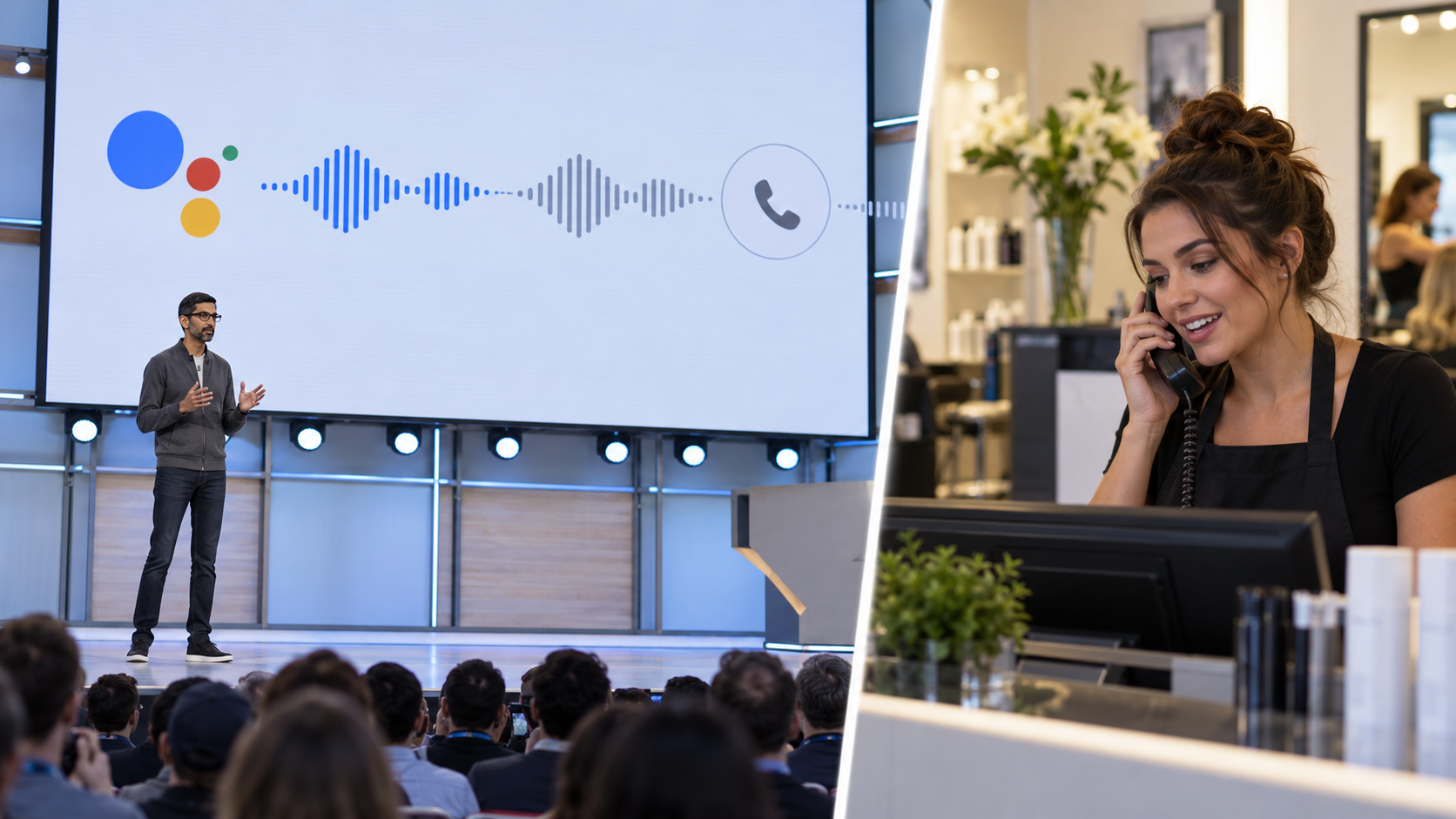
On May 8, 2018, Google demonstrated Duplex, an AI system that placed phone calls to schedule a haircut and ask a restaurant about availability. The natural-sounding conversations included pauses and disfluencies, allowing the system to navigate interruptions and ambiguous replies. Voice assistants could answer simple commands, but open-ended telephone conversations required speech recognition, planning, generation, timing, and recovery from unexpected responses. Businesses also relied on calls that could not be completed through a structured online form. The date matters because it turned a fast-moving technical, policy, or commercial development into a visible milestone that people and institutions could evaluate.
The substance of Google’s demonstration of the Duplex conversational system was as important as the headline. Duplex was trained for narrow domains and used a recurrent neural network to understand conversation state and produce speech. The demonstration impressed audiences but also prompted immediate debate about disclosure, recording, and whether people should know when they were speaking with a machine. Those choices reveal what the people behind the milestone believed was necessary at the time. AI history rarely advances through one breakthrough alone; research, infrastructure, product design, governance, and access all shape what a system can become.
The immediate consequences reached beyond the organization at the center of the event. The event changed public expectations for conversational AI and made synthetic-voice ethics impossible to ignore. Google responded by emphasizing identification and transparency as it tested the feature with businesses and users. The moment also invited scrutiny, because new capabilities create new dependencies. Reliability, safety, cost, privacy, and human control determine whether an impressive demonstration becomes a trustworthy part of everyday life. Those practical limits are essential to understanding both the achievement and the response it received.
In retrospect, Duplex capabilities later appeared in reservation and call-assistance products, while disclosure became a central design requirement for voice agents. The demo remains a landmark because it revealed how quickly AI conversation could cross from recognizably robotic to socially persuasive. Looking back from today’s rapidly changing AI landscape, this event belongs to a larger transition from specialized machine-learning experiments to systems embedded in ordinary products, workplaces, institutions, and public decisions. Its enduring lesson is that technical progress becomes historically significant when it changes what people can do and what society expects next. It also reminds us that every celebrated capability is shaped by the data, institutions, hardware, and human judgment surrounding it. The anniversary therefore records a turning point, not simply an announcement.
Google demonstrated Duplex, an AI system that placed phone calls to schedule a haircut and ask a restaurant about availability. The natural-sounding conversations included pauses and disfluencies, allowing the system to navigate interruptions and ambiguous replies.
Duplex was trained for narrow domains and used a recurrent neural network to understand conversation state and produce speech. The demonstration impressed audiences but also prompted immediate debate about disclosure, recording, and whether people should know when they were speaking with a machine.
The event changed public expectations for conversational AI and made synthetic-voice ethics impossible to ignore. Google responded by emphasizing identification and transparency as it tested the feature with businesses and users.
The event connected a concrete technical, commercial, or policy decision with the wider development of artificial intelligence.
Duplex capabilities later appeared in reservation and call-assistance products, while disclosure became a central design requirement for voice agents. The demo remains a landmark because it revealed how quickly AI conversation could cross from recognizably robotic to socially persuasive.
Its influence can be traced through later products, research, governance, or industry practice.
Explore more of "On This Day ..."
Discover more events from the same date across news, politics, technology, sports, and other fields. Each link highlights significant moments that shaped history on different fronts.