

On This Day in AI: May 29, 2023
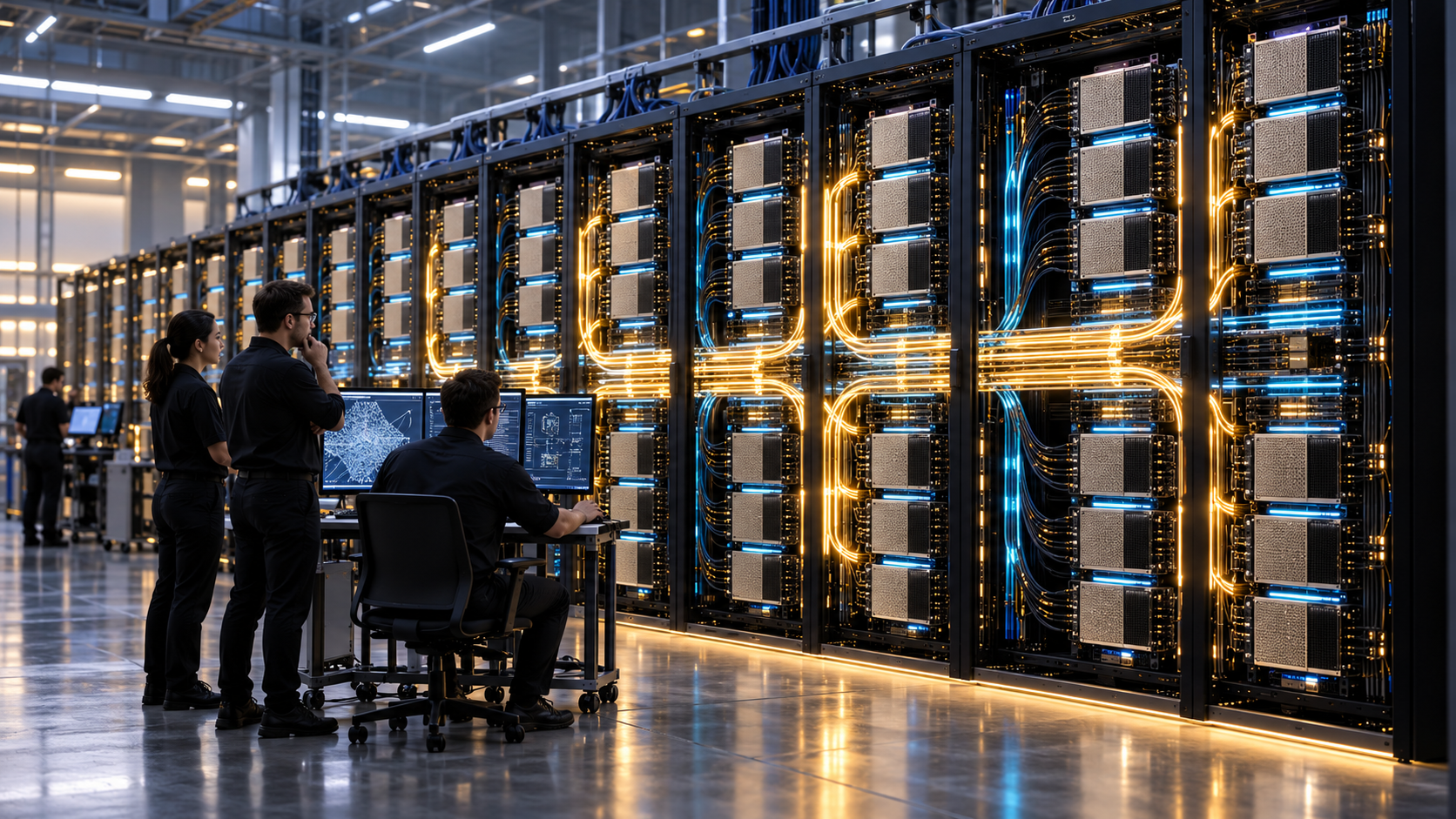
On May 29, 2023, NVIDIA unveiled DGX GH200, an AI supercomputer design connecting 256 Grace Hopper Superchips into one enormous shared-memory system. It was intended for the largest generative models, recommendation engines, and data-processing workloads. Foundation models were growing beyond the memory and communication limits of individual accelerators. Training and serving them efficiently required hardware that could move data quickly across hundreds of chips without forcing developers to manage every boundary manually. The date matters because it turned a fast-moving technical, policy, or commercial development into a visible milestone that people and institutions could evaluate.
The substance of NVIDIA’s unveiling of the DGX GH200 AI supercomputer was as important as the headline. The design used NVLink Switch System to combine the superchips with 144 terabytes of shared memory and about one exaflop of AI performance. NVIDIA said Google Cloud, Meta, and Microsoft would be among the first organizations to explore the architecture. Those choices reveal what the people behind the milestone believed was necessary at the time. AI history rarely advances through one breakthrough alone; research, infrastructure, product design, governance, and access all shape what a system can become.
The immediate consequences reached beyond the organization at the center of the event. DGX GH200 illustrated how generative AI was reshaping datacenter engineering around tightly connected systems rather than isolated GPUs. Memory capacity and interconnect bandwidth became headline specifications alongside raw arithmetic speed. The moment also invited scrutiny, because new capabilities create new dependencies. Reliability, safety, cost, privacy, and human control determine whether an impressive demonstration becomes a trustworthy part of everyday life. Those practical limits are essential to understanding both the achievement and the response it received.
In retrospect, Successive systems pushed toward rack-scale computing and even larger clusters. The announcement is an important hardware milestone because it anticipated the industrial infrastructure required to train and operate models with trillions of parameters and vast working contexts. Looking back from today’s rapidly changing AI landscape, this event belongs to a larger transition from specialized machine-learning experiments to systems embedded in ordinary products, workplaces, institutions, and public decisions. Its enduring lesson is that technical progress becomes historically significant when it changes what people can do and what society expects next. It also reminds us that every celebrated capability is shaped by the data, institutions, hardware, and human judgment surrounding it. The anniversary therefore records a turning point, not simply an announcement.
NVIDIA unveiled DGX GH200, an AI supercomputer design connecting 256 Grace Hopper Superchips into one enormous shared-memory system. It was intended for the largest generative models, recommendation engines, and data-processing workloads.
The design used NVLink Switch System to combine the superchips with 144 terabytes of shared memory and about one exaflop of AI performance. NVIDIA said Google Cloud, Meta, and Microsoft would be among the first organizations to explore the architecture.
DGX GH200 illustrated how generative AI was reshaping datacenter engineering around tightly connected systems rather than isolated GPUs. Memory capacity and interconnect bandwidth became headline specifications alongside raw arithmetic speed.
The event connected a concrete technical, commercial, or policy decision with the wider development of artificial intelligence.
Successive systems pushed toward rack-scale computing and even larger clusters. The announcement is an important hardware milestone because it anticipated the industrial infrastructure required to train and operate models with trillions of parameters and vast working contexts.
Its influence can be traced through later products, research, governance, or industry practice.
Explore more of "On This Day ..."
Discover more events from the same date across news, politics, technology, sports, and other fields. Each link highlights significant moments that shaped history on different fronts.