

On This Day in Business: February 2, 1913
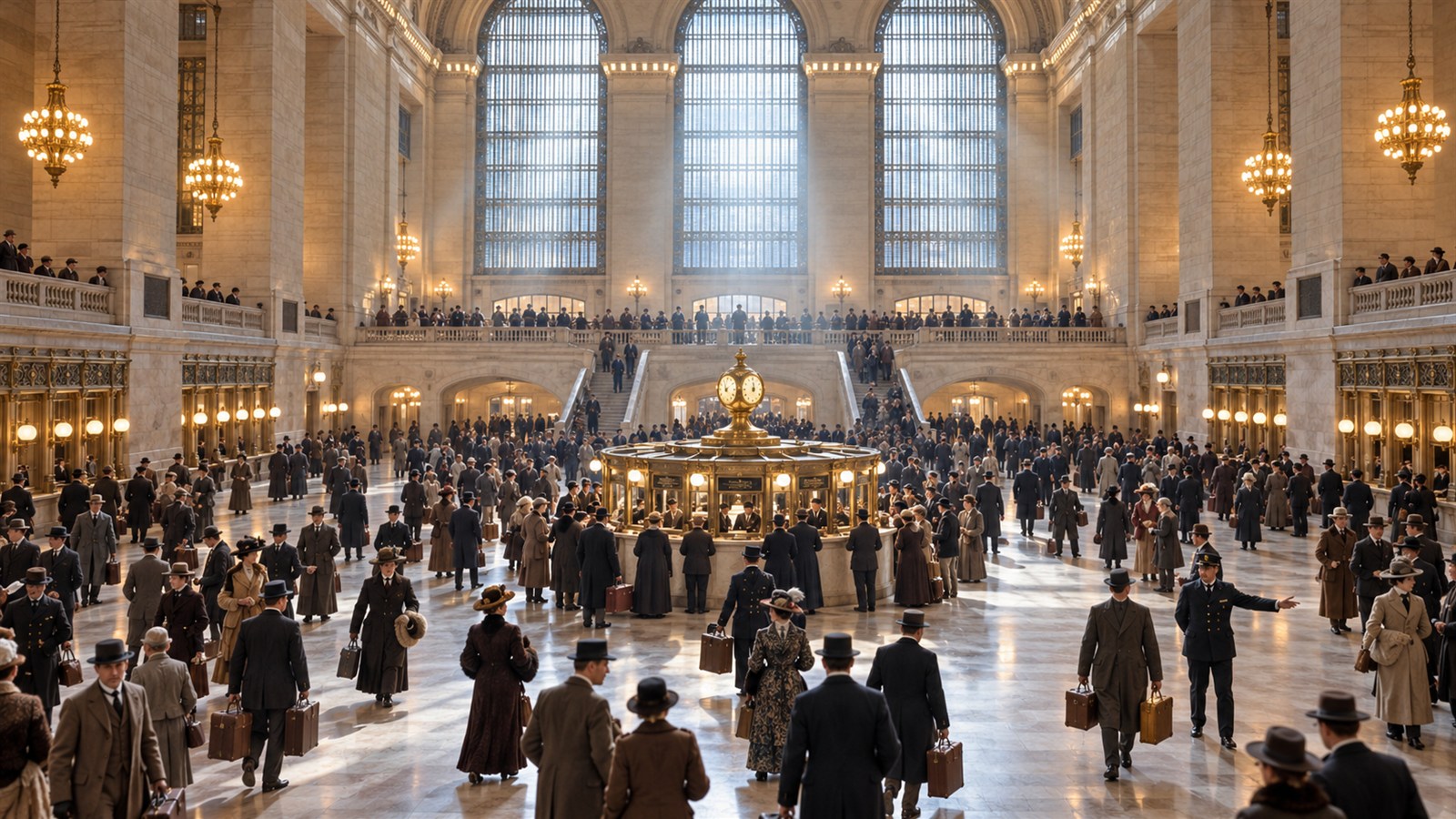
At 12:01 a.m. on February 2, 1913, New York's Grand Central Terminal officially opened. By the end of opening day, roughly 150,000 visitors had streamed through the new Beaux-Arts landmark at Forty-Second Street. The building replaced an earlier depot whose smoke, congestion and deadly accidents exposed the limits of steam railroading in a rapidly growing city. The New York Central and affiliated railroads used the reconstruction to electrify approaching trains, bury tracks and reorganize passenger movement. What appeared above ground as a monumental civic gateway rested on an enormous transportation machine arranged on two underground levels.
The terminal's design treated flow as a business problem. Ramps moved travelers between streets, concourses and platforms without forcing them onto long stairways. Separate passages helped arriving and departing passengers avoid collisions, while baggage systems, information booths and a broad main concourse coordinated thousands of individual journeys. Electric locomotives eliminated coal smoke in the tunnels and enabled the tracks to be covered. Architects Reed and Stem designed the operational plan, and Warren and Wetmore shaped the ceremonial interiors and exterior. The result combined practical circulation with a memorable customer experience, turning a transfer point into a destination.
Its most important financial innovation was the use of air rights. Once tracks were placed below grade, the railroad could lease the space above them for hotels, offices and apartment buildings. The surrounding development, promoted as Terminal City, helped offset the vast construction cost and concentrated valuable commercial activity around the station. The strategy aligned transportation and real estate: rail access raised nearby land values, and dense development produced rents and passengers. Grand Central therefore demonstrated that infrastructure could create a second product beyond travel itself—the right to build and conduct business on land made usable by engineering.
Grand Central survived later competition from automobiles and airplanes, proposals for demolition and decades of decline before a major restoration returned its architecture to prominence. Its February 2 opening remains significant because the terminal integrated technology, service design and property development into one coordinated enterprise. The railroads did not simply expand capacity; they changed the urban fabric around their network and captured part of the value they created. Modern transit-oriented development follows the same logic. A well-designed hub can reduce travel friction, attract commerce and support long-term investment, making the station both a public room and a platform for private economic activity. The terminal also demonstrates that architecture can be operating strategy. Its beauty attracted attention, but its ramps, concourses and carefully separated flows reduced confusion at scale, helping a transportation company turn efficiency into public confidence.
Steam congestion and tunnel smoke had made the earlier Grand Central facilities dangerous and inadequate for New York's growing passenger traffic.
Railroad electrification allowed tracks to be buried and covered, creating a cleaner multilevel terminal and valuable buildable space above the lines.
Grand Central Terminal officially opened at 12:01 a.m. on February 2, 1913, and attracted about 150,000 visitors during its first day.
Ramps, separated passenger routes and centralized information services made circulation part of the terminal's competitive customer experience.
Leasing air rights for Terminal City hotels, offices and apartments helped the railroad monetize land value created by the transportation network.
The terminal became a model for transit-oriented development and showed how infrastructure, architecture and real estate can reinforce one another.
Explore more of "On This Day ..."
Discover more events from the same date across news, politics, technology, sports, and other fields. Each link highlights significant moments that shaped history on different fronts.