

On This Day in Business: February 16, 1852
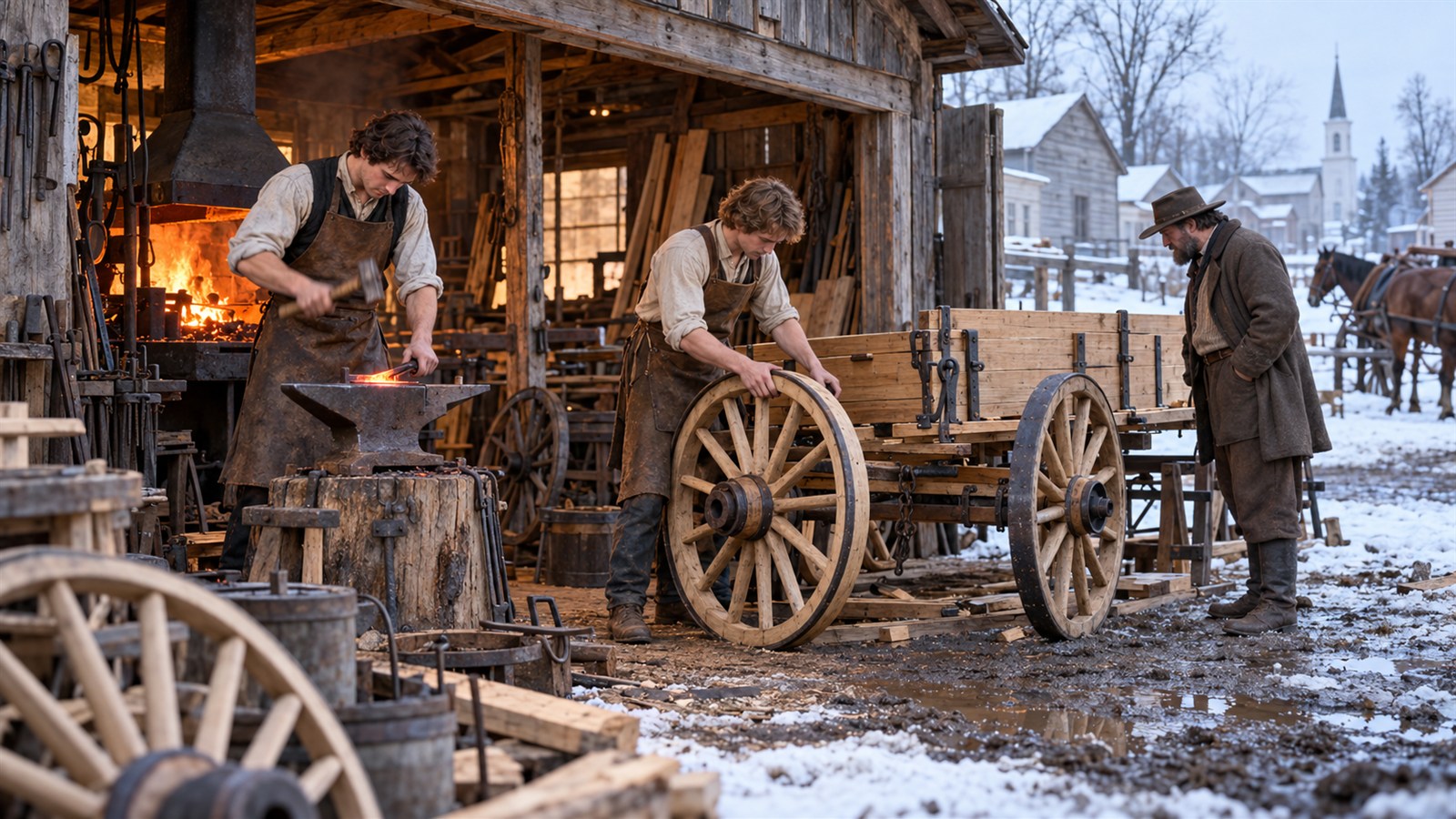
On February 16, 1852, brothers Henry and Clement Studebaker established a blacksmith and wagon shop in South Bend, Indiana. Their first operation was modest, producing and repairing practical horse-drawn equipment for local customers. The location connected them to a growing town, agricultural demand and transportation routes leading west. Other family members later joined the enterprise, bringing labor, sales ability and capital. What began as H. & C. Studebaker eventually became one of the largest wagon manufacturers in the world.
The company grew by serving markets that required durable standardized vehicles. It supplied wagons during the Civil War, then expanded through dealers and branches positioned near migration and freight routes. John Mohler Studebaker brought money earned during the California gold rush and helped manage manufacturing, while Peter Studebaker strengthened sales. The brothers reinvested in larger factories, machinery and distribution. Family roles were not always simple, but their combined capabilities allowed the firm to move beyond craft production into industrial scale without abandoning a reputation for dependable construction.
At the turn of the twentieth century, the transportation market began shifting from horses to engines. Studebaker first sold electric automobiles, then partnered with gasoline-car producers and reorganized as the Studebaker Corporation. Its name, dealer network, body-building skill and manufacturing facilities gave it assets that a new entrant would struggle to match. The transition was nevertheless costly and uncertain. The company had to acquire unfamiliar engineering knowledge and compete with firms designed around mass automobile production rather than adapt a business built for carriages.
February 16 matters because Studebaker's long history captures both the advantage and burden of incumbency. A trusted brand, skilled workforce and national distribution system can carry a company into a new technology, but legacy plants, products and assumptions can slow the move. Studebaker produced acclaimed automobiles for decades before closing its South Bend operations in 1963 and ending vehicle production in 1966. Its rise from a two-brother shop remains a remarkable story of manufacturing scale; its later struggle shows that scale must be repeatedly renewed. The enterprise survived the wagon-to-car transition longer than most carriage makers because it treated transportation as its market, yet even that broad identity could not remove the need for competitive cost, capital and volume. The family enterprise also benefited from timing: westward settlement and agricultural expansion created demand before automobile competition existed. Studebaker accumulated capital, reputation and distribution during the wagon era, giving its later experiments a base that most mechanical startups lacked.
South Bend's growth and western migration created steady demand for wagon repair and durable horse-drawn vehicles in the early 1850s.
Henry and Clement Studebaker combined blacksmith skill with contributions from brothers who later added capital, management and a wider sales network.
On February 16, 1852, the brothers established the small shop that became the foundation of the Studebaker manufacturing enterprise.
Military, agricultural and migration markets supported expansion into large factories and dealer operations serving customers across the country.
Studebaker used its brand and manufacturing base to enter electric and gasoline automobiles as horse-drawn transportation declined.
The company lasted into the 1960s, illustrating both how legacy assets can support technological transition and how scale must still remain competitive.
Explore more of "On This Day ..."
Discover more events from the same date across news, politics, technology, sports, and other fields. Each link highlights significant moments that shaped history on different fronts.