

On This Day in Business: March 23, 1857
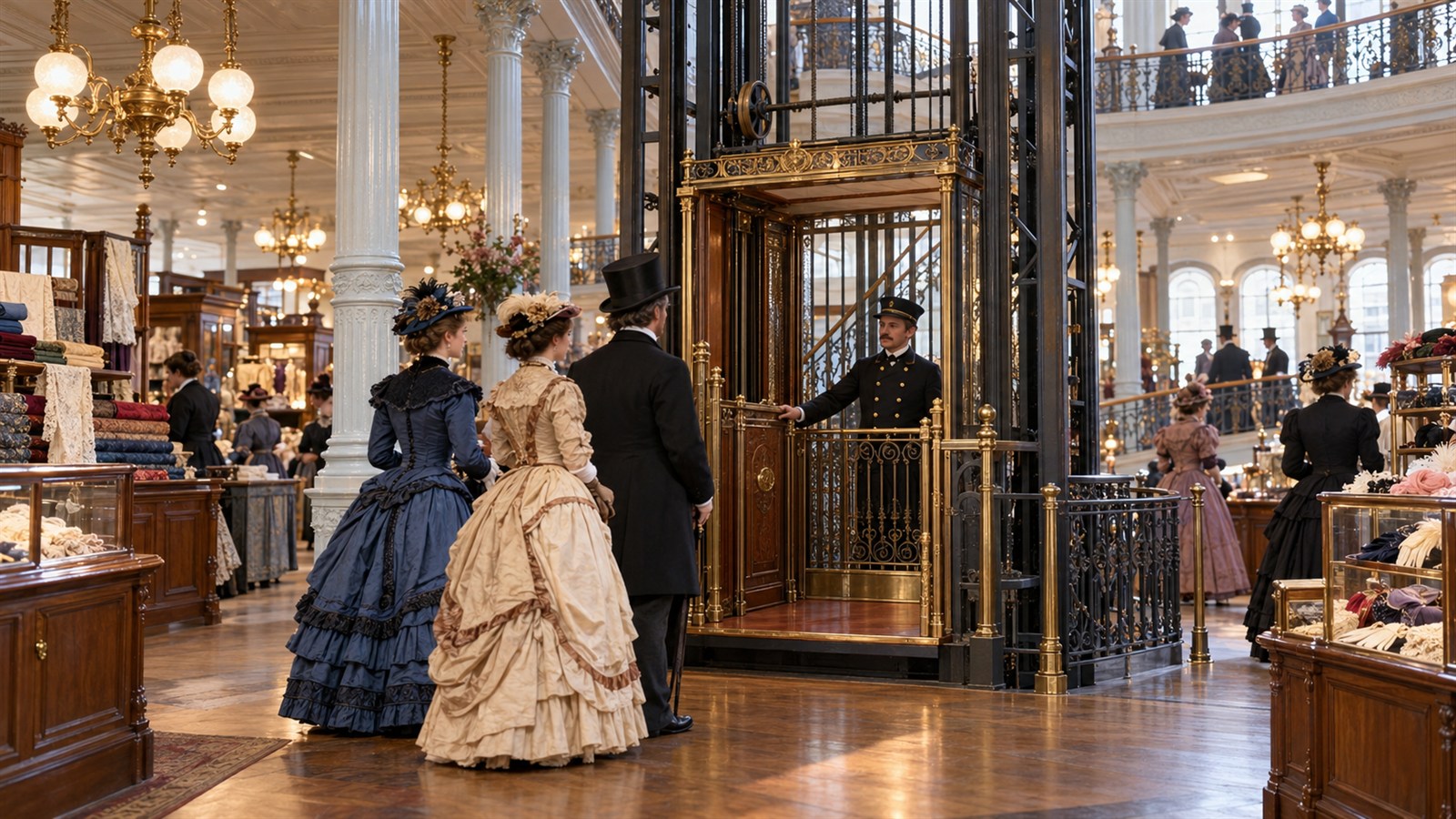
On March 23, 1857, a commercial passenger elevator made by the company associated with Elisha Graves Otis entered service at E. V. Haughwout's store in New York City. Hoisting platforms already existed, but public trust was limited because a broken rope could produce a catastrophic fall. Otis had demonstrated a safety mechanism that caught the platform if its supporting cable failed. Installing the device in an elegant retail building turned that engineering claim into an everyday customer experience and made vertical travel feel commercially usable.
The elevator did more than save shoppers a climb. It altered the value of space within a building. Upper floors had traditionally been less desirable because reaching them required effort; reliable lifts made height accessible to customers, tenants, goods, and workers. Retailers could display merchandise across multiple levels, while later office and residential developers could earn revenue from taller structures. The technology complemented advances in steel construction, urban land values, electricity, and water pressure, helping create the modern high-rise economy.
Adoption still depended on more than the safety brake. Owners needed shafts, machinery, operators, maintenance, inspections, and building designs that managed traffic. Early elevators were slow by later standards, and confidence had to be earned through repeated service. Otis built a business around installation and continuing reliability, not merely the sale of a patented device. As cities grew upward, service networks and safety standards became central to the industry's legitimacy.
The Haughwout installation demonstrates how risk-control technology can unlock a new market. Customers did not need to understand every gear; they needed to believe the system would stop safely and work when required. Once that trust existed, architects and developers could reorganize buildings around vertical movement. The resulting value appeared in real estate, retail, construction, and city density as well as elevator sales. March 23, 1857, marks the moment a visible safety innovation began turning upper floors from inconvenient space into a productive urban asset. Elevators also created a recurring-service business. A unit embedded in a building can operate for decades, making inspection, preventive maintenance, modernization, and rapid repair as important as the original installation. Long asset life rewards suppliers that preserve technical knowledge and local coverage. It also creates switching costs and responsibility: a service lapse can endanger people and disrupt the entire property. The industry's economics therefore grew around trust maintained over time, not simply machinery delivered once at the building's formal opening.
Hoists could move freight, but fear of cable failure limited their acceptance for carrying customers inside commercial buildings.
Elisha Otis developed and publicly demonstrated a mechanism designed to grip the guide rails if the hoisting rope broke.
An Otis passenger elevator began service at New York's Haughwout store on March 23, 1857, making the safety idea operational.
Owners still needed expensive shafts, power, operators, inspections, maintenance, and enough building traffic to justify installation.
Reliable elevators increased the value of upper floors and complemented structural technologies that enabled much taller urban buildings.
The installation shows how reducing perceived and actual risk can create demand far beyond the original equipment market.
Explore more of "On This Day ..."
Discover more events from the same date across news, politics, technology, sports, and other fields. Each link highlights significant moments that shaped history on different fronts.