

On This Day in Business: April 6, 1992
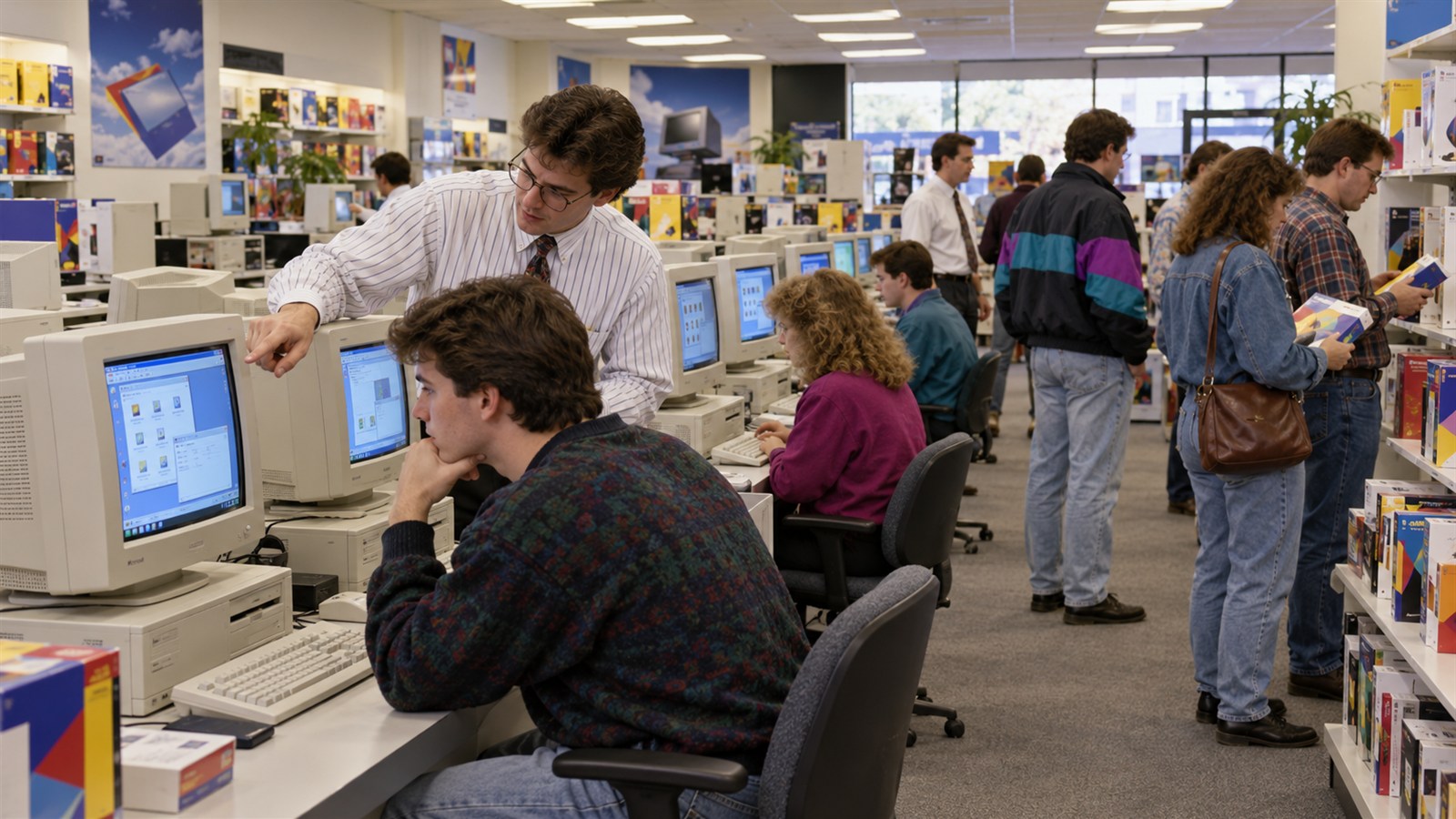
On April 6, 1992, Microsoft released Windows 3.1 for IBM-compatible personal computers. The software refined the graphical environment introduced by Windows 3.0 and arrived with improved stability, scalable TrueType fonts, multimedia support, and better handling of memory and applications. Users still installed it on top of MS-DOS, but windows, icons, menus, and a mouse offered a more approachable way to manage programs and files. Retail demand was strong, and manufacturers increasingly supplied Windows with new PCs. The release helped turn a graphical interface from an optional layer for enthusiasts into a normal expectation for mainstream office and home computing.
Windows 3.1 benefited from a broad hardware ecosystem. Many companies produced compatible computers, processors, printers, sound cards, and displays, while independent developers wrote applications for a shared platform. That variety lowered prices and widened distribution, but it also created engineering challenges. Microsoft had to support many combinations of devices and drivers that it did not control. Improvements to installation, documentation, and error handling therefore mattered alongside visible features. TrueType fonts strengthened desktop publishing and document exchange, while multimedia extensions helped PCs enter education, presentations, and entertainment beyond their earlier spreadsheet and word-processing roles.
The release intensified competition with Apple's Macintosh, which had popularized graphical personal computing, and with other operating environments. Microsoft gained leverage because Windows could reach the large installed base of DOS-compatible machines without requiring buyers to adopt one manufacturer's hardware. Once organizations trained workers and bought Windows applications, switching became more costly. Developers followed the growing audience, and the expanding software catalog made the platform more attractive to additional customers. This feedback loop helped establish Windows as the dominant PC environment of the 1990s and prepared the market for later versions that integrated networking and operating-system functions more fully.
Windows 3.1 shows how an incremental release can be strategically transformative. It did not invent graphical interfaces, but it made a familiar architecture more reliable, legible, and commercially useful at the moment PC ownership was spreading. Platform businesses often win by reducing uncertainty for several groups at once: customers receive compatibility, developers gain a larger audience, and hardware makers obtain a common software target. The same network effect can concentrate power and attract scrutiny, because control of the interface influences which applications reach users. April 6 marks a practical consolidation point when the graphical PC became ordinary rather than exceptional. Corporate purchasing amplified the advantage. Once a company selected Windows applications and established support procedures, the next compatible PC could be added with less disruption. Standard desktop images, training materials, and file formats converted individual software choices into organization-wide infrastructure. Vendors gained a large repeatable market, while buyers gained scale economies. The resulting dependence made migration harder and ensured that seemingly small compatibility decisions had long financial lives.
Windows 3.0 had expanded interest in Microsoft's graphical environment, but reliability, fonts, and device support still limited some business uses.
Version 3.1 improved the interface and added TrueType fonts, multimedia capabilities, and other refinements for compatible PCs.
Microsoft shipped Windows 3.1 on April 6, 1992, through retail channels and a growing network of computer manufacturers.
Supporting diverse hardware created driver and installation problems that required cooperation among Microsoft, vendors, and corporate technology departments.
A larger installed base attracted application developers, while the resulting software library encouraged more people and companies to adopt Windows.
The release helped establish a platform cycle in which compatibility, distribution, and developer participation reinforced one another.
Explore more of "On This Day ..."
Discover more events from the same date across news, politics, technology, sports, and other fields. Each link highlights significant moments that shaped history on different fronts.