

On This Day in Business: April 17, 1964
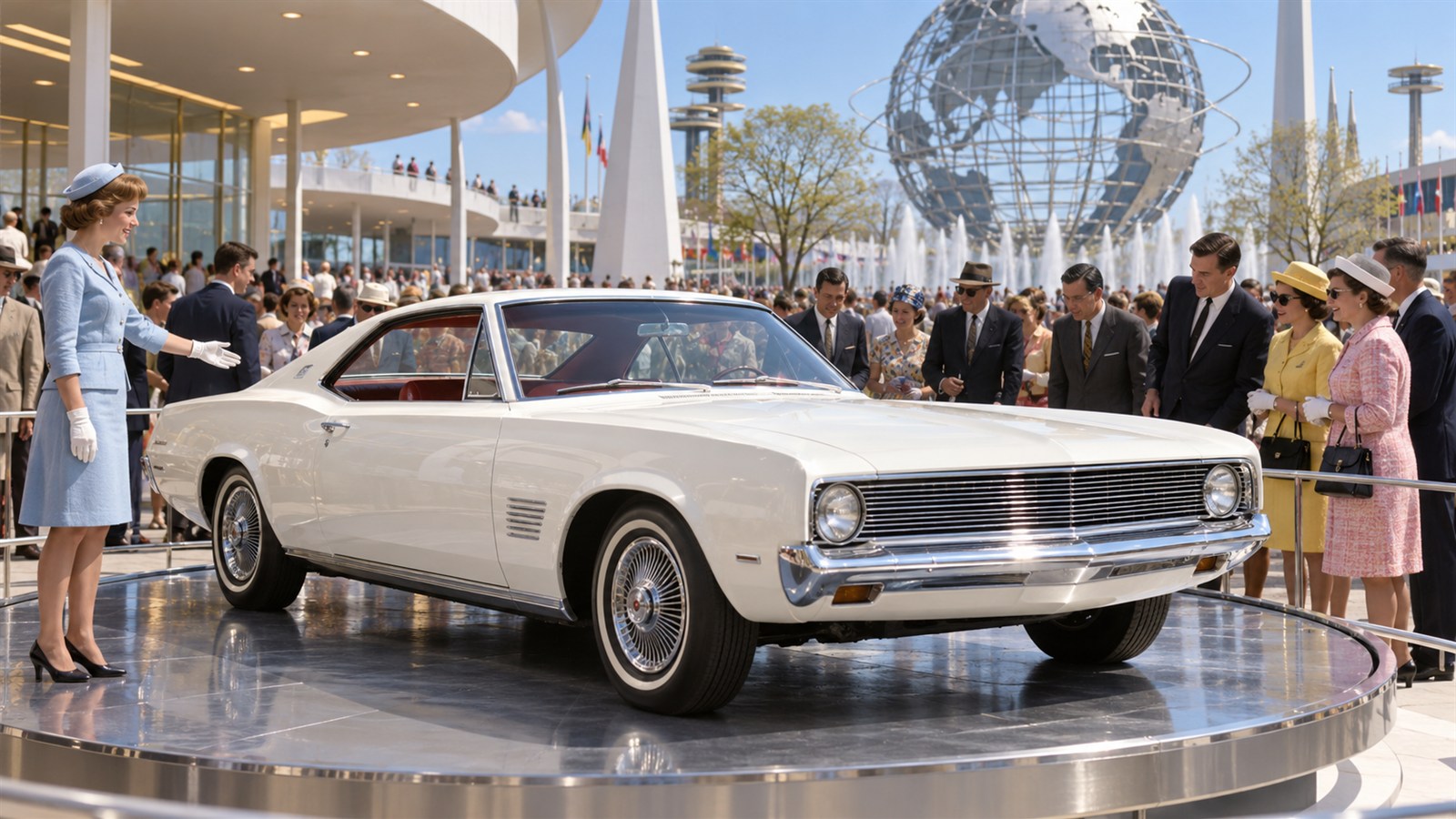
On April 17, 1964, Ford presented the Mustang to the public at the New York World's Fair and through dealerships across North America. The compact, sporty car used components from existing Ford models, allowing the company to offer dramatic styling without the cost of an entirely new mechanical platform. Buyers could choose engines, transmissions, interiors, and appearance packages, creating a vehicle that felt personal at a relatively accessible base price. Television advertising and simultaneous dealer events amplified the fair debut. Demand exceeded forecasts, and the Mustang quickly became one of the most successful new-car introductions in American history.
The product reflected research into younger buyers entering the market with rising incomes and different tastes from their parents. Ford executive Lee Iacocca and his team wanted a car that looked exciting, seated four, and could be profitable through options. Shared parts reduced development and manufacturing risk, while the long hood and short rear deck created a recognizable identity. The range of configurations broadened appeal: an economical commuter and a high-performance version could emerge from the same basic vehicle. Customization also increased transaction values as buyers added equipment beyond the advertised price.
Mustang sales created a new category commonly called the pony car, prompting competitors to introduce their own models. The car became embedded in film, music, racing, and advertising, giving Ford a cultural asset as well as a product line. Success still required factories and dealers to adjust rapidly to demand. Across later generations, changing fuel prices, safety and emissions rules, insurance costs, and consumer preferences forced the model to evolve. The brand survived because Ford preserved visual and emotional cues while altering technology and performance for new eras.
The debut demonstrates how a company can innovate through recombination. Ford did not need every component to be novel; it created value by assembling proven parts into a distinctive package and surrounding it with powerful distribution and promotion. Modular options let customers participate in defining the product while improving margins for the manufacturer and dealers. The World's Fair supplied spectacle, but nationwide availability converted attention into sales. April 17 marks a launch in which design, operational reuse, media, and channel coordination worked together to create an enduring automotive franchise. Dealers were crucial to the launch because national advertising created demand that had to be answered locally. Displays, demonstration drives, financing, trade-ins, service, and inventory determined whether excitement became a completed purchase. Ford synchronized factories, media, and independent retail operators around one date. The result shows that a launch is a supply-chain event, not merely a marketing announcement. A memorable product disappoints customers if the channel cannot deliver it while attention is highest.
Ford research identified younger households that wanted style and performance but could not necessarily afford an expensive sports car.
Using existing mechanical components controlled costs while a new body and extensive options created a distinctive, customizable identity.
The Mustang debuted publicly on April 17, 1964, at the New York World's Fair and in a coordinated network of dealerships.
Demand surpassed forecasts, forcing rapid production response and demonstrating the value of converting mass publicity into immediate availability.
Competitors created rival pony cars, while media appearances and racing turned Mustang into a cultural and commercial brand.
Its launch shows how recombining proven assets with focused design can produce innovation without reinventing every underlying component.
Explore more of "On This Day ..."
Discover more events from the same date across news, politics, technology, sports, and other fields. Each link highlights significant moments that shaped history on different fronts.