

On This Day in Business: May 9, 1960
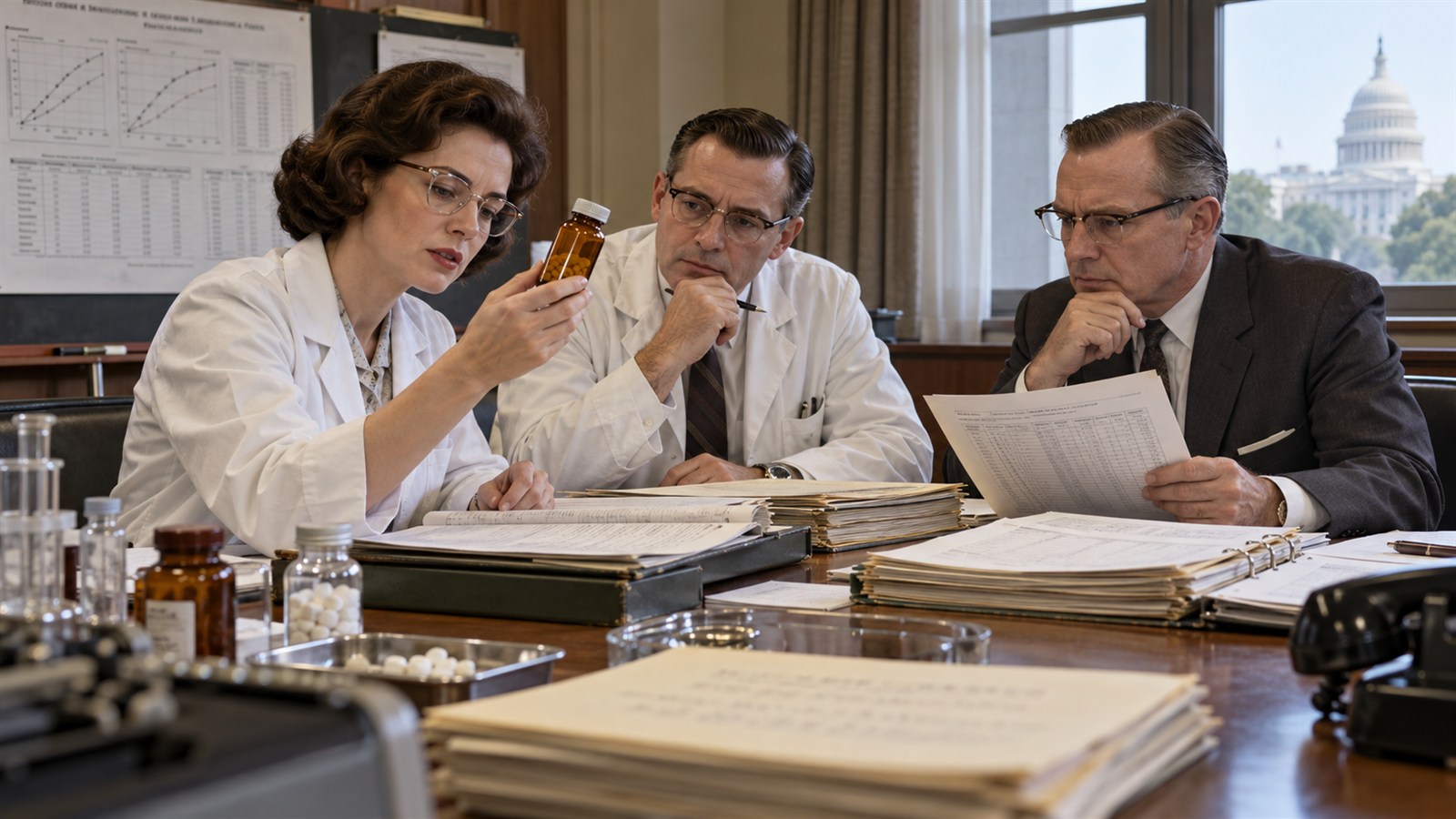
On May 9, 1960, the U.S. Food and Drug Administration approved G. D. Searle’s Enovid for use as an oral contraceptive. The drug had already been approved for certain menstrual disorders, but the new indication made it the first birth-control pill authorized in the United States. Its development joined biologist Gregory Pincus, physician John Rock, activist Margaret Sanger, and funder Katharine McCormick with clinical researchers and a pharmaceutical manufacturer. A daily prescription tablet offered women a highly effective method of preventing pregnancy that could be used independently of the immediate sexual act, changing health care, household planning, and consumer demand.
Commercialization depended on more than discovering active hormones. Researchers had to identify a workable dose, conduct trials, document results, obtain regulatory approval, manufacture consistent tablets, educate physicians, and create a schedule patients could follow. Some trials, including major work in Puerto Rico, involved vulnerable participants and consent practices that would not meet later standards. The high hormone doses used in early pills also produced side effects and elevated health risks. Those problems became part of the case for stronger clinical ethics, clearer warnings, post-market surveillance, and continuing reformulation.
Demand grew rapidly. The pill turned contraception into an ongoing relationship among patient, physician, pharmacy, manufacturer, and insurer. Calendar packaging and later lower-dose formulations improved routine use, while competitors entered the market. The product also became entangled with law, religion, and access. Court decisions removed restrictions for married and later unmarried users, but cost, medical gatekeeping, and political conflict continued to shape availability. Pharmaceutical companies gained a large recurring market, and reproductive health became a prominent arena in which regulation, personal autonomy, and commercial medicine met.
The approval matters because it shows how one medicine can alter both a market and the structure of everyday decisions. Reliable fertility control affected education, employment, marriage, and family timing, creating economic consequences far beyond drug sales. At the same time, the pill’s history warns against treating market adoption as proof that every development practice or dosage choice was sound. A durable health product requires evidence, informed consent, honest risk communication, and improvement after launch. Enovid opened a new category, but society determined its impact through physicians, courts, families, regulators, and patients whose experience pushed the technology toward safer and more accountable use. Packaging became a quiet operating innovation. A product taken daily over weeks depends on memory and correct sequencing, so calendar packs and patient instructions affected real-world performance. Pharmaceutical value is not contained in chemistry alone; it includes the design that helps people use the medicine safely and consistently. That principle now guides many long-term therapies.
Researchers, advocates, private funding, clinical sites, and G. D. Searle combined their capabilities to develop an oral contraceptive.
The FDA approved Enovid for contraception on May 9, 1960, creating the first authorized birth-control pill in the United States.
Manufacturing and prescribing converted a scientific result into a daily product supported by doctors, pharmacies, and packaging.
Early high doses and ethically troubling trials exposed risks that later strengthened standards for research and patient information.
Rapid adoption created a recurring pharmaceutical market while law and politics continued to govern access.
The pill’s largest economic effects came through changes in education, work, family timing, and control over long-term plans.
Explore more of "On This Day ..."
Discover more events from the same date across news, politics, technology, sports, and other fields. Each link highlights significant moments that shaped history on different fronts.