

On This Day in Business: May 13, 1986
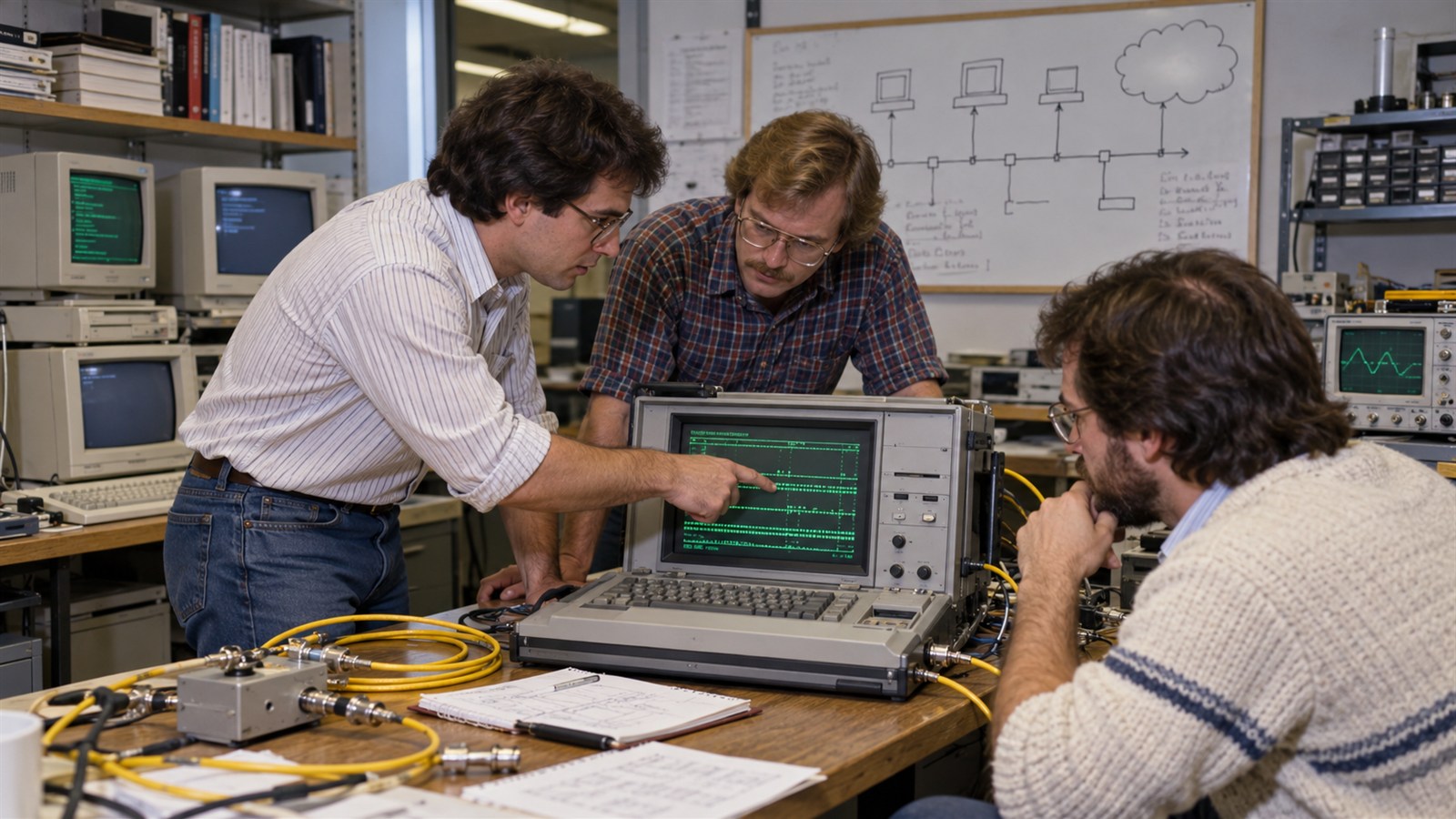
On May 13, 1986, Len Shustek and Harry Saal founded Network General Corporation in Menlo Park, California. The company’s first product, the Sniffer, helped technicians capture and analyze communications on local-area networks. Corporate computing was moving from isolated machines toward connected PCs, servers, printers, and specialized equipment. That connectivity created a new operational problem: when a network slowed or failed, administrators needed evidence about packets and protocols rather than guesses about individual devices. Network General built a business by making invisible traffic observable.
The Sniffer combined hardware and software in a portable diagnostic system that could attach to a network and display what was happening. Its value increased with network complexity. A small office might tolerate improvised troubleshooting, but a bank, manufacturer, or technology company could lose significant time when many users depended on shared applications. Protocol analyzers helped specialists locate malformed traffic, congestion, configuration mistakes, and failing equipment. The product therefore sold risk reduction and faster recovery, not merely technical data. Its name became so closely associated with the category that “sniffer” entered general networking vocabulary.
Network General expanded with the growth of Ethernet and enterprise networks. Selling to technical professionals required credible support, training, updates, and compatibility with evolving protocols. In 1997 the company merged with McAfee Associates to form Network Associates, linking network management with security software. The combination reflected a market in which performance and protection were increasingly connected, though the businesses later changed structure again. The original product’s legacy continued in packet-analysis tools used to diagnose systems, investigate incidents, and verify how applications behave on real networks.
The founding matters because infrastructure businesses often emerge one layer behind a visible technology boom. As companies bought connected computers, they also needed tools to monitor and repair the connections. Network General did not create the network; it created confidence that the network could be understood when it misbehaved. That position can be durable because every new protocol and application adds demand for visibility, even as it forces the diagnostic vendor to keep learning. The larger lesson is that complexity produces a secondary market for observation. Whenever a system becomes essential, customers will pay for instruments that convert hidden activity into evidence, shorten outages, and make specialists more effective. The brand also illustrates the double edge of category language. When customers used 'sniffer' generically, the product gained extraordinary awareness, yet a company must prevent its trademark from losing distinctiveness. Technical vendors need terminology that users remember while still protecting the legal identity that competitors cannot freely claim. Adoption and ownership must be managed together.
Local-area networks connected growing numbers of business computers while making failures harder to isolate.
Len Shustek and Harry Saal founded Network General in Menlo Park on May 13, 1986.
The Sniffer captured packet traffic and gave administrators evidence about protocols, errors, and congestion.
Customers bought faster diagnosis and reduced downtime rather than raw technical information alone.
Support, training, and continual protocol updates became essential parts of the product as networks evolved.
The company demonstrated that widespread infrastructure creates a valuable market for tools that make hidden behavior visible.
Explore more of "On This Day ..."
Discover more events from the same date across news, politics, technology, sports, and other fields. Each link highlights significant moments that shaped history on different fronts.