

On This Day in Business: May 24, 1883
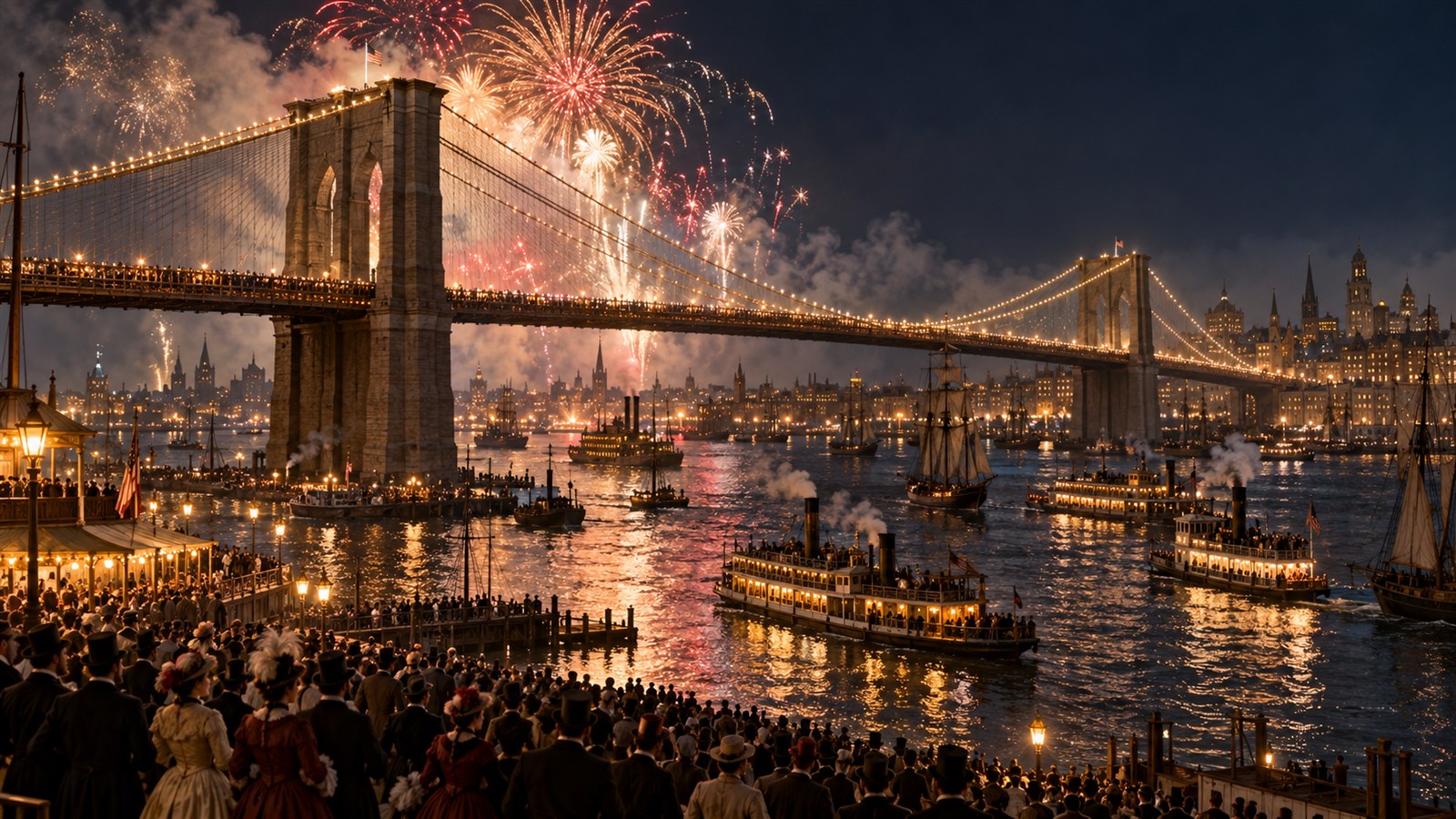
On May 24, 1883, the New York and Brooklyn Bridge opened across the East River with ceremonies, fireworks, and enormous public interest. The suspension bridge created the first fixed connection between the cities of New York and Brooklyn, then separate municipalities. At completion, its central span was the longest suspension span in the world. Pedestrians, carriages, and elevated railway trains would share the structure, turning a difficult ferry crossing into dependable infrastructure. The bridge immediately became both a transportation business and a symbol of engineering ambition.
The project took fourteen years and survived extraordinary challenges. Designer John A. Roebling died before major construction began; his son Washington Roebling became chief engineer but was disabled by decompression sickness after work in the pressurized caissons. Emily Warren Roebling served as an essential intermediary, studying technical matters and carrying instructions between her husband and the site. Workers excavated foundations beneath the river, raised granite towers, spun steel-wire cables, and managed risks that were not fully understood. Delays, deaths, political controversy, and cost increases tested the project’s legitimacy.
Once open, the bridge changed patterns of land value, commuting, freight, and retail activity. Tolls and transit use helped finance operations, while reliable access encouraged Brooklyn’s growth and contributed to the closer integration of the two cities. The bridge also had to earn public confidence. A deadly stampede days after opening showed that crowd management and trust mattered alongside structural strength. Over time, traffic changed from horses and rail cars to automobiles, bicycles, and walkers, requiring continuing maintenance and adaptation rather than a one-time engineering victory.
The opening matters because infrastructure creates value through the connections it makes possible. The bridge shortened and stabilized movement between two labor and consumer markets, influencing where people could live, work, and invest. Its construction also demonstrates that large projects depend on institutional continuity when individual leaders are lost or incapacitated. Financing, technical knowledge, political support, and public confidence had to survive for more than a decade before revenue began. The Brooklyn Bridge became durable not because it remained unchanged, but because successive operators preserved its core function while adapting the deck and rules to new users. Capacity also changed behavior before congestion returned. Easier crossing encouraged more trips and development, eventually filling the new route with demand its builders could not have observed. This is a recurring infrastructure pattern: relieving one constraint changes location choices and creates new traffic. Operators must plan for induced demand and preserve options to manage a successful asset.
Ferries carried people and goods across the East River, but weather and capacity limited dependable movement.
The Roebling family’s design used stone towers, steel wire, and a record-setting suspension span.
Fourteen years of construction involved dangerous caisson work, technical setbacks, deaths, and political scrutiny.
The bridge opened on May 24, 1883, with public ceremonies and a large fireworks display.
Fixed access changed commuting, trade, development, and land values between New York and Brooklyn.
Its long life reflects continuous maintenance and adaptation as transportation shifted from horses and trains to modern traffic.
Explore more of "On This Day ..."
Discover more events from the same date across news, politics, technology, sports, and other fields. Each link highlights significant moments that shaped history on different fronts.