

On This Day in Business: June 3, 1900
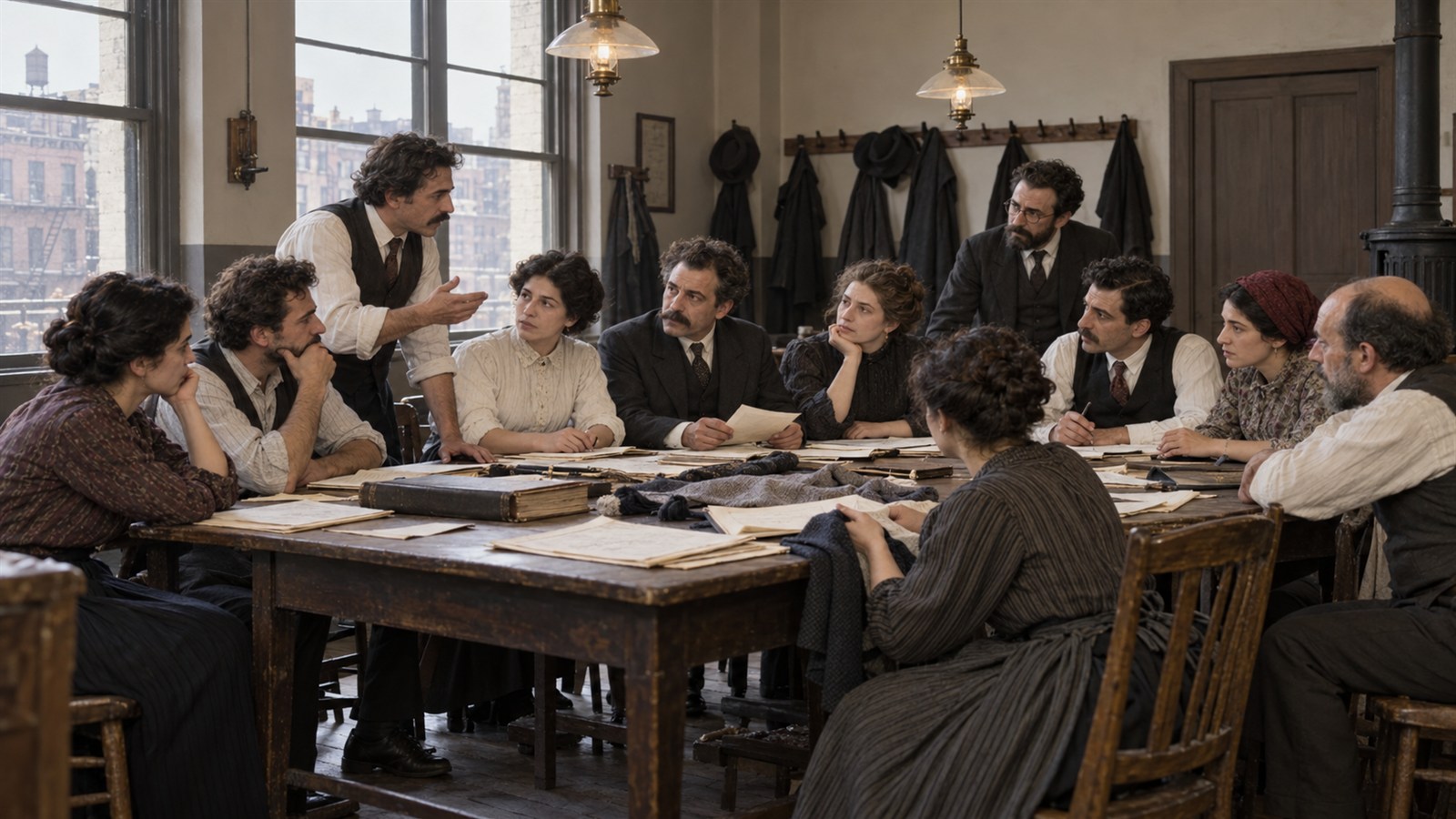
On June 3, 1900, eleven delegates met at the Labor Lyceum on East Fourth Street in New York City and formed the International Ladies' Garment Workers' Union. They represented local unions in New York, Philadelphia, Baltimore, and Newark with roughly 2,000 members in the women's clothing trade. The delegates believed that local organizations could not effectively confront an industry whose contractors, workshops, and labor supply extended across city lines. They chose Herman Grossman as president, Bernard Braff as secretary-treasurer, and affiliation with the American Federation of Labor. The new union created a national institution for workers facing long hours, low pay, seasonal unemployment, and unstable shop conditions.
Garment production was organized through layers of manufacturers, contractors, and small shops. That structure allowed brands and wholesalers to shift orders when costs rose, while workers carried much of the risk when fashion seasons changed. Many employees were recent immigrants and women had limited influence in established labor organizations. A federation could coordinate strikes, collect dues, negotiate common standards, and support members across separate workplaces. It also adopted a union label, an early attempt to let buyers identify goods made under union conditions. The label connected shop-floor bargaining to consumer reputation, making working conditions part of the product's public identity.
Growth was neither immediate nor orderly. The ILGWU faced internal political disputes, employer resistance, failed actions, and high turnover. Large strikes in 1909 and 1910 later demonstrated the leverage available when thousands of workers acted together. The Triangle Shirtwaist Factory fire in 1911 exposed the human cost of unsafe production and accelerated demands for factory regulation. Over time, the union negotiated wages and hours, supported health and educational programs, and developed sophisticated relationships with employers and government. Those activities made it more than a strike organization; it became an institution that supplied services, information, and stability within a volatile industry.
The founding matters to business history because labor markets are part of every operating model. Low prices and rapid production can conceal costs borne by workers until accidents, turnover, strikes, or public outrage reveal them. Collective bargaining changes how those costs are measured and divided, while labels and campaigns allow consumers to judge the conditions behind a product. The ILGWU also showed that fragmented workers can build countervailing scale against fragmented employers by coordinating across locations. Modern apparel supply chains span continents rather than neighboring cities, but the central management question remains familiar: sustainable production depends on standards that travel with the work, not only on the price quoted by the next contractor.
Eleven delegates represented about 2,000 garment workers from four major eastern cities at the founding convention.
They formed a national union because local groups struggled against an industry able to move orders between contractors and cities.
Collective dues, coordinated action, and a union label gave workers tools that individual shops could not sustain alone.
Internal disputes and employer resistance slowed early growth, but mass strikes later demonstrated the value of coordinated scale.
The union expanded into education, health services, research, and long-term bargaining over wages and workplace standards.
Its history shows that labor conditions, supply-chain structure, product reputation, and business continuity are tightly connected.
Explore more of "On This Day ..."
Discover more events from the same date across news, politics, technology, sports, and other fields. Each link highlights significant moments that shaped history on different fronts.