

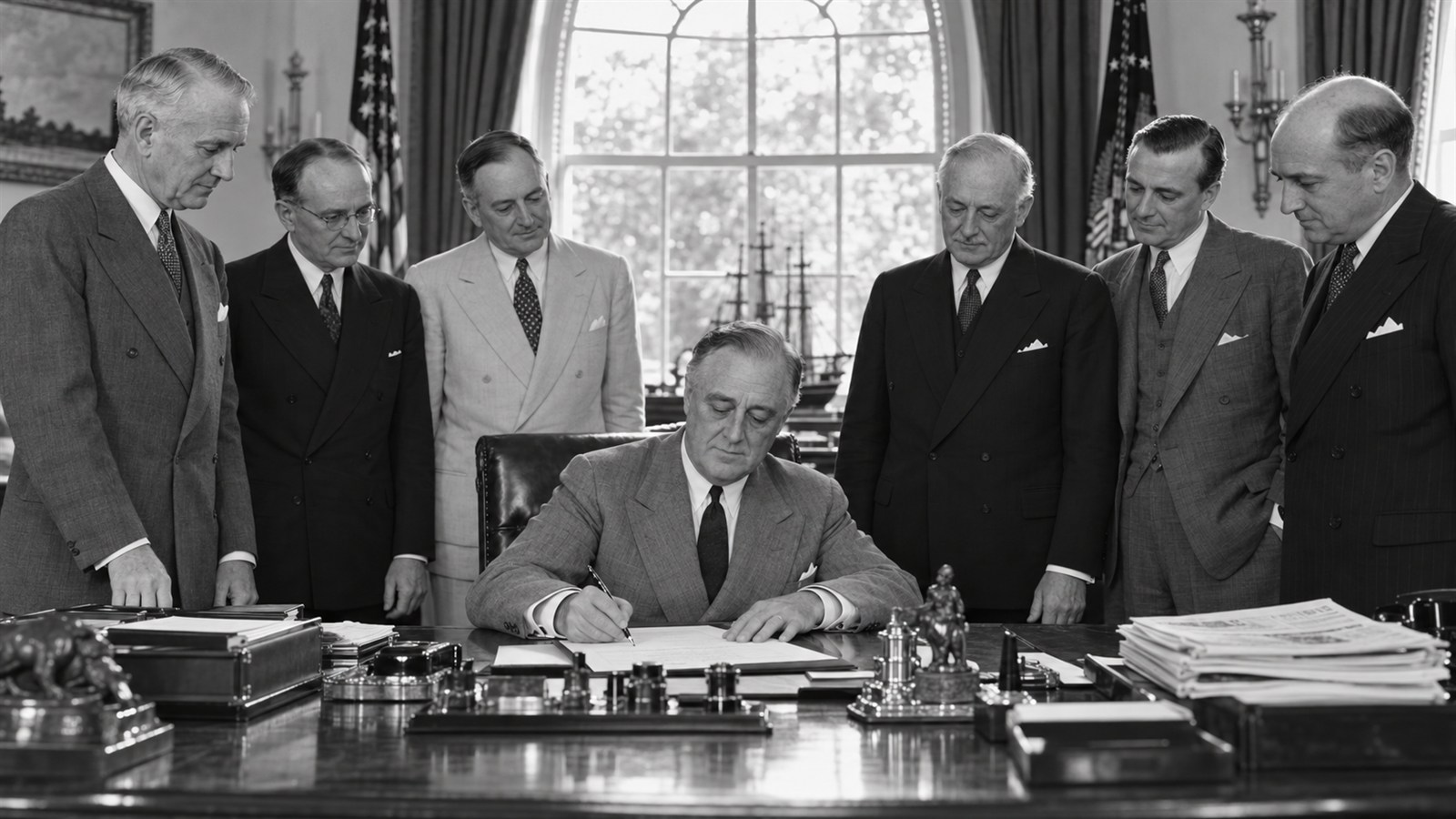
On This Day in Business: June 6, 1934
On June 6, 1934, President Franklin D. Roosevelt signed the Securities Exchange Act, creating the Securities and Exchange Commission and establishing federal oversight of securities trading. The law followed the market crash of 1929, the Great Depression, and congressional investigations that exposed manipulation, conflicts, and weak disclosure in financial markets. The Securities Act of 1933 had focused on new offerings. The 1934 measure addressed exchanges, brokers, dealers, ongoing reporting by public companies, and practices in the secondary market. It gave a permanent agency authority to write rules, require information, investigate misconduct, and discipline regulated firms.
The act treated confidence as infrastructure. Markets cannot efficiently connect savings with businesses when investors believe prices are manipulated or material facts are hidden. Registration and reporting requirements made issuers responsible for recurring public information, while rules for exchanges and intermediaries created clearer operating obligations. The commission did not guarantee investment success or eliminate speculation. Instead, its framework aimed to improve the quality and availability of information and to deter conduct that made participation unfair. That distinction mattered commercially: risk could remain, but the process for evaluating and trading it needed rules that participants broadly trusted.
Implementation required expertise as well as statutes. The SEC had to recruit lawyers, accountants, economists, and examiners, define reporting forms, supervise self-regulatory organizations, and enforce new standards against established market practices. Public companies incurred compliance costs, yet standardized disclosure also reduced the effort required for investors to compare firms. Brokers and exchanges gained a federal referee whose presence could strengthen confidence beyond any single institution's reputation. Over subsequent decades, amendments, court decisions, technology, and new products expanded the regulatory system, but periodic reporting and federal market oversight remained central features of American public finance.
The June signing matters because regulation can enlarge a market when it supplies credible common rules. Individual firms may prefer less disclosure, but a system in which every participant doubts the others can drive capital away or demand a higher price for uncertainty. The Exchange Act shifted part of market trust from private relationships to auditable information and accountable institutions. That tradeoff remains visible in modern debates about cost, innovation, and investor protection. The durable management lesson is that transparency is not merely a legal burden. When standards are understandable and consistently enforced, they can become shared commercial infrastructure that helps strangers transact at scale. The framework also made record quality a management issue. Incomplete ownership, transaction, or financial data could undermine enforcement and investor decisions even when a rule existed on paper. Reliable markets therefore depend on institutions that collect comparable information, preserve audit trails, and correct errors before confidence is lost.
The 1929 crash and subsequent investigations revealed manipulation, hidden conflicts, and inadequate public-company information.
The June 6 law created the SEC and extended federal oversight from securities offerings into secondary trading markets.
Exchanges, brokers, dealers, and public issuers received continuing registration, reporting, and conduct obligations.
The framework sought to improve information and deter abuse without promising that investments would be safe or profitable.
Standardized disclosure imposed compliance costs but also made companies easier for distant investors to compare.
The act shows how enforceable common rules can convert trust from a private advantage into infrastructure for a larger market.
Explore more of "On This Day ..."
Discover more events from the same date across news, politics, technology, sports, and other fields. Each link highlights significant moments that shaped history on different fronts.