

On This Day in Business: June 16, 1903
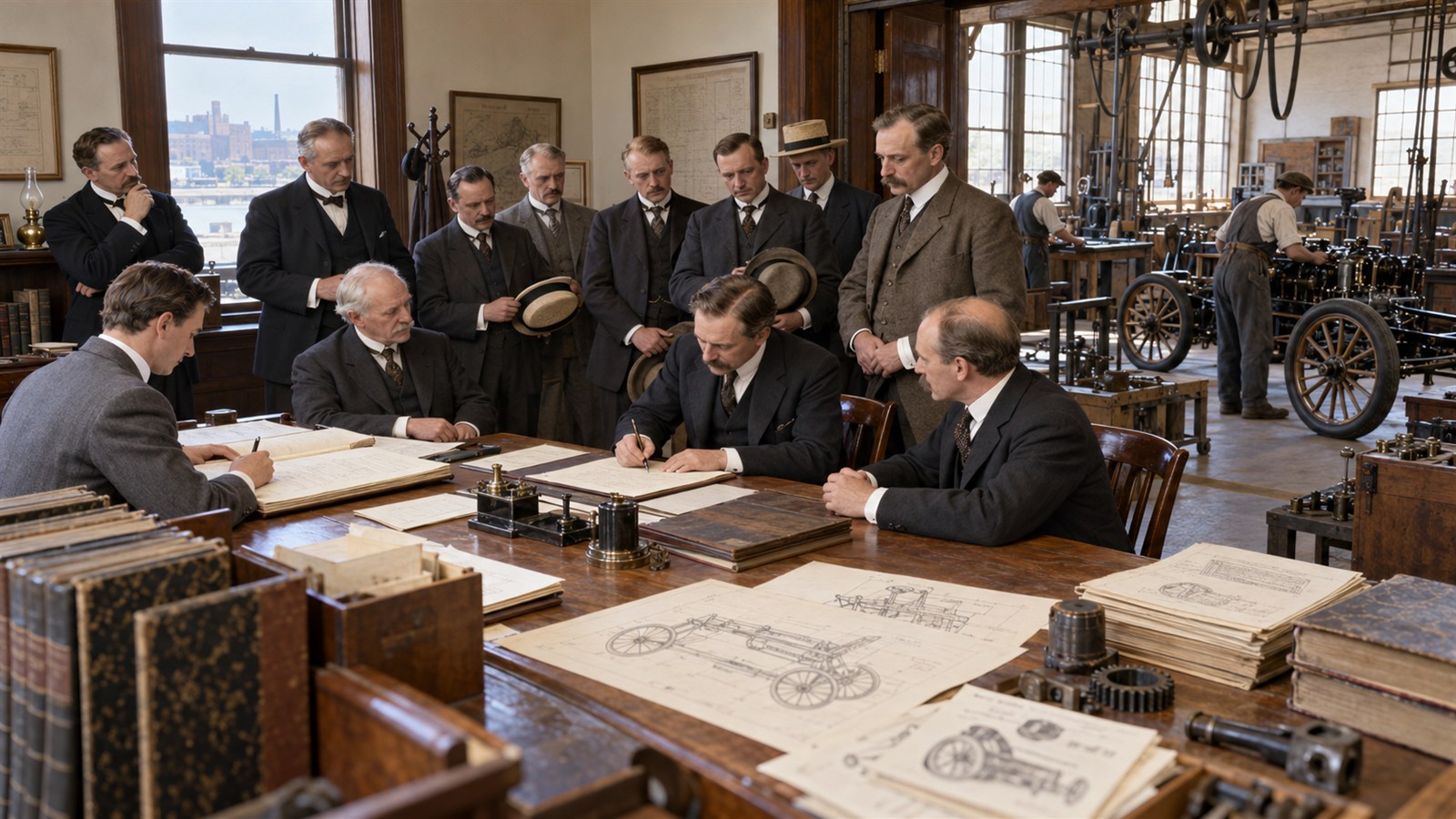
On June 16, 1903, Henry Ford and a group of investors incorporated Ford Motor Company in Michigan. Twelve stockholders committed $28,000 to the venture, providing capital, business relationships, and manufacturing experience. Ford had already built experimental cars, raced successfully, and participated in two automobile companies that did not meet his goals. The new articles defined a corporation capable of manufacturing and selling motor vehicles rather than another temporary workshop partnership. Henry Ford was not initially president, and his ownership was only part of the total. The company's survival depended on converting his product ideas into an organization that could buy parts, assemble cars, collect cash, and deliver reliably.
Early Ford operated from a rented Detroit building and relied heavily on outside suppliers. Components arrived for assembly into the Model A, with cash flow tight enough that the first customer orders mattered immediately. That network reduced the need to own every production process at the start, but it increased dependence on coordination and quality. The company earned revenue, introduced successive models, and learned which designs attracted a broad market. Ford favored simpler, lighter, more affordable cars, while some investors expected premium products. The disagreement was strategic: it concerned whether automobiles would remain luxury goods or become practical transportation for many households.
The Model T, introduced in 1908, resolved that direction by combining a durable design with expanding volume. Later, the moving assembly line reduced labor time per vehicle and supported lower prices, while standardized parts and vertical integration reshaped the supply system. Dealers, service, roads, fuel, consumer credit, and a growing wage economy all contributed to mass ownership. The 1903 corporation supplied the legal and financial container in which those capabilities accumulated. It also survived conflicts among founders and eventually concentrated control in the Ford family, illustrating how governance can change as a venture moves from uncertain startup to dominant manufacturer.
The incorporation matters because a founder's technical vision becomes economically powerful only through complementary people and structures. Investors contributed more than money; suppliers, managers, dealers, and workers turned designs into repeatable transactions. Ford's earlier failures became useful because they clarified control, product position, and manufacturing priorities. Modern entrepreneurs often celebrate the breakthrough product, yet incorporation marks a different invention: an organization designed to survive beyond one prototype or individual agreement. Ford Motor Company's later scale was not present in the June papers, but those papers aligned capital and authority around a specific attempt to build practical cars. The factory system came afterward; the durable enterprise began here.
Twelve stockholders committed $28,000 to create a Michigan corporation capable of manufacturing and selling automobiles.
Ford brought prototype and racing experience, while partners added capital, supplier relationships, management, and legal structure.
The first operation used a rented building and many outside components, making cash flow and coordination immediate concerns.
Successive models helped the company learn whether the larger opportunity lay in luxury machines or affordable practical transport.
The Model T, assembly methods, dealers, service, and a broader supply system later transformed the small venture into mass manufacturing.
Incorporation created the durable container in which product knowledge, capital, governance, and operating capabilities could accumulate.
Explore more of "On This Day ..."
Discover more events from the same date across news, politics, technology, sports, and other fields. Each link highlights significant moments that shaped history on different fronts.