

On This Day in Business: June 19, 1978
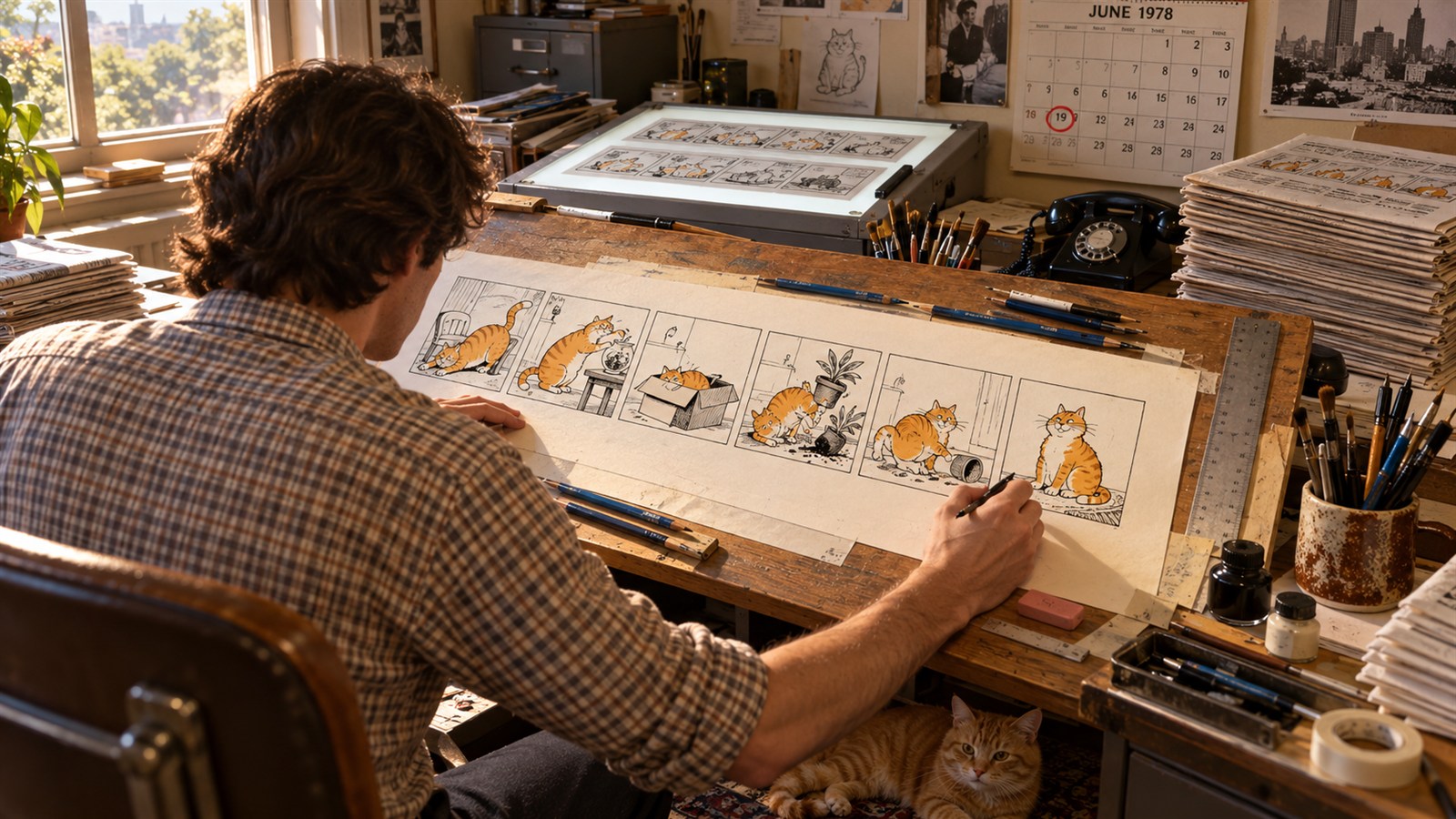
On June 19, 1978, Garfield made his national newspaper debut in 41 papers through United Feature Syndicate. Cartoonist Jim Davis introduced Jon Arbuckle and his heavy, sarcastic cat in a simple strip that established the relationship immediately. Davis had previously created a comic about an insect but concluded that newspaper readers had many popular dogs and no major cat character to match them. He shaped Garfield around recognizable habits—eating, sleeping, avoiding effort, and commenting dryly on human behavior. The launch placed one daily creative product into dozens of local markets at once and began a franchise that would reach far beyond the comics page.
Syndication gave cartoonists unusual scale. A central distributor sold the same strip to many newspapers, handled contracts and delivery, and shared revenue with the creator. Each additional paper expanded reach without requiring Davis to redraw the feature for a new city. The daily schedule demanded reliable production and a format that worked within narrow space and short reading time. Garfield's domestic setting and limited cast made the humor easy to understand across regions. The cat's expressive silhouette and repeatable traits also translated well to merchandise, an opportunity Davis considered as the audience grew.
The franchise expanded into paperback collections, television specials, animation, toys, greeting cards, clothing, food promotions, and films. Davis established a company to manage licensing and production, allowing greater control over how the character appeared. That infrastructure mattered because widespread licensing can generate revenue while weakening a brand if products become inconsistent or excessive. The comic remained the recurring source material and kept the audience connected to Garfield's personality. By anchoring new formats in familiar behavior, the business could diversify without requiring the character to become someone different for every partner.
The debut matters because a small creative asset can become a global enterprise when its form is repeatable, distributable, and easy to recognize. Syndication separated creation from local sales, while licensing separated audience reach from the economics of one newspaper placement. Both systems required quality control and dependable output. Garfield's commercial success is sometimes attributed to calculated merchandising, but merchandise worked because the character expressed ordinary impulses with uncommon clarity. The broader lesson is that scale magnifies identity; it does not substitute for it. A franchise can enter many categories when customers still recognize the same emotional promise at the center of each product. Daily publication also created a compounding archive. Collections repackaged past strips for bookstores, while television and film teams could draw on established jokes and relationships. Consistent small outputs accumulated into a library with resale and adaptation value, making schedule discipline a form of asset creation.
Garfield debuted through United Feature Syndicate in 41 newspapers on June 19, 1978 with Jon Arbuckle beside him.
A cat defined by appetite, sleep, resistance, and dry commentary offered readers a simple and widely recognizable personality.
Syndication let one daily strip reach many local markets while a distributor handled newspaper sales, delivery, and contracts.
Reliable production, tight space, clear silhouettes, and a limited cast made the feature practical for daily publication.
Books, television, animation, toys, apparel, promotions, and films expanded revenue under a dedicated licensing organization.
Garfield shows that distribution and licensing magnify a strong identity, but cannot replace the character consistency audiences value.
Explore more of "On This Day ..."
Discover more events from the same date across news, politics, technology, sports, and other fields. Each link highlights significant moments that shaped history on different fronts.