

On This Day in Business: June 29, 2007
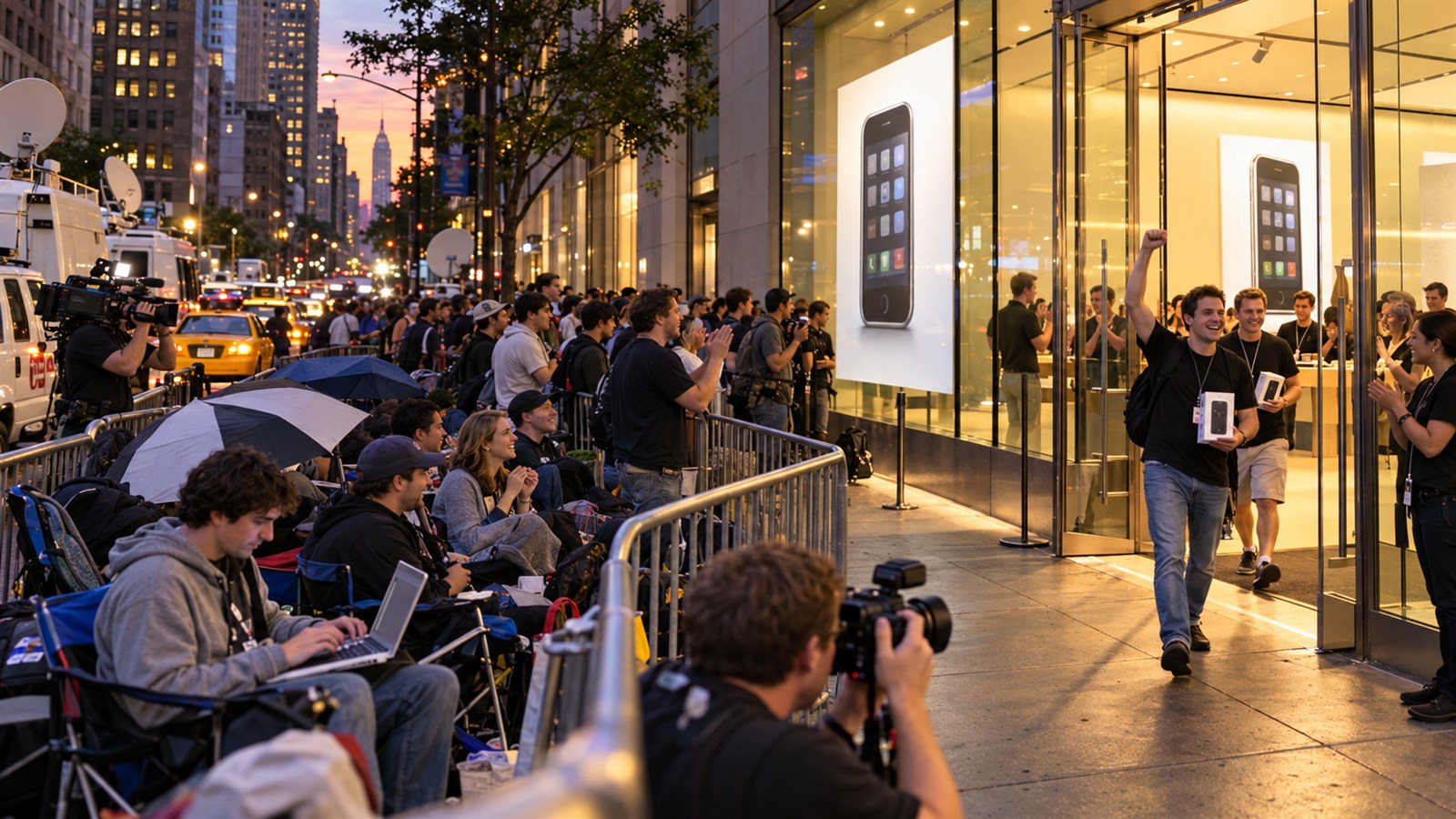
On June 29, 2007, Apple began selling the first iPhone in the United States at 6 p.m. local time. Customers lined up outside Apple and AT&T stores to buy a device that combined a mobile phone, widescreen music player, and web communicator behind a multi-touch display. The 4-gigabyte model cost $499 and the 8-gigabyte version $599 with a two-year service agreement. Apple had introduced the product in January, giving the company and its exclusive carrier months to build anticipation, prepare stores, train employees, and explain an interface that removed the physical keyboard familiar to smartphone users.
The product proposition rested on integration. Apple controlled the hardware, operating system, industrial design, desktop synchronization, and retail demonstration, while AT&T supplied the cellular network and customer contracts. The full web browser, visual voicemail, music functions, sensors, and touch gestures made the device feel less like a collection of features than a small general-purpose computer. That coherence came with constraints: the first model used a slower network, lacked many later capabilities, and limited software to Apple's built-in applications and web experiences. Even so, direct manipulation with fingers changed customer expectations for mobile interfaces.
A year later, the App Store turned the iPhone into a platform for outside developers, expanding its uses and creating new businesses. Hardware sales, carrier economics, application distribution, services, accessories, and developer tools reinforced one another. Competitors adopted large touchscreens and richer mobile operating systems, accelerating the smartphone market. The device also disrupted cameras, music players, maps, media, advertising, and many local services by placing a connected computer in consumers' pockets. That reach brought concerns about privacy, platform control, labor, distraction, repairability, and dependence alongside commercial opportunity.
The launch matters because a category can change when a company redesigns the whole interaction rather than improving one specification. Apple did not invent every component, but it coordinated touch input, software, media, networking, and retail into an experience customers could understand within minutes. The long preview period and controlled store launch converted novelty into desire, while later developer participation multiplied value beyond the original feature list. Modern platform builders should notice both sides: integration can make adoption simple, and gatekeeping can give one company great power over participants. The first iPhone's business legacy is an ecosystem in which hardware is the entry point to continuing relationships, transactions, and rules. Retail theater lowered perceived risk. Employees demonstrated gestures, buyers opened boxes together, and news coverage showed real people using the unfamiliar device. For products that ask customers to abandon established habits, guided first use can be as important as the advertising that brought them to the door.
Apple and AT&T stores began selling the first iPhone at 6 p.m. on June 29, 2007 after months of anticipation.
The device combined phone, music, web, and touch interaction in a coherent design without a physical keyboard.
Hardware, operating system, synchronization, retail demonstrations, carrier service, and contracts were coordinated as one launch.
Early limits included a slower network, missing later features, and no native third-party application store at release.
The App Store later converted the device into a platform and spread disruption across many established product categories.
The iPhone shows how integration can simplify adoption while giving the platform owner continuing economic and governance power.
Explore more of "On This Day ..."
Discover more events from the same date across news, politics, technology, sports, and other fields. Each link highlights significant moments that shaped history on different fronts.