

On This Day in Business: July 1, 1979
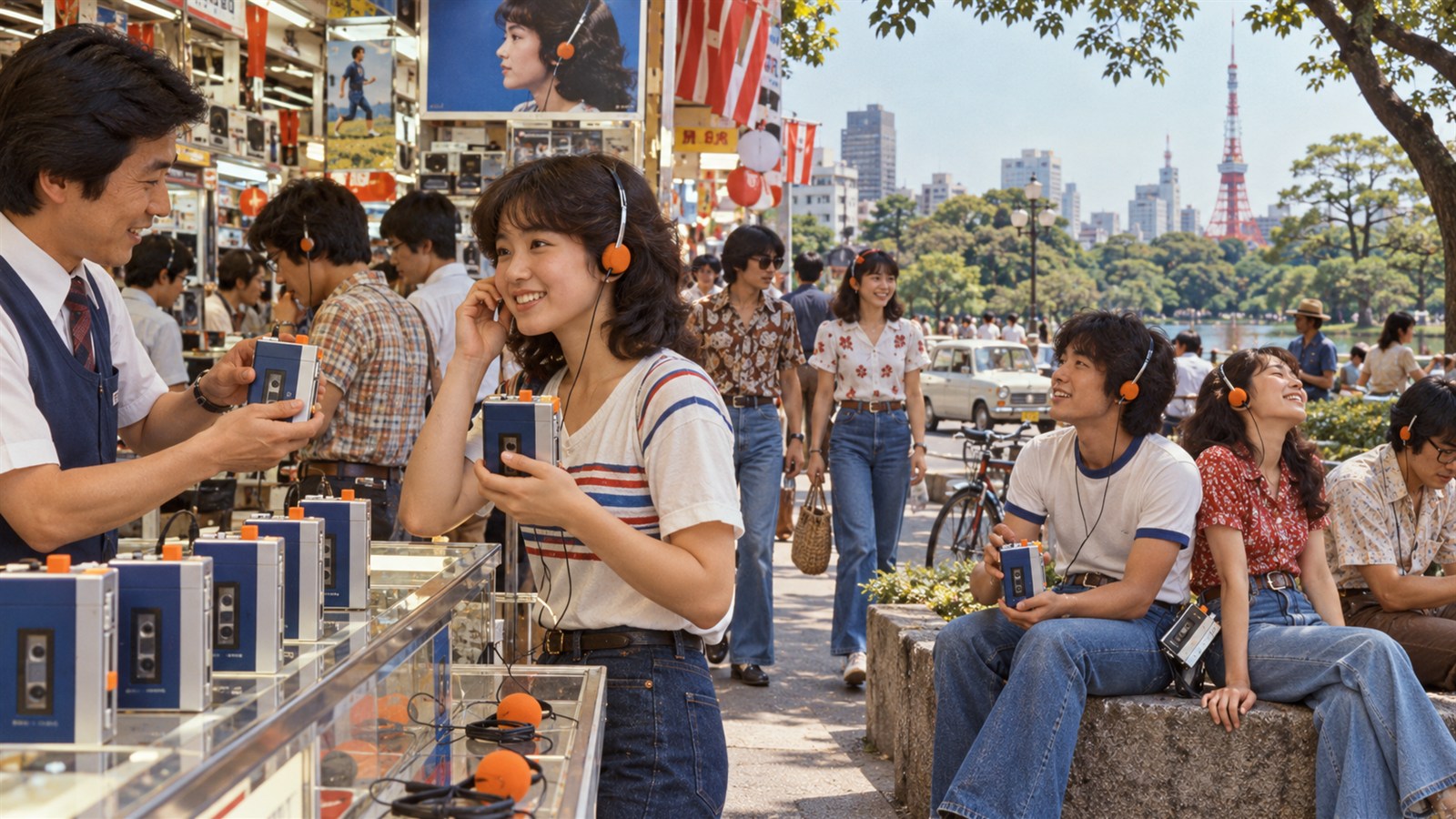
On July 1, 1979, Sony placed the TPS-L2 portable cassette player on sale in Japan. The compact blue-and-silver machine came with lightweight headphones and was designed for listening rather than recording. Sony cofounder Masaru Ibuka had wanted a small stereo device for music during travel, and engineer Nobutoshi Kihara adapted the company's Pressman recorder into a playback-only product. The result initially looked risky: it lacked a speaker, used an unfamiliar name, and entered a market that retailers were not sure existed. Sony priced it at 33,000 yen and prepared a modest first production run while employees demonstrated it to journalists and young consumers outdoors.
The launch strategy made the experience easier to understand. Instead of relying only on specifications, Sony staff let people wear the headphones and move freely while music continued. The original player even included two headphone sockets and a button that lowered the music so two listeners could speak. Those choices framed private listening as social and mobile rather than isolating. Early sales were slow, but word of mouth and street-level demonstrations helped the first batch sell out. Sony soon adapted the name for export markets and increased production as demand spread far beyond Japan.
The Walkman changed the economics of recorded music by creating more listening occasions. Commuting, exercise, travel, and waiting became potential consumption time, while cassette sales benefited from a device people could carry all day. Competitors entered with their own portable players, and accessories, blank tapes, batteries, and headphones formed a wider ecosystem. The product also altered industrial design expectations. Consumers accepted smaller controls and fewer features in exchange for light weight, reliability, and freedom from a fixed stereo system. Sony continued refining size, battery life, and styling across hundreds of models.
The July launch matters because it shows that a new category can emerge from subtracting functions. Sony removed recording and the built-in speaker, then concentrated value in portability and personal use. The company also marketed a behavior, not merely a machine: music could accompany movement through everyday life. That insight outlasted the cassette format and carried into compact discs, digital players, and smartphones. The Walkman became a global brand because hardware, content, and a clearly demonstrated use case reinforced one another. Its commercial lesson remains direct: a focused product can expand a market when it frees an existing activity from the place where customers once had to do it. The commercial success also reshaped public space. Headphones allowed people to create a private soundtrack while remaining physically present on streets, trains, and campuses. That behavior prompted both enthusiasm and criticism, but it made personal electronics visible to other potential buyers. Every user became a moving demonstration of the category, lowering the cost of explaining what the product did.
Sony adapted a compact recorder into a stereo playback device built for travel and personal listening.
The TPS-L2 went on sale in Japan on July 1, 1979, at 33,000 yen with lightweight headphones.
Outdoor demonstrations let customers experience mobility instead of judging the unfamiliar product by specifications alone.
Demand accelerated after a slow start, forcing Sony to expand production and prepare versions for overseas markets.
Portable listening created new occasions for music and supported markets for tapes, batteries, headphones, and accessories.
The Walkman showed that removing features can create a stronger product when the remaining benefit is clear and liberating.
Explore more of "On This Day ..."
Discover more events from the same date across news, politics, technology, sports, and other fields. Each link highlights significant moments that shaped history on different fronts.