

On This Day in Business: July 26, 1775
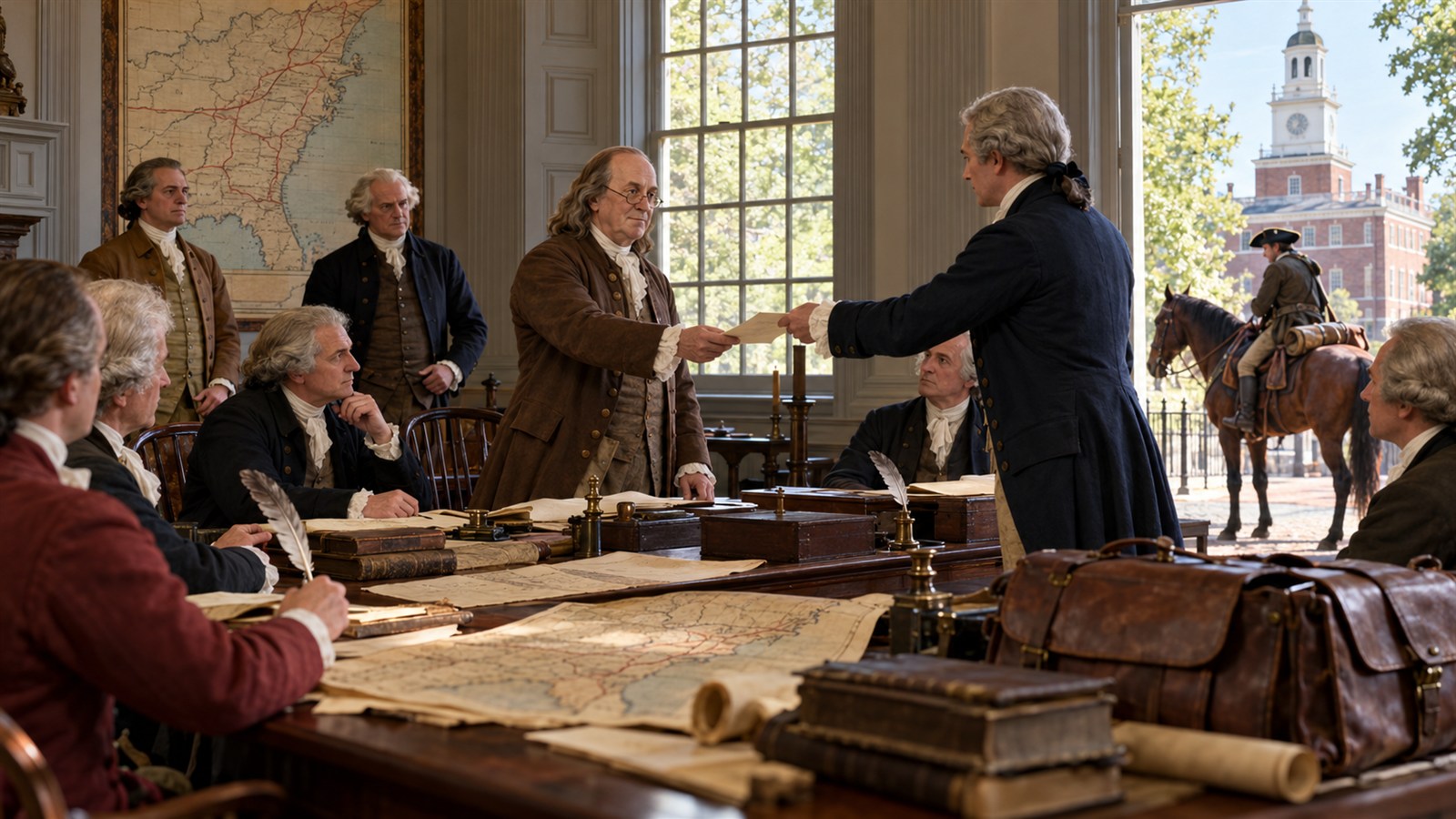
On July 26, 1775, the Second Continental Congress established a postal system for the united colonies and appointed Benjamin Franklin as postmaster general. War had made dependable communication among Congress, military leaders, local committees, and citizens urgent. The new organization built on existing colonial routes and Franklin's earlier postal experience. It authorized offices, riders, schedules, and rates under continental rather than British control, giving the revolutionary government a communications network of its own.
A postal system is a coordination business. Individual letters have little value if collection, sorting, transport, handoff, and delivery are unreliable. Routes must connect, postmasters must account for money, riders need horses and safe roads, and customers need predictable charges. Scale improves the network because a common route can carry many messages and newspapers. The early service also had strategic importance: information could shape military decisions, commerce, political legitimacy, and public opinion.
After independence, the postal system became a permanent national institution. The Constitution empowered Congress to establish post offices and post roads, and later laws expanded routes and administrative structure. Mail service supported newspapers, financial documents, catalogs, orders, and personal correspondence as settlement moved west. Railroads, steamships, rural free delivery, parcel post, trucks, aircraft, automation, and digital tracking repeatedly changed operations while preserving the basic obligation to connect addresses across the country.
The July resolution matters because communications infrastructure can be both a public service and a platform for commerce. Merchants could trade at greater distance when prices, bills, orders, and payments moved predictably. Publishers reached readers, and citizens participated in political debate across a large territory. Universal reach is expensive, especially where routes are long and volume is low, so postal policy continually balances access, price, competition, and public purpose. The founding decision recognized that a nation and a market both depend on channels people trust to carry information. Postal access also supported small enterprises that could not maintain private couriers. A common service pooled transportation costs across many users and routes, letting a merchant send an invoice or catalog for a predictable fee. That inclusiveness expanded the number of firms able to trade at distance. It also made service reliability an economic obligation, not merely an administrative convenience. Mail volume, however, could strain the same network that volume made economical. Growing populations and new territories required larger facilities, clearer addressing, better schedules, and more transport contracts. The service had to standardize while remaining adaptable to local geography. Its long history is therefore one of repeated redesign around a stable promise of connection.
Revolutionary leaders needed a communications network independent of British postal control.
The Continental Congress created a postal system on July 26, 1775, and appointed Benjamin Franklin postmaster general.
Offices, riders, routes, schedules, rates, sorting, handoffs, and accounting turned separate deliveries into a network.
The service carried military, political, commercial, newspaper, and personal information across the colonies.
Later roads, rail, rural delivery, parcel service, aircraft, automation, and tracking extended the same public mission.
The decision shows how dependable communication infrastructure supports government, trade, media, and national cohesion.
Explore more of "On This Day ..."
Discover more events from the same date across news, politics, technology, sports, and other fields. Each link highlights significant moments that shaped history on different fronts.