

On This Day in Business: August 9, 1991
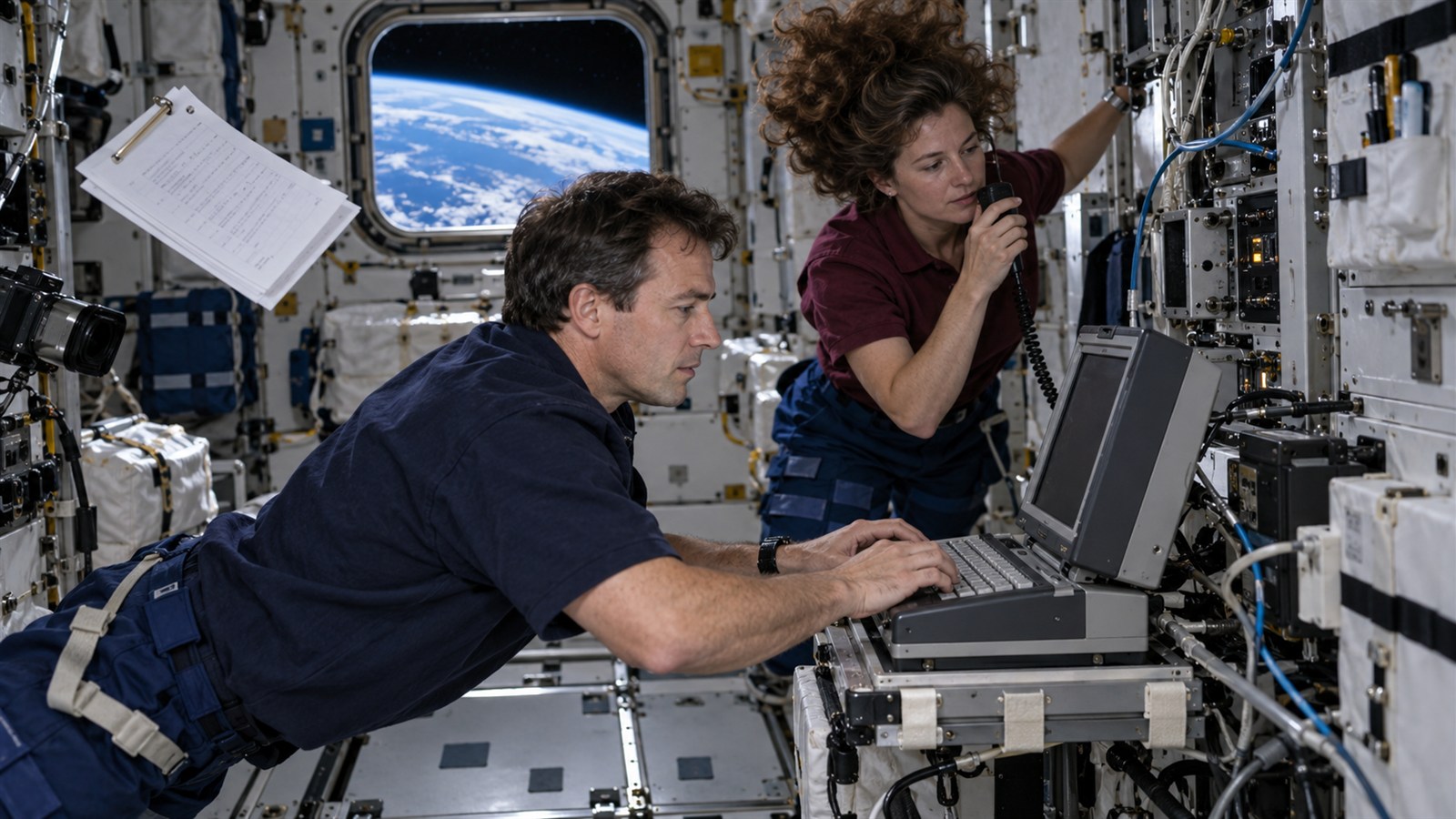
On August 9, 1991, astronauts aboard the Space Shuttle Atlantis sent what is recognized as the first email from space. Using a Macintosh Portable connected through NASA's communications system, crew members Shannon Lucid and James Adamson transmitted a short message to colleagues on Earth. The equipment was bulky and the connection depended on specialized infrastructure, but the demonstration joined portable computing with long-distance digital communication in an unforgettable setting. It suggested that electronic mail was becoming more than an office convenience: it could support people working far beyond an ordinary desk, even in orbit.
Email had already been used across research and corporate networks, yet most personal computing remained tied to local files, telephone modems, and fixed workplaces. The shuttle experiment illustrated the emerging value of asynchronous communication. A message could be prepared, transmitted through a network, and read without both parties sharing the same place or schedule. That flexibility reduces coordination costs, especially when teams are distributed or operating under time constraints. Spaceflight made the point dramatically, but the same economics would soon apply to salespeople, field technicians, travelers, and managers carrying portable computers on Earth.
The message also depended on a stack of complementary systems: the laptop, communications hardware, ground networks, software, and procedures used by the shuttle crew and support team. No single product created the experience. That lesson became central to mobile business. Device makers needed network operators, software developers needed reliable hardware, and employers needed security and workflow practices. As each layer improved, portable communication moved from an expensive specialist capability to an expected feature of commercial life. The value of mobility came from the ecosystem working together, not merely from shrinking a computer.
Modern crews aboard the International Space Station use far more capable networks, and workers on Earth now carry devices that combine messaging, video, cloud software, and navigation. The 1991 transmission seems modest only because the underlying model became ordinary. Its business legacy lies in making remoteness less of a barrier to participation. Digital communication widened the range of places where knowledge work could happen and expanded markets for portable hardware, connectivity, collaboration tools, and support services. The first email from space captured a future in which location would still matter, but it would no longer determine whether a person could join the information flow. It also made reliability under extreme conditions a compelling advertisement for portable computing, showing customers that mobility could be designed as serious infrastructure rather than a novelty. For technology vendors, such a visible test supplied credibility that ordinary advertising could not match. If a portable computer could support a crew in orbit, businesses could more readily imagine dependable use in aircraft, factories, hospitals, and remote field offices.
Atlantis astronauts transmitted the first recognized email from space on August 9, 1991.
The crew used a Macintosh Portable linked through NASA communications systems.
The demonstration showed that digital messaging could serve workers far from a conventional office.
Email reduced coordination costs by allowing people to send and read messages at different times.
Successful mobile communication required hardware, networks, software, and operating procedures to work together.
The event anticipated a large market for portable computing, connectivity, and remote collaboration.
Explore more of "On This Day ..."
Discover more events from the same date across news, politics, technology, sports, and other fields. Each link highlights significant moments that shaped history on different fronts.