

On This Day in Business: September 9, 1999
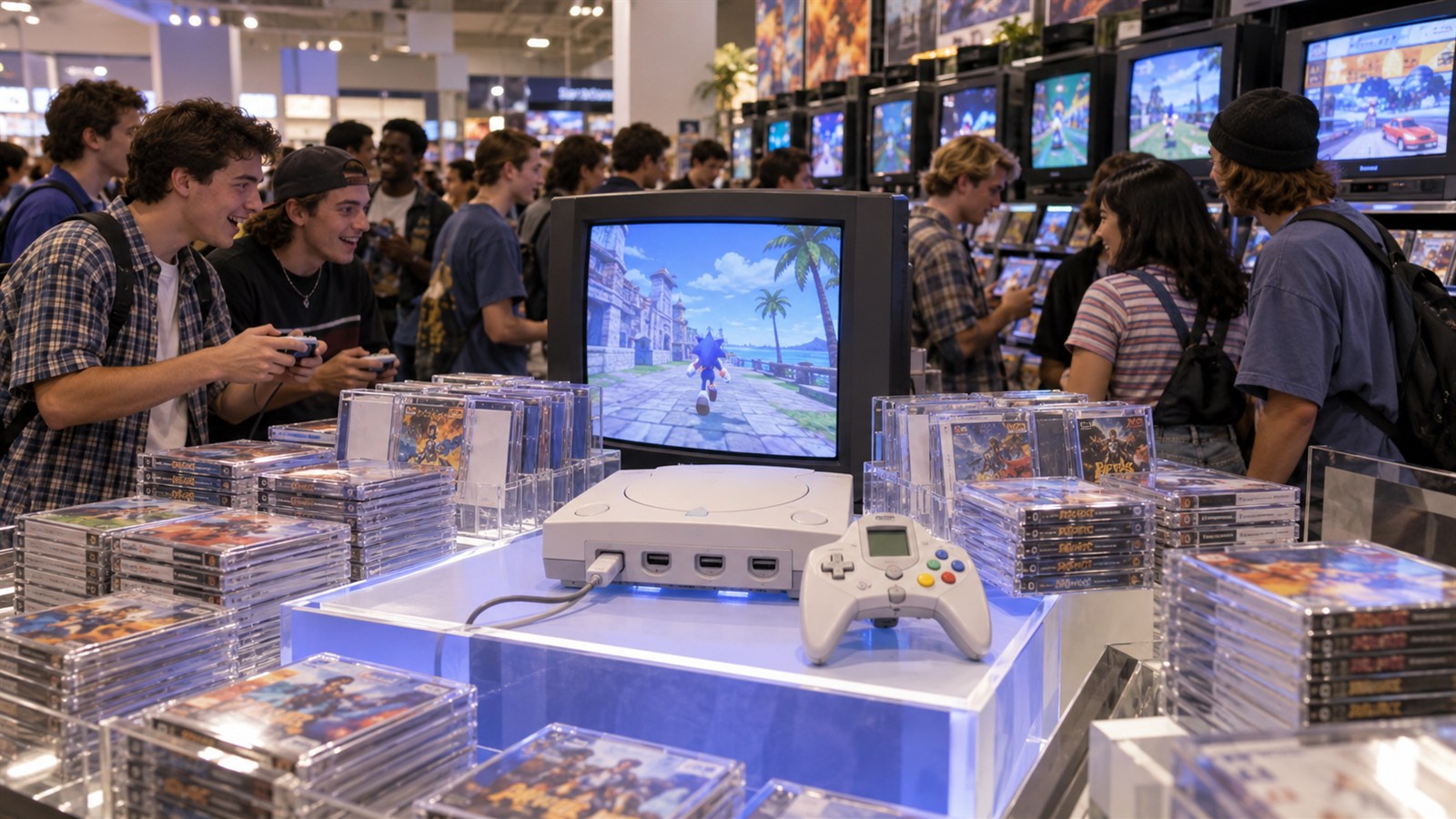
On September 9, 1999—marketed as 9/9/99—Sega launched the Dreamcast console in the United States for $199. The system arrived with a large lineup of games and a built-in modem designed to bring internet features into the living room. Retail demand was strong: more than 225,000 consoles sold during the first twenty-four hours, according to contemporary industry reporting. The launch showed how a memorable date, coordinated retail inventory, recognizable software, and a clear technical advantage could produce an event that felt larger than a normal electronics release.
Dreamcast entered a difficult competitive position. Sega's previous Saturn console had struggled in North America, retailers and developers remembered uneven support, and Sony's next PlayStation was approaching. Sega responded with a platform designed to be easier to develop for, capable of strong three-dimensional graphics, and closely related to its arcade hardware. The modem was particularly forward-looking. At a time when many households still used dial-up internet connections, Sega treated online communication, downloadable material, and multiplayer games as features of a mass-market console rather than experiments limited to personal computers.
The U.S. debut succeeded as a launch but not as a long-term turnaround. Strong first-day sales could not erase the company's financial pressure, the PlayStation brand's momentum, and concern that Dreamcast lacked a DVD drive just as movies were helping sell competing hardware. Sega discontinued the console after a short life and shifted from producing hardware to publishing software for other systems. That decision illustrates the difference between product enthusiasm and platform durability. A console business needs years of developer support, manufacturing scale, retail confidence, marketing, and enough users to justify continued investment.
Dreamcast nevertheless left a substantial business legacy. Its network orientation anticipated online console services that later became standard, while its creative software earned lasting loyalty. The system also demonstrated that exiting hardware can preserve intellectual property and talent when the economics of the installed-base race become unsustainable. Sega's pivot allowed its game franchises to reach former rivals' machines. September 9 remains memorable because the console combined a disciplined launch campaign with technology slightly ahead of the market around it. The result was a commercially brief platform whose ideas outlived its production run—a reminder that an unsuccessful market position can still contain innovations competitors later validate at scale. Retail partners and game publishers bore that platform risk alongside Sega. Inventory commitments, development budgets, and marketing plans all depended on the console attracting a durable audience. Dreamcast showed that a launch can create excitement quickly while an ecosystem needs repeated proof over several years.
Sega launched Dreamcast in the United States on September 9, 1999, for $199.
The 9/9/99 campaign coordinated retail attention, software releases, and a memorable date.
A built-in modem made internet communication a standard feature of the console.
Strong launch sales could not overcome financial pressure and intense platform competition.
Sega ended Dreamcast production and shifted from console hardware to multiplatform software.
Online features and distinctive games gave the short-lived system influence beyond its sales life.
Explore more of "On This Day ..."
Discover more events from the same date across news, politics, technology, sports, and other fields. Each link highlights significant moments that shaped history on different fronts.