

On This Day in Business: October 1, 1971
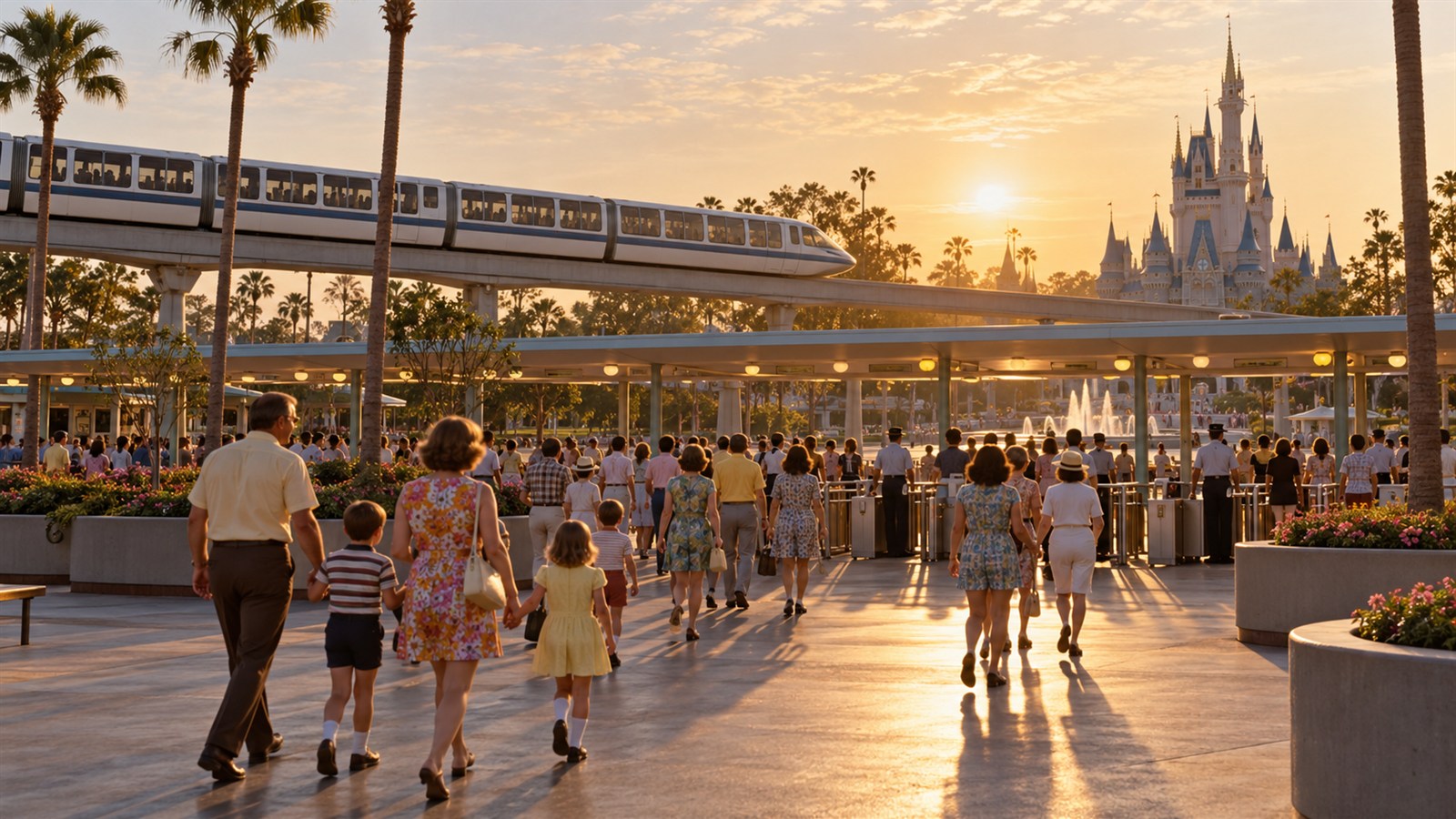
On October 1, 1971, Walt Disney World welcomed its first public guests near Orlando, Florida. The opening included the Magic Kingdom, the Contemporary Resort, the Polynesian Village Resort, transportation systems, golf courses, and other recreation across an enormous property. Rather than copy Disneyland as a stand-alone amusement park, the company created a destination intended to hold a family's attention for an entire vacation. Roy O. Disney had carried the project forward after his brother Walt's death in 1966, overseeing a complex construction and financing effort whose reported cost reached roughly $400 million. The resort opened without the company carrying outstanding debt on the project.
The Florida strategy solved several business constraints Disney had encountered in California. The company quietly assembled about 28,000 acres through separate buyers, limiting price speculation while it secured enough land for future growth. Florida also offered warm weather, an expanding highway network, and access to the large population east of the Mississippi. State legislation created the Reedy Creek Improvement District, giving the development unusual responsibility for roads, utilities, drainage, fire protection, and planning. That autonomy helped Disney coordinate infrastructure at a scale closer to a private city than a conventional attraction, while hotels and transportation extended the brand beyond the park gates.
Opening day began cautiously, with fewer visitors than some observers expected, but the resort soon reshaped Central Florida's economy. Tourism, construction, hospitality, retail, and air travel expanded around a destination that encouraged longer stays and repeat visits. Disney controlled more of the customer journey than it could at Disneyland: guests could sleep, eat, shop, and move around inside a connected system. The model diversified revenue while giving the company multiple opportunities to turn stories and characters into physical experiences. It also demonstrated how intellectual property could anchor capital-intensive real estate, creating demand for rooms, restaurants, transportation, and merchandise alongside ticket sales.
Walt Disney World continued to add parks, hotels, shopping districts, sports facilities, and vacation ownership products, becoming one of the world's best-known tourism businesses. Its scale brought difficult questions as well, including labor conditions, land use, public authority, environmental pressure, and the region's dependence on tourism. Even so, the 1971 opening remains a landmark in experience design and destination economics. Disney did not merely sell admission to rides; it built an operating environment in which lodging, logistics, entertainment, and service reinforced one another. That integrated proposition influenced resorts and attractions far beyond Florida, showing how a company could use patient land assembly and coordinated infrastructure to transform a single brand into an enduring regional marketplace.
Walt Disney World opened to the public near Orlando on October 1, 1971.
The original resort included the Magic Kingdom, two hotels, recreation, and its own transportation network.
Disney assembled roughly 28,000 acres to preserve room for expansion and control the surrounding guest experience.
The destination model connected tickets with lodging, food, retail, transportation, and merchandise revenue.
Construction and tourism growth helped remake Central Florida's labor market, infrastructure, and identity.
The opening established a durable model for using entertainment brands to anchor large-scale destination development.
Explore more of "On This Day ..."
Discover more events from the same date across news, politics, technology, sports, and other fields. Each link highlights significant moments that shaped history on different fronts.