

On This Day in Business: November 23, 1889
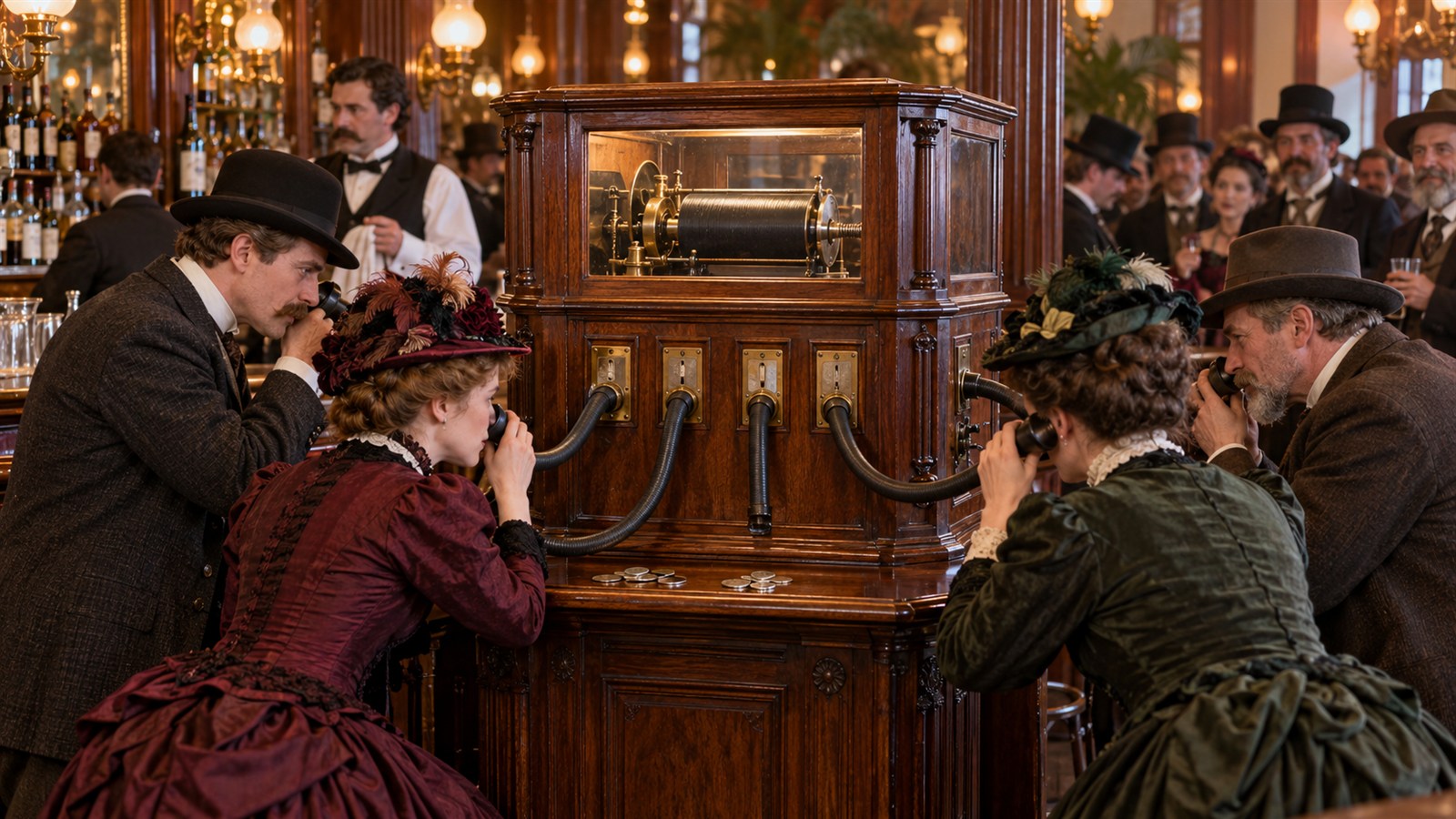
On November 23, 1889, a coin-operated phonograph was demonstrated at the Palais Royale Saloon in San Francisco. Louis Glass and William S. Arnold adapted an Edison phonograph so patrons could insert a nickel and listen through one of several tubes. The device converted recorded sound into a metered public service rather than requiring each listener to own an expensive machine. The proposition had to be understandable at the counter: a recognizable product, a clear price, and a service routine customers could trust. Retail concepts scale only when the promise can be delivered during ordinary shifts, not merely when the founder is present for opening day.
The early installation offered a limited selection and private listening tubes instead of room-filling speakers. Its commercial insight was straightforward: place entertainment where customers already gathered and charge for each use. The saloon gained an attraction, the operator gained repeat revenue, and the recording technology acquired a new distribution channel. That required choices about layout, menu or assortment, staffing, training, equipment, and replenishment. Small efficiencies multiplied across transactions, while a confusing process or inconsistent product could erase the benefit of promotion. Operations therefore became part of the brand rather than a function hidden behind it.
Later jukeboxes improved selection, amplification, reliability, and visual appeal. Operators placed machines in bars, diners, dance halls, and other venues, sharing revenue with location owners and creating demand for records. Popularity data from paid plays could also signal which songs were connecting with listeners. Expansion created a second challenge—copying the experience without flattening what made it distinctive. Franchising, standardized equipment, supplier agreements, and local management could accelerate growth, but only if measurement and accountability preserved quality as the number of locations and employees increased.
The first nickel-in-the-slot phonograph anticipated platform and vending models that monetize access rather than ownership. Its economics depended on placement, maintenance, content supply, and frequent small payments. Digital music services are technically different, but they continue the same search for a convenient bridge between a catalog, a listening moment, and a price. For current operators, the lesson is that customer loyalty is assembled from repeatable details. A memorable idea earns the first visit; dependable execution earns the next one. Businesses that document the process, learn from frontline workers, and protect unit economics give a strong concept room to compound. In practical terms, the advantage came from linking a clear customer promise to disciplined execution. Capital had to be allocated before demand was certain, employees and partners had to coordinate, and leaders had to keep learning after the initial milestone passed into history.
A coin-operated phonograph was installed on November 23, 1889.
The location was the Palais Royale Saloon in San Francisco.
Patrons inserted a nickel and listened through individual tubes.
The machine monetized access without requiring home ownership.
Later jukeboxes supported record sales and venue revenue.
Placement, maintenance, content, and small payments defined the model.
Explore more of "On This Day ..."
Discover more events from the same date across news, politics, technology, sports, and other fields. Each link highlights significant moments that shaped history on different fronts.