

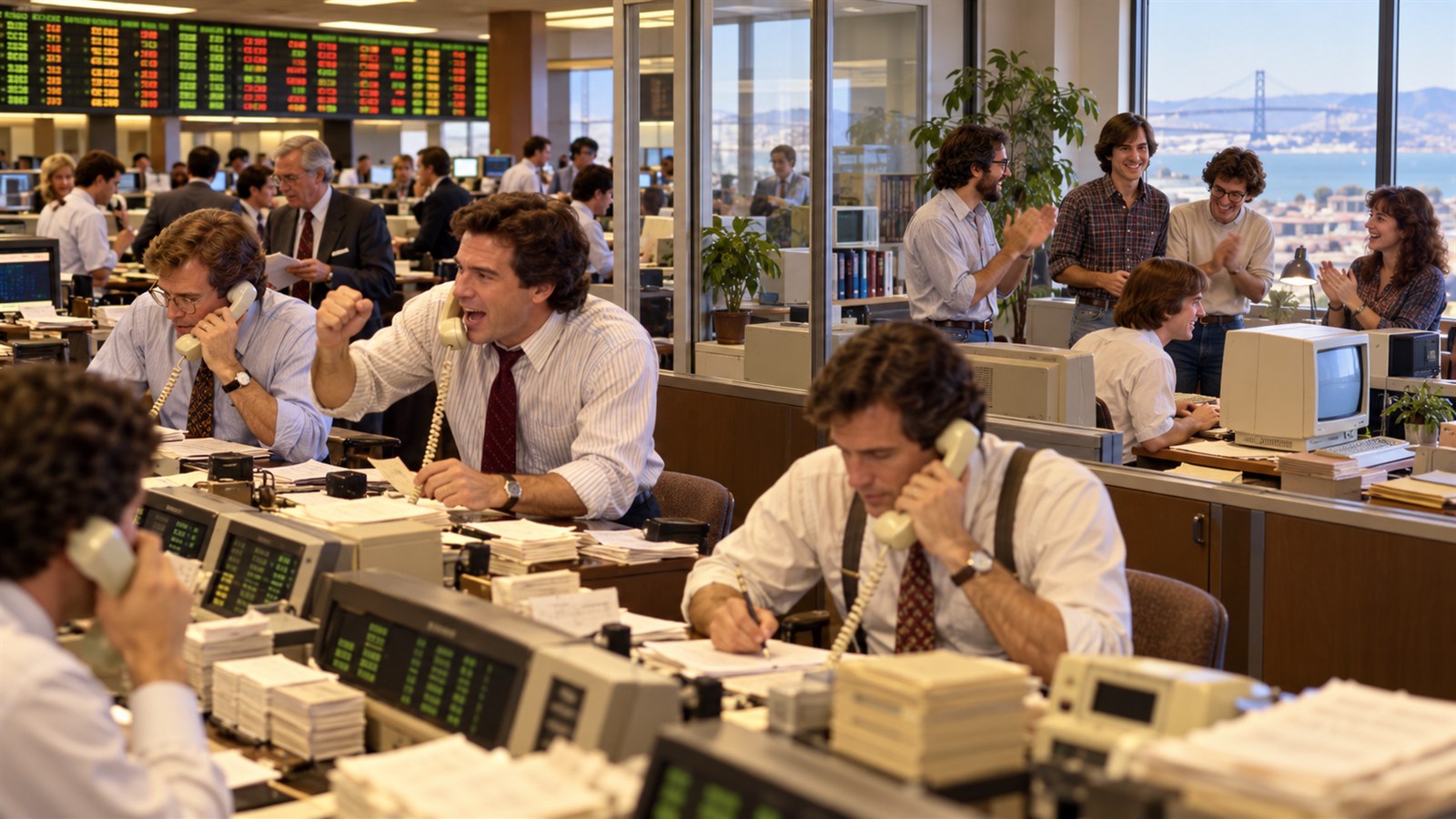
On This Day in Business: December 12, 1980
On December 12, 1980, Apple Computer completed its initial public offering. The company sold 4.6 million shares at 22 dollars each, raising capital for a business that had grown rapidly around the Apple II and creating substantial paper wealth for founders, employees, and early investors. The strategy promised scale, but size alone could not create value. The economic case depended on combining assets, talent, purchasing power, technology, and market access more effectively than separate organizations could manage, after accounting for disruption and the cost of change.
Public ownership provided capital and liquidity but also imposed disclosure, governance, and market expectations. Managers now had to explain performance to a wide investor base while continuing to fund product development in a young industry where technical standards, customer segments, and competitors were changing quickly. Customers, regulators, employees, and investors judged different parts of the decision. Efficiency could improve while competition, employment, or service weakened in particular markets. Strong governance required leaders to identify those tradeoffs early instead of treating them as issues to address after the announcement.
The offering showed how personal computing had moved from hobbyist circles toward a recognized growth market. Demand for shares reflected belief that computers could become broadly useful in homes, schools, and businesses, even though the path to mass adoption and the future shape of the industry remained uncertain. Execution depended on systems, reporting lines, incentives, capital plans, and culture. Targets were meaningful only if managers could convert them into observable improvements without interrupting daily operations. That made sequencing and accountability as important as the strategic presentation used to justify the move.
Apple's IPO became a landmark in technology finance, but the durable value came from products and capabilities built afterward, not from the opening price. Going public is a financing event rather than an operating strategy; capital creates options only when leadership turns it into useful products and resilient institutions. For modern executives, the lesson is to treat transformation as an operating program with measurable owners, deadlines, and customer safeguards. A decision can be signed or announced in a day, but its outcome emerges over years as leaders choose what to combine, preserve, redesign, or discontinue. In practical terms, the advantage came from linking a clear public or customer promise to disciplined execution. Capital and attention had to be committed before demand was certain, partners had to coordinate, and leaders had to keep learning after the first milestone passed into history. The strongest legacy was not the announcement alone, but the repeatable capability, institution, or market that people built around it afterward.
Apple completed its IPO on December 12, 1980.
The company sold 4.6 million shares at 22 dollars each.
The offering raised capital and created liquidity for early stakeholders.
Public ownership added disclosure and governance responsibilities.
Investor demand reflected growing confidence in personal computing.
Long-term value still depended on products, execution, and reinvestment.
Explore more of "On This Day ..."
Discover more events from the same date across news, politics, technology, sports, and other fields. Each link highlights significant moments that shaped history on different fronts.