

On This Day in Business: December 19, 1843
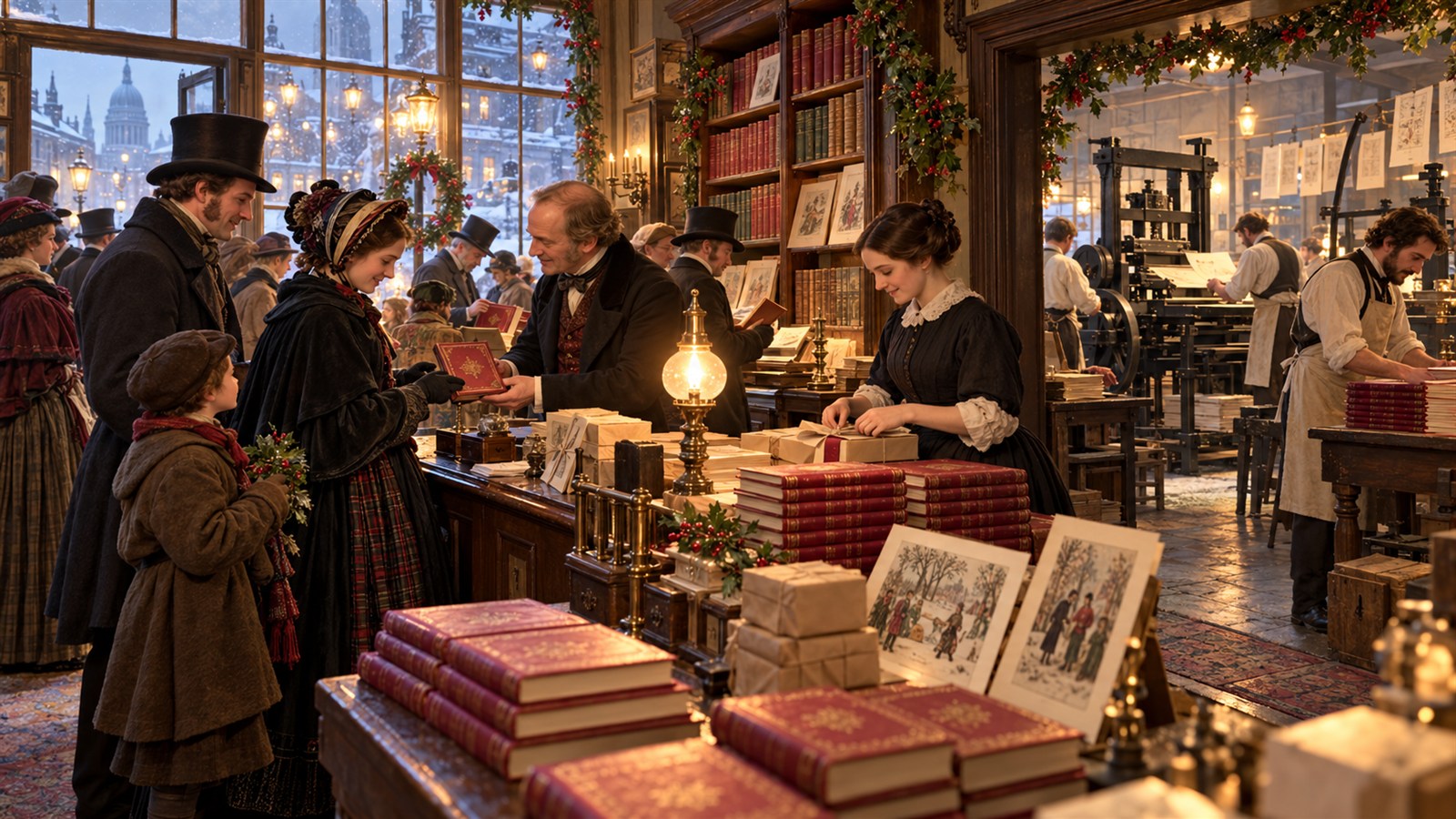
On December 19, 1843, Charles Dickens published A Christmas Carol in London. The first edition of 6,000 copies sold out by Christmas Eve, showing immediate demand for the story even though Dickens had financed an unusually handsome production with color illustrations and decorative binding. The venture joined creative ambition to a distribution system capable of reaching an audience. Content has limited economic value without access, while a channel has little reason to exist without work distinctive enough to make readers, listeners, viewers, or players return. The operating model connected those two sides.
Dickens wanted a book that was attractive yet affordable, but the physical specifications and pricing compressed his profit. The episode separated popularity from unit economics: strong sales can still disappoint financially when production costs, retailer discounts, credit terms, and returns are not aligned with price. Leaders had to commit to talent, rights, equipment, promotion, and scheduling before demand was fully known. They were effectively buying an option on future attention, accepting near-term uncertainty for the chance to establish habits and a recognizable position in a changing market.
The story then accumulated value through additional editions, stage adaptations, readings, translations, films, and seasonal reuse. Its themes and compact structure made it easy for new audiences and media to revisit, turning a short publishing project into enduring cultural intellectual property. Once an audience formed, the enterprise could extend value through advertising, subscriptions, licensing, syndication, merchandise, sequels, or repeat exhibition. Scale also raised expectations: the brand had to deliver consistently, protect credibility, and adapt as competitors copied the format or distribution technology changed.
A Christmas Carol demonstrates why creators need both artistic control and business visibility. Premium materials can support a brand, but costs must be modeled honestly. Long-term rights and reusability may outweigh the first print run, especially when a work can renew demand at a predictable time each year. The durable lesson is that media companies are built from both stories and systems. Creative work attracts attention, but rights ownership, operational reliability, audience insight, and distribution determine how long that attention can become revenue. A launch matters most when it begins a repeatable relationship. In practical terms, the advantage came from linking a clear public or customer promise to disciplined execution. Capital and attention had to be committed before demand was certain, partners had to coordinate, and leaders had to keep learning after the first milestone passed into history. The strongest legacy was not the announcement alone, but the repeatable capability, institution, or market that people built around it afterward.
A Christmas Carol was published on December 19, 1843.
The first edition consisted of 6,000 copies.
It sold out by Christmas Eve.
Color illustrations and fine production raised costs for Dickens.
Strong demand therefore did not produce the profit he expected.
Editions and adaptations turned the story into enduring seasonal property.
Explore more of "On This Day ..."
Discover more events from the same date across news, politics, technology, sports, and other fields. Each link highlights significant moments that shaped history on different fronts.