

On This Day in Business: December 24, 1955
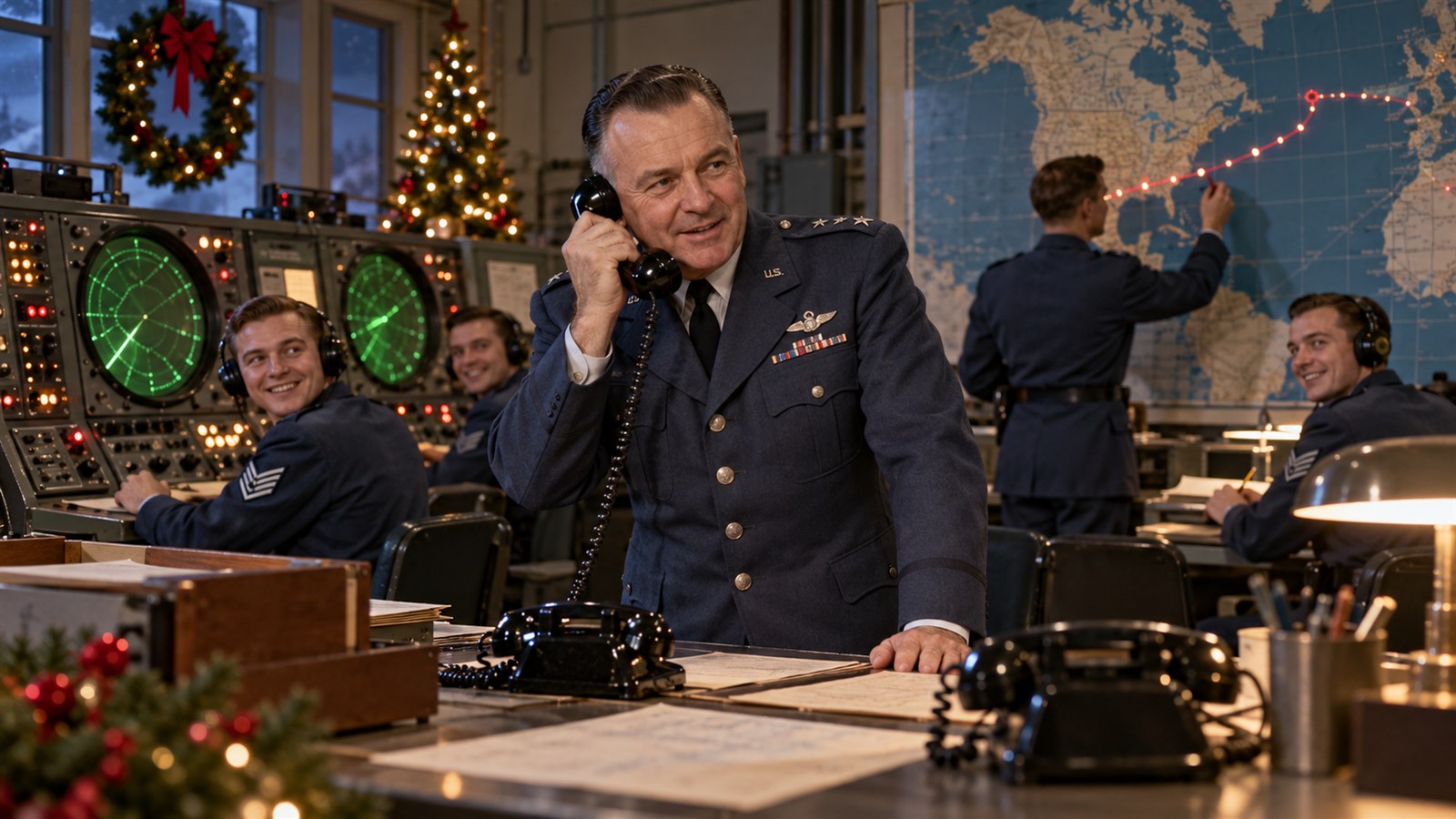
On December 24, 1955, a child trying to reach Santa called the unlisted operations number of the Continental Air Defense Command. Colonel Harry Shoup answered and directed staff to check radar for Santa's progress, beginning a tradition later continued by NORAD. The public moment rested on years of organizing, fundraising, negotiation, and rule setting. Institutions become durable when people can coordinate around procedures that outlast any one leader. The challenge is to make authority legitimate enough to attract participation while keeping decision making clear and accountable.
The accidental contact became a public-service experience that connected an intimidating defense organization with families. Staff used existing communications and tracking expertise in a playful way, while newspapers, radio, telephone operators, and later websites extended the story to a much larger audience. Resources also had to match the mission. Membership, donations, fees, sponsorship, or public support could sustain activity, but each funding source brought expectations. Leaders therefore needed governance that protected independence, disclosed conflicts, and showed participants how contributions were converted into useful work.
The program grew into an annual operation supported by military and civilian volunteers and corporate contributors. It handled large volumes of calls and, eventually, digital traffic, requiring schedules, scripts, technical capacity, security, and coordination beyond the charm of the original mistake. Growth expanded both reach and responsibility. A wider network could set standards, share knowledge, and represent common interests, yet it could also exclude outsiders or become slow to adapt. Healthy institutions make space for challenge while preserving the continuity required for long projects.
Santa tracking shows how institutions can build trust through a tradition consistent with their capabilities. The idea worked because it was authentic, easy to explain, and renewed every year. Brand goodwill is strongest when participation feels useful and generous rather than designed only to capture attention. For current organizations, the lesson is that reputation accumulates through consistent process. Clear criteria, fair treatment, transparent records, and willingness to correct mistakes create trust. Ceremonies may symbolize legitimacy, but the institution earns it repeatedly through decisions that stakeholders can understand and test. In practical terms, the advantage came from linking a clear public or customer promise to disciplined execution. Capital and attention had to be committed before demand was certain, partners had to coordinate, and leaders had to keep learning after the first milestone passed into history. The strongest legacy was not the announcement alone, but the repeatable capability, institution, or market that people built around it afterward.
A child called the CONAD operations center on December 24, 1955.
Colonel Harry Shoup answered the mistaken call.
Staff began reporting Santa's imagined position by radar.
NORAD continued the tradition after it was formed in 1958.
Volunteers and technical partners later supported a global audience.
The program turned specialized capability into enduring public goodwill.
Explore more of "On This Day ..."
Discover more events from the same date across news, politics, technology, sports, and other fields. Each link highlights significant moments that shaped history on different fronts.