

On This Day in Business: December 27, 1932
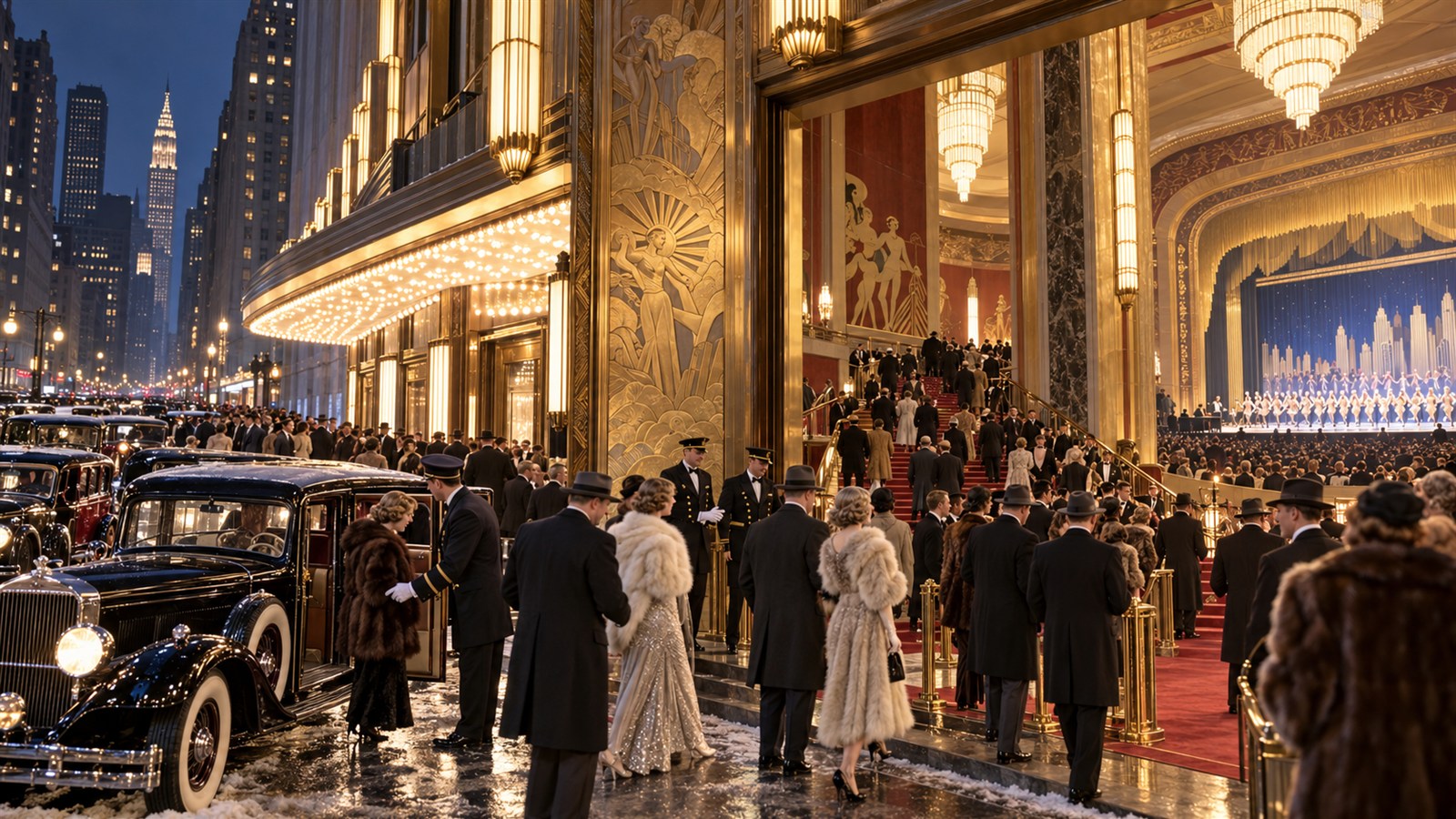
On December 27, 1932, Radio City Music Hall opened to the public at Rockefeller Center in New York. Designed as an immense Art Deco showplace, it offered a lavish stage program in a roughly 6,000-seat auditorium during the depths of the Great Depression. The venture joined creative ambition to a distribution system capable of reaching an audience. Content has limited economic value without access, while a channel has little reason to exist without work distinctive enough to make readers, listeners, viewers, or players return. The operating model connected those two sides.
John D. Rockefeller Jr. and impresario Samuel Rothafel treated entertainment as an anchor for a larger real-estate development. The theater's scale, hydraulic stage machinery, interior design, staffing, promotion, and location were intended to attract crowds and help establish Rockefeller Center as a destination. Leaders had to commit to talent, rights, equipment, promotion, and scheduling before demand was fully known. They were effectively buying an option on future attention, accepting near-term uncertainty for the chance to establish habits and a recognizable position in a changing market.
The opening format proved too long and difficult for such a large hall, so management shifted toward films paired with stage shows. That adjustment became central to the venue's identity, while premieres, performances, and the Rockettes provided multiple reasons for audiences and producers to use the space. Once an audience formed, the enterprise could extend value through advertising, subscriptions, licensing, syndication, merchandise, sequels, or repeat exhibition. Scale also raised expectations: the brand had to deliver consistently, protect credibility, and adapt as competitors copied the format or distribution technology changed.
Radio City's opening demonstrates that even monumental assets need flexible programming. Real estate, technology, and spectacle created capacity, but managers still had to learn what customers would attend and what schedule could fill seats. Successful venues adapt the offer while preserving the experience that makes the building distinctive. The durable lesson is that media companies are built from both stories and systems. Creative work attracts attention, but rights ownership, operational reliability, audience insight, and distribution determine how long that attention can become revenue. A launch matters most when it begins a repeatable relationship. In practical terms, the advantage came from linking a clear public or customer promise to disciplined execution. Capital and attention had to be committed before demand was certain, partners had to coordinate, and leaders had to keep learning after the first milestone passed into history. The strongest legacy was not the announcement alone, but the repeatable capability, institution, or market that people built around it afterward.
Radio City Music Hall opened on December 27, 1932.
The Art Deco auditorium held roughly 6,000 people.
The venue anchored part of the new Rockefeller Center development.
Its original vaudeville-style program proved difficult at that scale.
Management shifted toward films combined with stage presentations.
Flexible programming turned a large fixed asset into an enduring destination.
Explore more of "On This Day ..."
Discover more events from the same date across news, politics, technology, sports, and other fields. Each link highlights significant moments that shaped history on different fronts.