

On This Day in Health: February 1, 2016
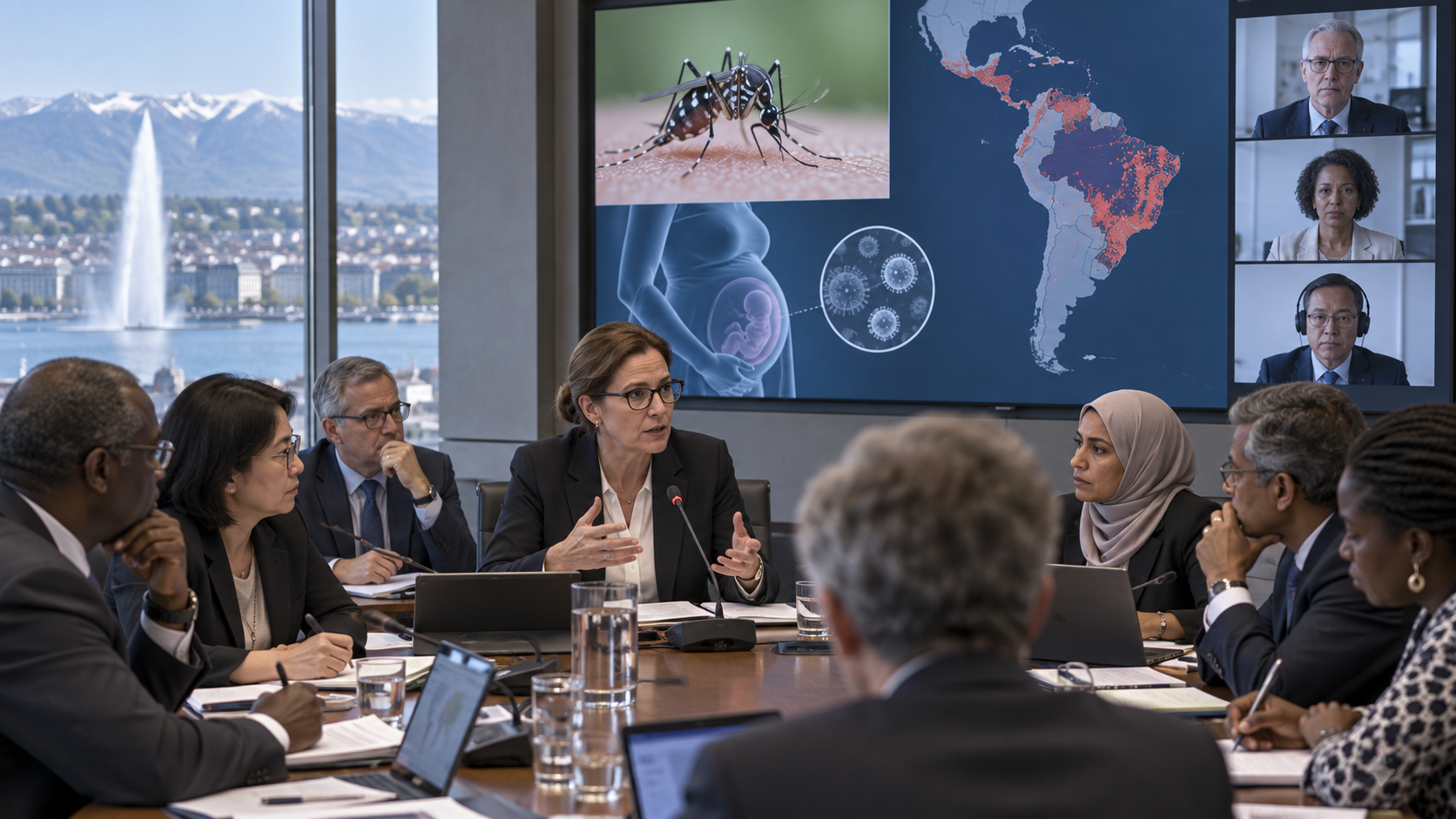
On February 1, 2016, World Health Organization Director-General Margaret Chan declared a Public Health Emergency of International Concern in response to clusters of microcephaly and other neurological disorders reported in areas affected by Zika virus. An emergency committee of specialists had reviewed the rapid rise in cases, particularly in Brazil, and the earlier occurrence of neurological complications in French Polynesia. At that moment, experts considered a causal relationship with Zika strongly suspected but not yet scientifically proven. The declaration focused the world’s attention on the unusual complications and the need for coordinated research, surveillance, and prevention rather than on the generally mild fever, rash, and joint pain experienced by many infected adults.
Zika virus is transmitted mainly by Aedes mosquitoes, which also spread dengue and chikungunya. The virus had been identified decades earlier, but a large outbreak in the Americas beginning in 2015 changed its public-health significance. Brazilian clinicians observed a disturbing increase in babies born with microcephaly, a condition involving an unusually small head and often serious brain-development problems. Evidence also connected infection with Guillain-Barré syndrome, a rare neurological disorder. Because mosquito exposure was widespread and many infections caused few or no symptoms, health agencies faced the difficult task of measuring transmission while advising pregnant people amid profound uncertainty.
The emergency designation enabled stronger international coordination and accelerated studies designed to test causation, improve diagnostic tools, and track pregnancies and birth outcomes. WHO emphasized mosquito control, protection from bites, access to reproductive-health information, and careful counseling for pregnant travelers and residents. It did not recommend broad restrictions on travel or trade, judging that such measures were not justified by available evidence. The response had important limitations. There was no vaccine or specific treatment, laboratory tests could be difficult to interpret, and communities with weak housing, sanitation, and health services bore disproportionate risk. Advice also intersected with unequal access to contraception, prenatal care, and abortion.
Subsequent research established that Zika infection during pregnancy can cause microcephaly and a wider pattern now called congenital Zika syndrome. WHO ended the emergency designation in November 2016 while stressing that the virus remained a persistent public-health challenge requiring long-term work. Transmission later declined, but surveillance, vaccine research, mosquito control, and support for affected children and families continued. The February declaration matters because it shows how health authorities must act when the potential harm is severe but evidence is still developing. It also exposed the need to pair outbreak science with practical social support: knowing how a virus spreads cannot protect people who lack screens, reliable care, reproductive choices, or the resources to follow public-health guidance.
A Public Health Emergency of International Concern is a legal designation under the International Health Regulations. It signals an extraordinary cross-border risk and creates recommendations for a coordinated response.
The committee evaluated neurological clusters rather than declaring an emergency for ordinary Zika illness alone. The concentration of congenital abnormalities made uncertainty itself an urgent reason for investigation.
The designation mobilized laboratories, pregnancy registries, mosquito surveillance, and international funding. Researchers moved quickly to compare outcomes and determine whether infection could directly disrupt fetal development.
Officials avoided general travel and trade bans, which can impose large costs without stopping mosquito-borne transmission. Guidance instead emphasized personal protection, vector control, and tailored advice around pregnancy.
Confirmation of congenital Zika syndrome reshaped prenatal counseling and research on how viruses cross the placenta. It also created lasting care needs for children with neurological, vision, hearing, and mobility problems.
Zika demonstrated that outbreak vulnerability is social as well as biological. Housing quality, water storage, mosquito exposure, access to testing, and reproductive-health services all influence who can act on scientific advice.
Explore more of "On This Day ..."
Discover more events from the same date across news, politics, technology, sports, and other fields. Each link highlights significant moments that shaped history on different fronts.