

On This Day in Health: March 16, 2020
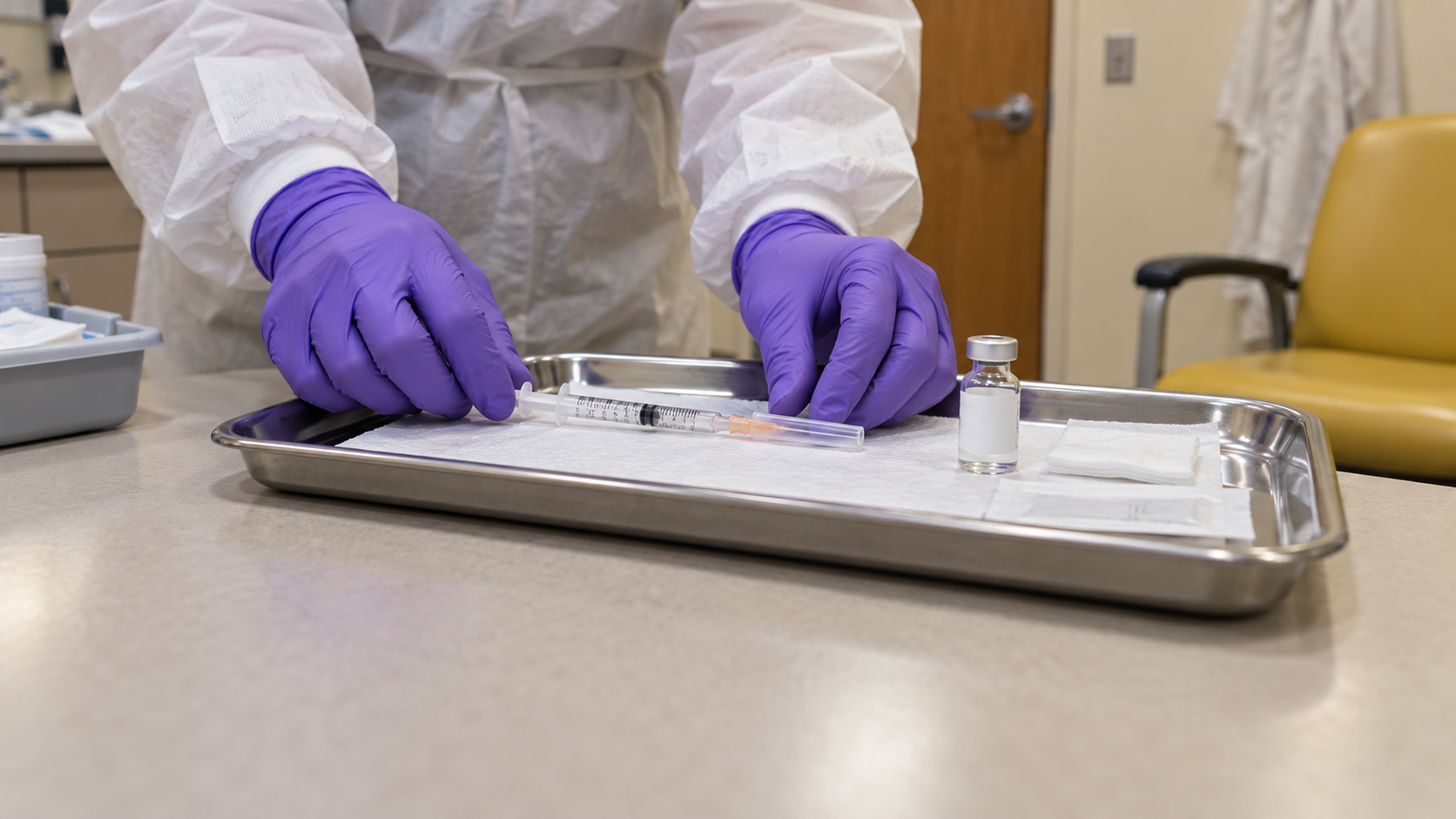
On March 16, 2020, the first participant received an investigational COVID-19 vaccine in a phase 1 trial at Kaiser Permanente Washington Health Research Institute in Seattle. The candidate, mRNA-1273, was developed through work by scientists at the National Institute of Allergy and Infectious Diseases and Moderna. The National Institutes of Health announced the start of the study that day. It was an early human-testing milestone during a rapidly developing emergency, not a vaccine approval or evidence that widespread protection had already been demonstrated. The trial began the clinical work needed to evaluate a promising experimental approach.
The study initially planned to enroll forty-five healthy volunteers aged eighteen to fifty-five. Researchers would assess safety and whether vaccination produced an immune response, using different dose groups. Participants were to receive two injections separated by approximately four weeks and return for follow-up. Blood samples would help investigators measure the response, while clinical observations would address possible adverse effects. Those activities served questions appropriate to a small early-stage trial. They could inform later studies, but they could not establish the full range of outcomes that a larger program would need to examine before a vaccine could be used broadly.
The speed of development depended on earlier research rather than beginning from nothing when the new virus appeared. Scientists had studied related coronaviruses, including those responsible for SARS and MERS, and had worked on ways to present the spike protein to the immune system. Once the genetic sequence of SARS-CoV-2 became available, that experience helped researchers select a sequence for the messenger RNA platform. The candidate was intended to direct cells to produce a viral protein and prompt an immune response. Prior laboratory work supplied a rationale and a technical starting point, while the human trial remained necessary to test the approach in people.
March 16 illustrates the connection between long-term scientific preparation and an urgent clinical response. A visible first injection rested on years of research, manufacturing work, institutional experience, and volunteer participation. The trial also shows why speed does not erase the distinctions between stages of evidence. Safety observations and immune measurements in an early study lead to further questions rather than automatically resolving them. The milestone belongs at the beginning of a clinical development pathway that would require additional trials and regulatory review. Its lasting meaning is the move from a laboratory-designed candidate into structured human testing, where researchers could begin gathering evidence directly while the broader health emergency continued to unfold.
March 16 marks the first participant's vaccination in this phase 1 study. It was distinct from later authorization.
The trial planned forty-five healthy adult volunteers. Its early questions concerned safety and immune responses.
Different dose groups and scheduled follow-up provided structured observations. A small initial study could not answer every question about protection.
Earlier SARS and MERS research helped scientists work quickly. The new candidate drew on an established scientific foundation.
The mRNA platform aimed to prompt cells to produce a viral protein. Human studies were needed to evaluate the resulting response.
Volunteers made early clinical evidence possible. The first injection was one step in a larger development program.
Explore more of "On This Day ..."
Discover more events from the same date across news, politics, technology, sports, and other fields. Each link highlights significant moments that shaped history on different fronts.