

On This Day in Health: July 1, 1946
On July 1, 1946, the Communicable Disease Center opened in Atlanta, Georgia. The new federal organization occupied one floor of a small building at 291 Peachtree Street and began with fewer than 400 employees. Its first mission was tightly focused: keep malaria from spreading across the United States. The center grew from the wartime Malaria Control in War Areas program, which had protected military bases and defense-production communities in the South. The location made practical sense because the region had long been the center of the nation's malaria problem, and much of the staff's experience involved mosquitoes, drainage, spraying, laboratory work, and support for state health departments.
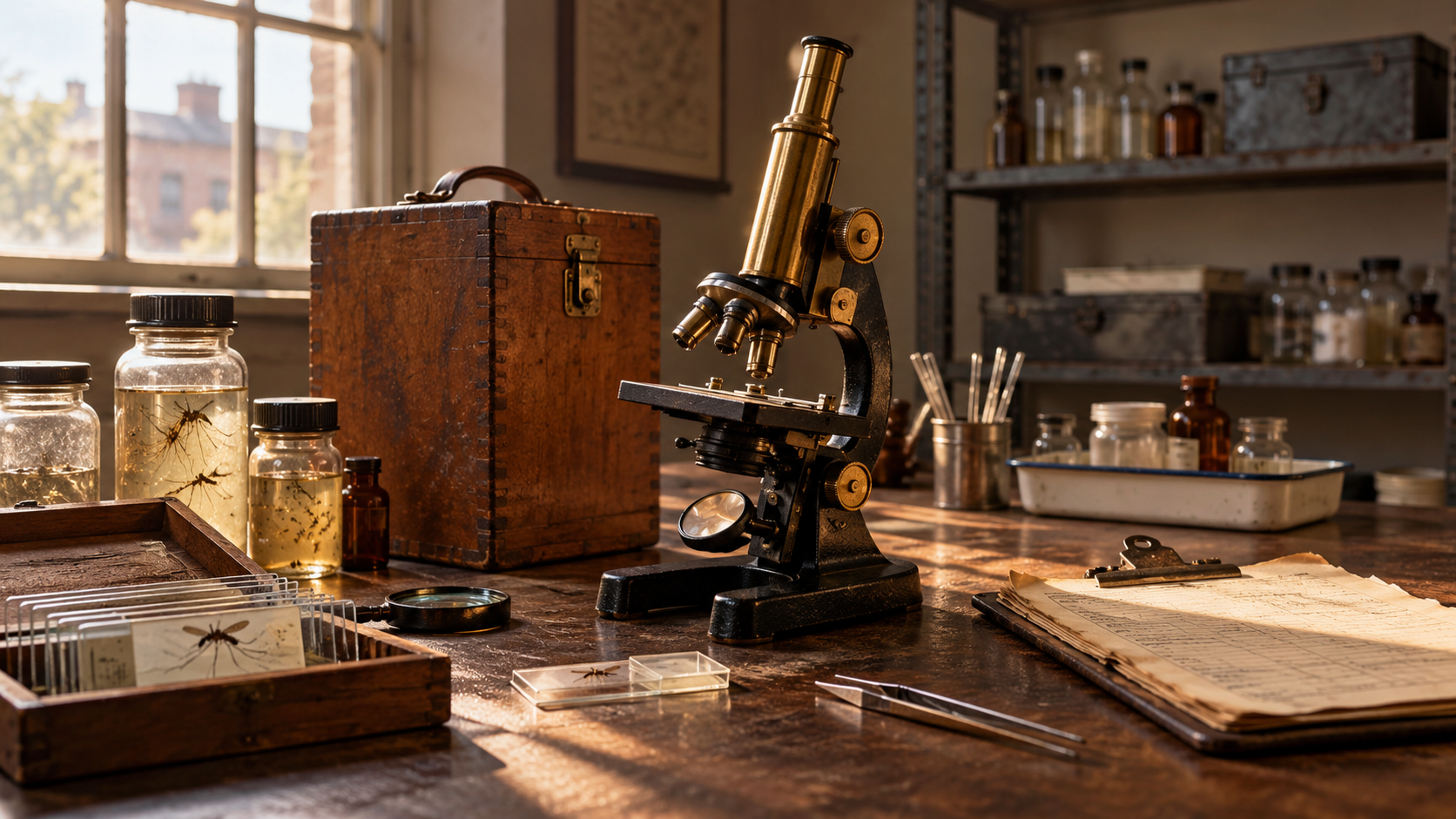
The early CDC was an operational public-health agency as much as a scientific one. Its employees needed trucks, sprayers, shovels, microscopes, and trained field workers to investigate mosquito breeding and help communities control it. Joseph W. Mountin of the U.S. Public Health Service had pressed for a permanent institution that could carry wartime expertise into peacetime disease prevention. The laboratory at 291 Peachtree reflected the organization's modest beginning: researchers worked in cramped quarters with the tools available to identify parasites and support field investigations. The center's value depended on cooperation with state and local health departments rather than on treating patients as a hospital would.
Opening day did not create the broad modern CDC all at once. Malaria control dominated the initial assignment, while staff, authority, and scientific capacity remained limited. Mountin advocated expanding the center's responsibility to other communicable diseases, but that change required years of new programs and transfers from elsewhere in government. In 1947, Emory University conveyed land on Clifton Road for a token payment, providing a future headquarters site. Surveillance, laboratory consultation, training, and outbreak assistance gradually became central services. The institution's early name also changed several times as its responsibilities widened, so the 1946 abbreviation points to the Communicable Disease Center rather than the agency's present full title.
The opening mattered because it established a durable national base for applied epidemiology and disease control. Early malaria work linked laboratory evidence with field action, a pattern later used for polio, influenza, foodborne illness, environmental hazards, and emerging infections. The Epidemic Intelligence Service, established in 1951, further developed the practice of sending trained investigators where urgent public-health questions arose. Remembering the small Atlanta office keeps the milestone in proportion: it began with a specific regional disease problem, practical equipment, and a limited staff. Its legacy came from turning that focused experience into a continuing partnership with health departments and an expanding capacity to detect, investigate, and prevent threats to health.
The center inherited people and methods from Malaria Control in War Areas. That wartime program provided a practical foundation for mosquito surveillance and field operations.
Atlanta placed the new organization near the South's historic malaria zone. The location also supported collaboration with regional health departments and universities.
Fewer than 400 employees and one floor of office space made the opening modest. Equipment shortages were part of the agency's earliest practical challenges.
The 1946 organization did not yet have the full mission associated with today's CDC. Its authority and subject areas expanded through later programs and transfers.
Surveillance became one of the institution's defining methods. Reliable reports allowed investigators to recognize patterns and help states respond to outbreaks.
The milestone shows how a focused disease-control program became lasting public-health infrastructure. Its influence came through evidence, field assistance, and partnership.
Explore more of "On This Day ..."
Discover more events from the same date across news, politics, technology, sports, and other fields. Each link highlights significant moments that shaped history on different fronts.