

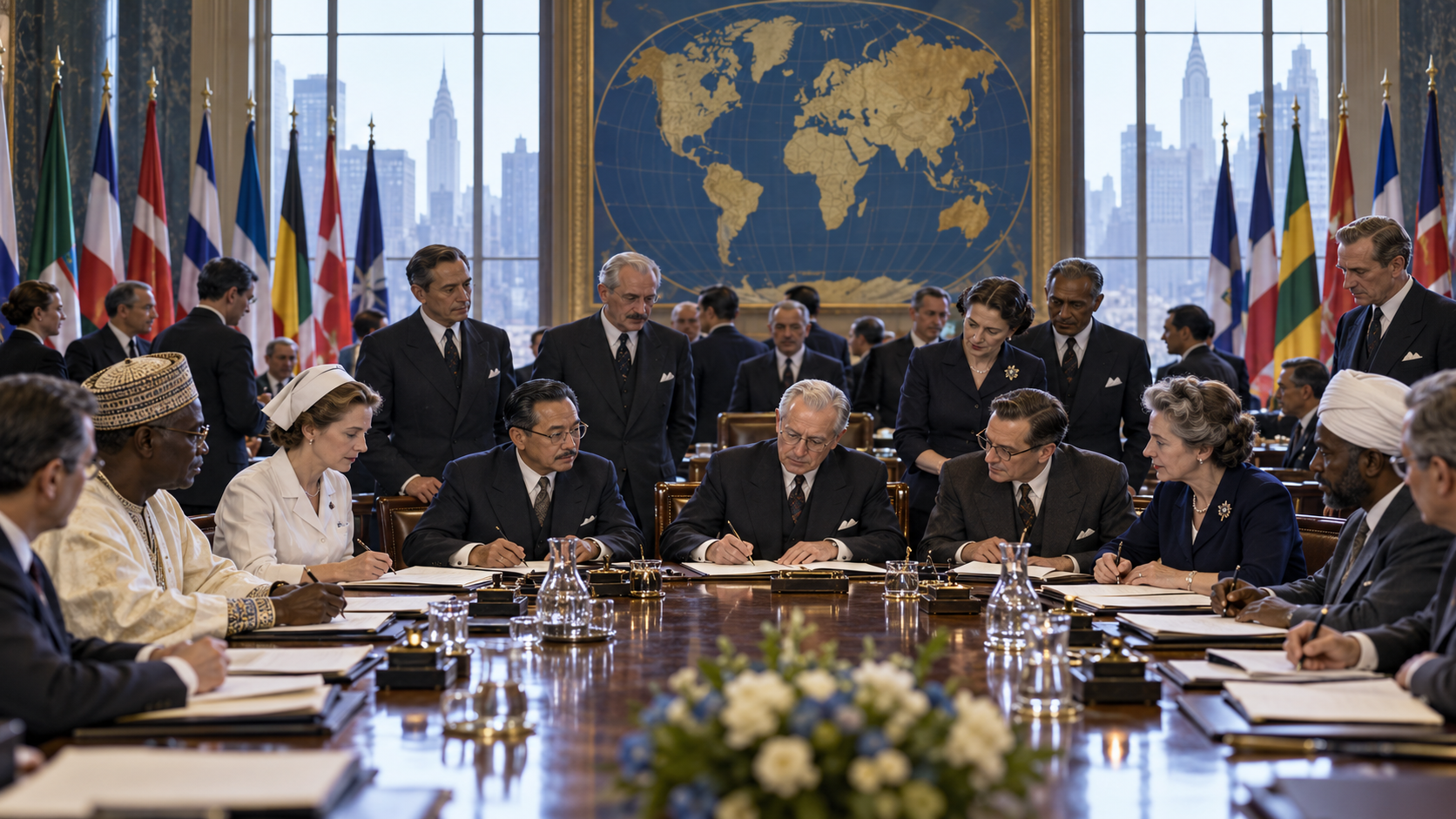
On This Day in Health: July 22, 1946
On July 22, 1946, representatives meeting at the International Health Conference in New York adopted and signed the Constitution of the World Health Organization. Delegates from fifty-one United Nations members and ten other nations endorsed the document after World War II had exposed the need for lasting international cooperation. The Constitution established WHO as the United Nations specialized agency for health and set an ambitious objective: the highest possible level of health for all peoples. It entered into force on April 7, 1948, after enough governments ratified it, and that anniversary became World Health Day.
The Constitution described health as physical, mental, and social well-being, not only the absence of disease. It also declared the enjoyment of the highest attainable standard of health a fundamental right without distinction based on race, religion, political belief, or economic and social condition. Those principles widened the frame of international health beyond border quarantine and the control of a few infections. They linked health with living conditions, knowledge, public responsibility, and cooperation among states while assigning WHO functions in surveillance, standard setting, technical assistance, research, and emergency response.
The language was influential but did not create an automatic legal guarantee of care for every person. WHO depends on member states for authority, information, financing, and implementation, and governments retain control over their own health systems. Political conflict and unequal resources can delay collective action. The broad definition of health has also been criticized as an ideal that is difficult to measure. Yet its breadth helped legitimize mental health, prevention, social conditions, maternal and child health, nutrition, and other concerns that cannot be reduced to whether a diagnosed disease is present.
July 22 marks the agreement on a constitutional framework rather than the day WHO began operating. The distinction matters because adoption, ratification, institution building, and effective public-health work are separate steps. Since 1948, WHO has coordinated disease classification, vaccination campaigns, technical guidance, and responses to international emergencies; its most celebrated achievement was the eradication of smallpox. Its record also contains delays, disputes, and lessons from outbreaks. The founding Constitution remains important because it expresses a durable premise: health threats cross borders, and countries need shared rules, evidence, and institutions even when their interests and capacities differ. It also made international health a continuing responsibility of governments, rather than a temporary response assembled only when a crisis had already crossed borders and caused visible harm.
The WHO Constitution was adopted and signed on July 22, 1946, at an international conference in New York after the Second World War.
It entered into force on April 7, 1948, when the required ratifications were complete; that later date is observed as World Health Day.
The Constitution's principles were aspirational. They did not instantly create universal health services or give WHO direct control over national systems.
WHO still depends on cooperation, reporting, funding, and implementation by member states, which can be constrained by politics and unequal resources.
The document defined health broadly and described the highest attainable standard of health as a fundamental right without discrimination.
It supplied the legal and ethical foundation for international surveillance, standards, technical assistance, vaccination, research, and emergency coordination.
Explore more of "On This Day ..."
Discover more events from the same date across news, politics, technology, sports, and other fields. Each link highlights significant moments that shaped history on different fronts.