

On This Day in Health: August 1, 1948
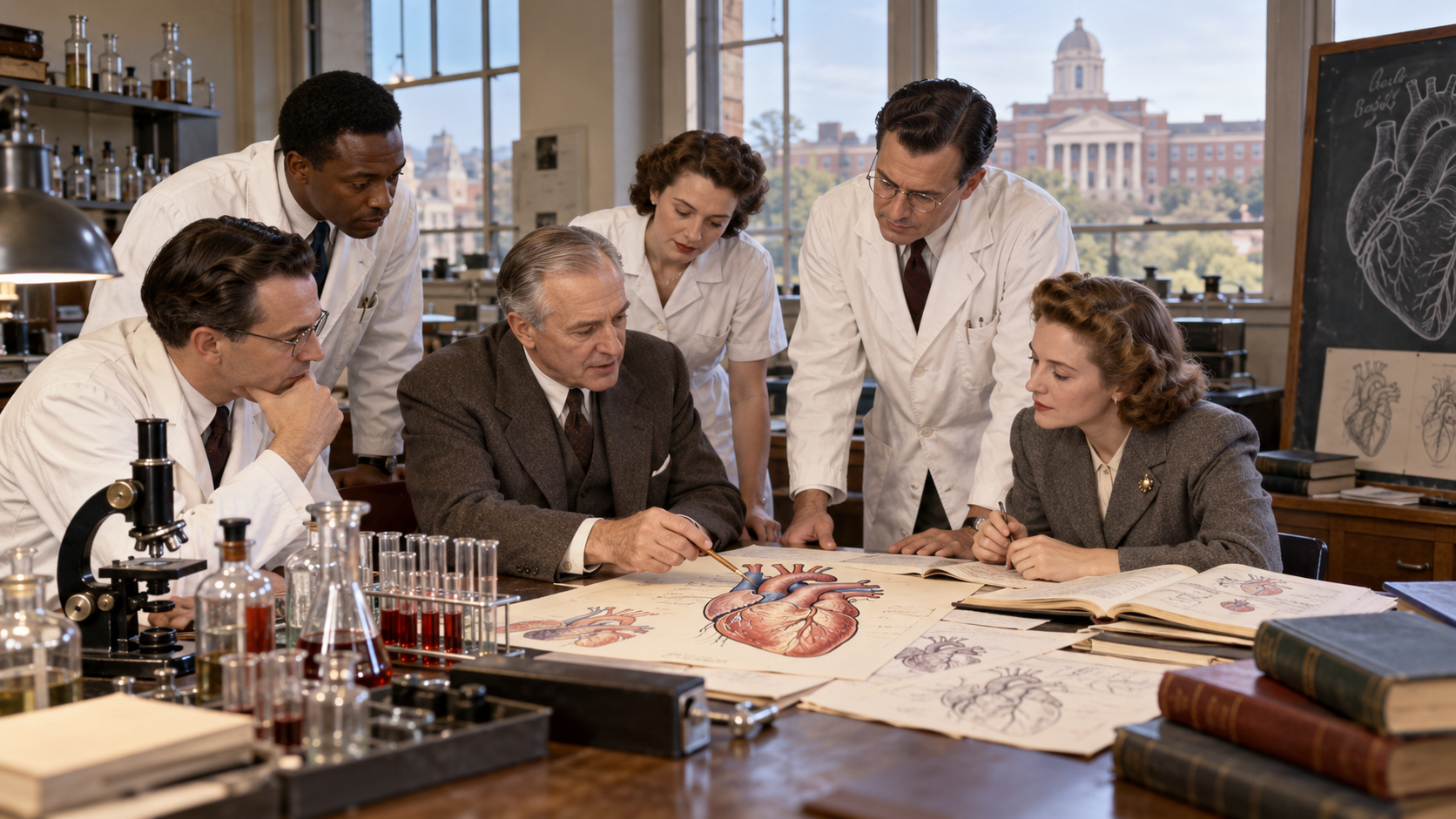
On August 1, 1948, U.S. Surgeon General Leonard A. Scheele formally established the National Heart Institute as part of the National Institutes of Health. President Harry S. Truman had signed the National Heart Act six weeks earlier, authorizing a federal institute and an advisory council devoted to diseases of the heart and circulation. The August organization order put that mandate into operation. It transferred existing federal cardiovascular and gerontology research to the new institute and assigned its director responsibility for coordinating the Public Health Service heart program. The step gave cardiovascular research a permanent home inside the nation’s expanding biomedical research system.
The need was urgent. Heart and circulatory diseases had become a leading cause of death, while researchers still lacked reliable answers about many of their causes, risk factors, and treatments. The National Heart Act authorized the institute to conduct and support research, train specialists, coordinate programs, and help states apply effective methods of prevention, diagnosis, and treatment. That design joined work in federal laboratories with grants to universities, hospitals, and medical schools. It also reflected a broader postwar belief that sustained public investment could turn basic science, clinical investigation, and population research into longer and healthier lives.
The institute soon helped build a research network with lasting influence. Its early years overlapped with the launch of the Framingham Heart Study, a long-running investigation that clarified how blood pressure, cholesterol, smoking, and other factors relate to cardiovascular disease. The institute supported laboratory science, clinical training, and studies of communities, while its mission later expanded beyond the heart. It became the National Heart and Lung Institute in 1969 and the National Heart, Lung, and Blood Institute in 1976. Sleep research also became part of its responsibilities. Those changes followed the growing recognition that cardiovascular health connects with lungs, blood, metabolism, behavior, and sleep.
The August 1 milestone matters because institutions shape what questions can be studied over decades. A federal center could maintain large cohorts, support specialized investigators, set research priorities, and spread findings beyond a single hospital or university. That capacity helped move cardiovascular medicine from limited treatment of advanced illness toward prevention, risk measurement, and evidence-based care. The institute’s record also shows that discovery depends on public infrastructure as well as individual breakthroughs. Its name and scope have changed, but the central promise made in 1948 remains recognizable: organize national scientific effort so that knowledge about heart, lung, blood, and sleep disorders can become practical tools for prevention and care.
The National Heart Act was signed on June 16, 1948, authorizing a federal institute, advisory council, research support, training, and cooperation with the states.
On August 1, Surgeon General Leonard A. Scheele used an organization order to establish the National Heart Institute within NIH and consolidate federal heart research responsibilities.
The new institute was charged with conducting and supporting research, training investigators, coordinating programs, and helping translate findings into prevention, diagnosis, and treatment.
Its early portfolio combined laboratory and clinical work with population research, including the era-defining Framingham Heart Study and a growing network of university grants.
Congress and federal health leaders later expanded the mission to lung and blood diseases, and the institution took its current NHLBI name in 1976.
The institute’s history shows how stable public research infrastructure can connect long-term science, professional training, national data, and patient care.
Explore more of "On This Day ..."
Discover more events from the same date across news, politics, technology, sports, and other fields. Each link highlights significant moments that shaped history on different fronts.