

On This Day in Health: August 21, 1986
On the night of August 21, 1986, a vast cloud of carbon dioxide escaped from Lake Nyos in northwestern Cameroon. The invisible gas flowed downhill through nearby valleys, displacing breathable air around villages and livestock. People rapidly lost consciousness; about 1,700 died, along with thousands of animals. Survivors described an abrupt, quiet catastrophe rather than a conventional volcanic eruption. Lake Nyos occupies a volcanic crater, and carbon dioxide from deep geological sources had accumulated under pressure in its lower waters over time.
Investigators concluded that the lake released dissolved gas in a rare event now called a limnic eruption. The exact initial trigger remained uncertain, but once deep water rose and pressure dropped, bubbles could form and drive an accelerating overturn, much like opening a shaken carbonated drink on a massive scale. Dense carbon dioxide hugged the ground and moved along low areas. It caused asphyxiation by reducing available oxygen and exposing people to high gas concentrations. Some survivors had skin injuries linked to pressure and prolonged unconsciousness rather than heat or corrosive chemicals.
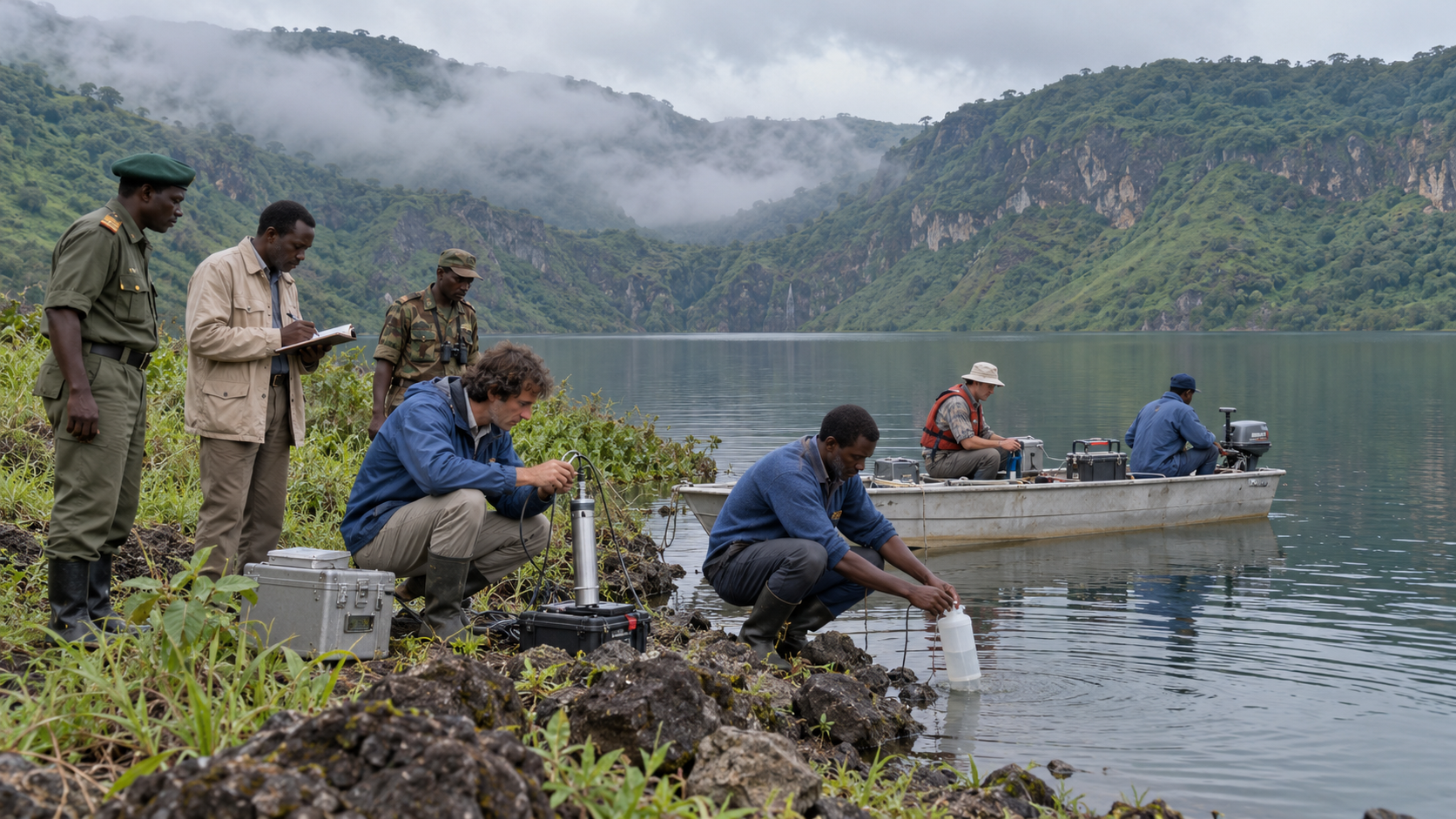
Cameroonian authorities and international teams faced immediate clinical, humanitarian, and scientific challenges. They treated survivors, evacuated hazardous areas, mapped the affected valleys, sampled lake water and gases, and assessed whether another release could occur. High carbon-dioxide concentrations remained in the deep lake. Engineers later installed pipes that brought gas-rich water upward, allowing carbon dioxide to escape gradually instead of accumulating to dangerous levels. Monitoring also expanded to nearby crater lakes, and concern about the natural dam at Lake Nyos added a separate flood risk requiring continued management.
The disaster became a defining case in environmental and emergency health because the hazard was odorless, invisible, and unfamiliar. Ordinary filter masks cannot protect against an oxygen-displacing gas, so warning, evacuation, terrain awareness, and source control are critical. The event also shows why disaster medicine must work with geology, chemistry, engineering, and local knowledge. Degassing systems reduce risk but need maintenance, monitoring, and clear community plans. August 21 honors the people and communities affected while marking a practical lesson: rare natural hazards can become preventable mass-casualty events when scientists, authorities, and residents build surveillance and mitigation before the next emergency. Communication posed a special problem because residents could neither see nor smell the threat. Technical monitoring had to be translated into practical decisions about when to leave low ground and when it was safe to return. Trust depends on sharing uncertainty, maintaining equipment visibly, and ensuring that local authorities can interpret instruments without waiting for outside teams.
Lake Nyos released a dense carbon-dioxide cloud on August 21, 1986, killing about 1,700 people and many animals in valleys below the crater lake.
Gas from deep geological sources had accumulated in bottom water, where high pressure allowed large quantities of carbon dioxide to remain dissolved.
A still-uncertain disturbance likely began an overturn; falling pressure produced bubbles, accelerating the rise and sudden release of more gas.
The cloud displaced oxygen and caused rapid unconsciousness and asphyxiation, while many survivor skin injuries reflected immobility and pressure.
Investigators mapped the hazard and engineers installed degassing pipes to release carbon dioxide gradually, alongside continued lake and dam monitoring.
Preparedness for invisible hazards depends on cross-disciplinary science, trusted warnings, evacuation routes, maintenance, and plans designed with affected communities.
Explore more of "On This Day ..."
Discover more events from the same date across news, politics, technology, sports, and other fields. Each link highlights significant moments that shaped history on different fronts.