

On This Day in Health: August 26, 1906
Albert Bruce Sabin was born in Bialystok, then part of the Russian Empire and now in Poland, on August 26, 1906. His family immigrated to the United States in 1921, and he trained in medicine and virology in New York. Polio could cause meningitis, paralysis, and death, and recurring epidemics created fear across many countries. Sabin studied how poliovirus entered and multiplied in the body. He concluded that the intestine was a central site of infection, an insight that shaped his pursuit of a live, weakened vaccine given by mouth.
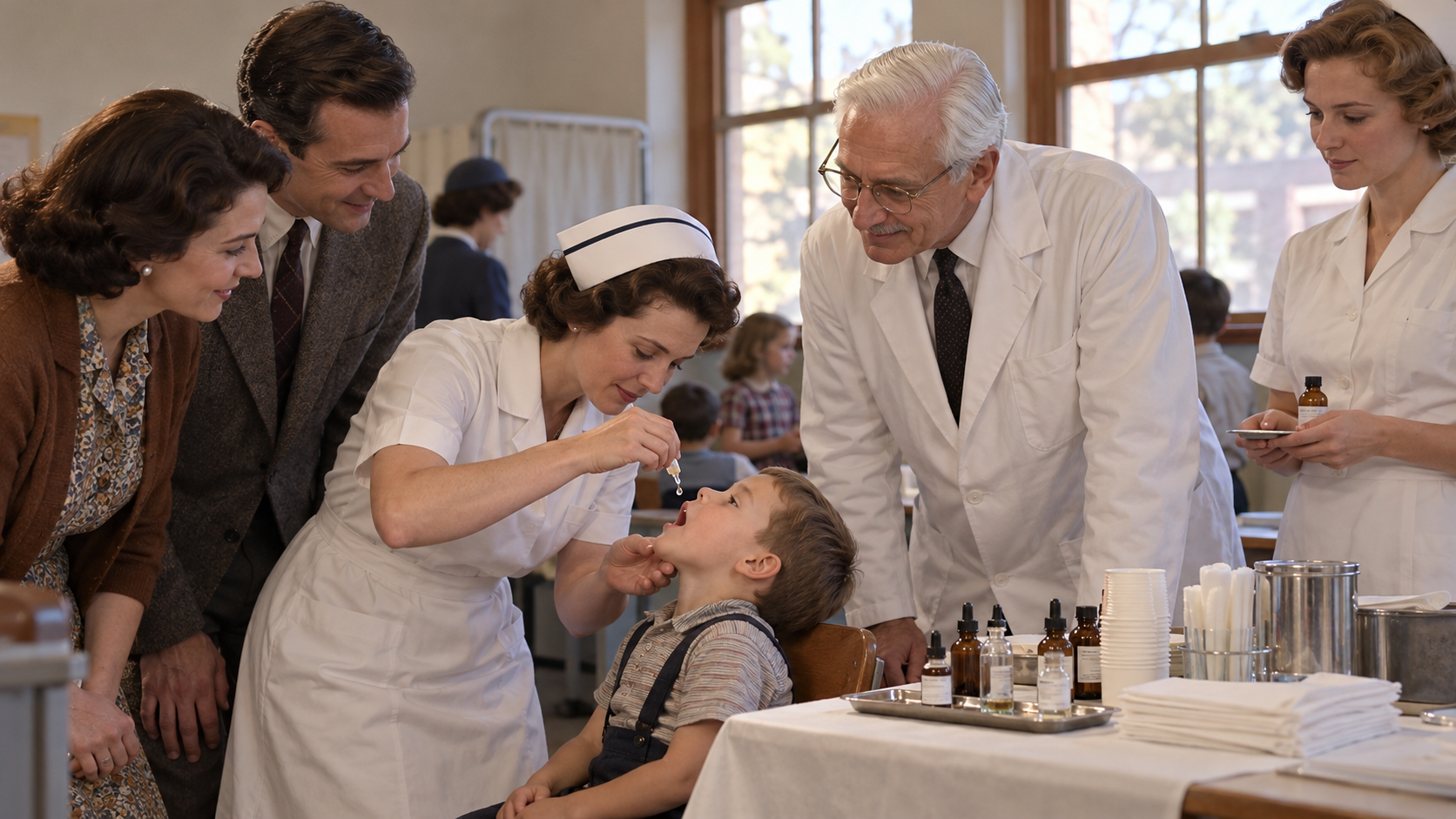
Jonas Salk’s injected inactivated vaccine was licensed first, in 1955, and rapidly protected individuals from paralytic disease. Sabin pursued a different tool: attenuated strains that could reproduce enough in the intestine to induce strong immunity without causing ordinary polio. Large trials took place outside the United States, including extensive programs in the Soviet Union and Eastern Europe, before U.S. authorities licensed Sabin strains beginning in 1961. Oral drops were inexpensive, easy to administer, and well suited to mass campaigns, helping reduce both illness and community transmission.
The oral vaccine also has an important limitation. Because its virus is live, it can very rarely cause vaccine-associated paralysis, and in under-immunized communities it can circulate long enough to genetically change and produce outbreaks. Countries that have eliminated wild poliovirus often use the inactivated vaccine, which cannot cause polio, while eradication programs tailor combinations of vaccines to local risks. Sabin’s contribution therefore complements rather than erases Salk’s. Each vaccine has distinct strengths, and policy changes as transmission falls and the balance of benefit and risk shifts.
Sabin’s birthday marks the importance of designing a medical technology for delivery as well as biology. A vaccine that could be placed on a sugar cube or given as drops allowed trained teams and volunteers to reach millions of children quickly. Global polio incidence has fallen by more than 99 percent since coordinated eradication efforts began, yet the final stage remains difficult because conflict, displacement, mistrust, missed communities, and viral persistence can interrupt coverage. The history argues for humility and sustained infrastructure. Scientific invention matters, but surveillance, cold chains, local health workers, transparent communication, and repeated access turn a vaccine into population protection. Eradication creates an unusual public-health finish line: every suspected case must be investigated even where disease has become rare. Laboratories sequence polioviruses, teams test wastewater, and vaccinators respond to gaps before paralysis reveals wider spread. Maintaining that vigilance is costly, but stopping too early would allow a preventable infection to regain ground.
Sabin was born on August 26, 1906, immigrated to the United States as a teenager, and built a career in virology and pediatric infectious disease.
His research emphasized that poliovirus multiplies in the intestine, encouraging development of a live attenuated vaccine delivered by mouth.
Salk’s injected inactivated vaccine arrived first; large international trials then established Sabin strains for mass oral immunization programs.
Oral vaccine is easy to deliver and can interrupt transmission, but its live virus can rarely cause paralysis or evolve during prolonged circulation.
Inactivated and oral vaccines serve different roles, and eradication policy changes as countries move from widespread transmission toward elimination.
The continuing campaign depends on surveillance, trusted local workers, reliable delivery, conflict access, and high coverage as much as on vaccine design.
Explore more of "On This Day ..."
Discover more events from the same date across news, politics, technology, sports, and other fields. Each link highlights significant moments that shaped history on different fronts.