

On This Day in Health: October 11, 1987
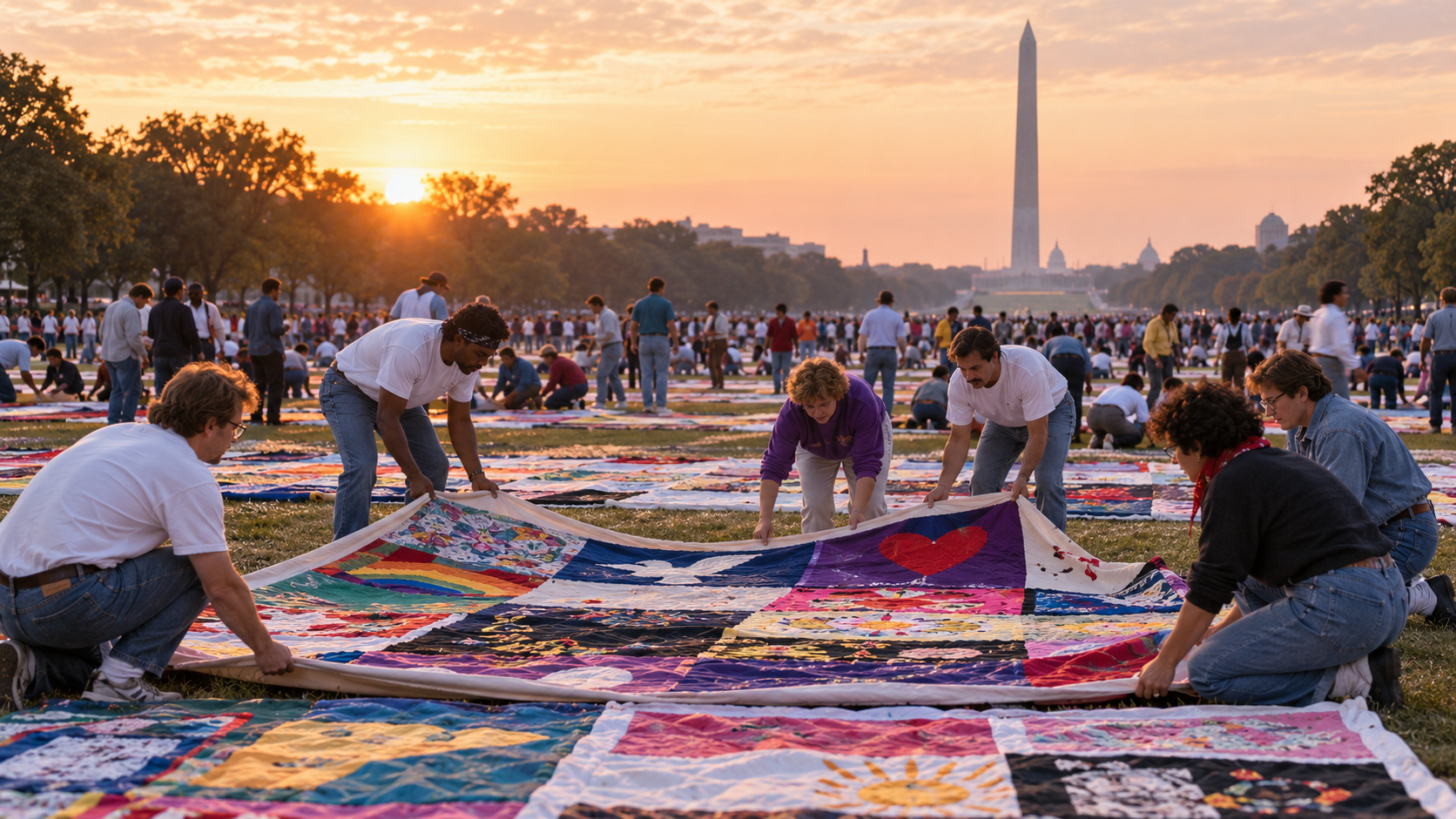
On October 11, 1987, the AIDS Memorial Quilt was displayed for the first time on the National Mall in Washington, D.C., during the National March on Washington for Lesbian and Gay Rights. This date matters because it fixes a broad medical story to a specific moment, place, and group of people. It also shows how health history is shaped by institutions and practical choices as well as laboratory discoveries.
The background was already developing before that day. AIDS had taken thousands of lives while many families faced stigma, silence, discrimination, and inadequate government action. Cleve Jones conceived a memorial after a 1985 candlelight march created a wall of handwritten names in San Francisco. Those conditions defined what participants could attempt and what patients or communities could reasonably expect. The available tools, social expectations, and professional structures all shaped the result. Change also depended on cooperation among people whose roles were not always recorded equally. They also explain why later accounts sometimes compress years of preparation into a single anniversary. Looking at that preparation keeps credit broad and makes the turning point easier to understand without turning it into a miracle story.
What happened on the date was consequential but limited. At sunrise, volunteer teams unfolded sections containing 1,920 individual panels as names were read aloud. The fabric filled an area larger than a football field and turned statistics into visible stories of people loved and lost. A memorial could not substitute for prevention, treatment, research, housing, or policy, and the early Quilt did not represent every community affected equally. Its growth required continuing outreach and care with private memories entrusted to a public archive. The distinction is important: the event did not instantly solve the underlying health problem, and later progress depended on follow-up research, training, policy, funding, and public trust. Contemporary evidence also helps separate what participants knew then from interpretations added after the result became famous.
Its longer legacy reaches beyond the original setting. The display inspired a national tour, international projects, fundraising, education, and tens of thousands of additional panels. It became one of the most powerful works of public memorial art in modern health history. The Quilt now supports remembrance and teaching while reminding public health institutions that stigma and indifference can deepen an epidemic as surely as gaps in biomedical knowledge. Seen in context, the anniversary is useful because it connects a concrete historical episode with continuing questions about evidence, access, safety, and responsibility in health care. That connection is stronger when the people affected, the limits of the achievement, and the work still unfinished remain part of the account.
At sunrise, volunteer teams unfolded sections containing 1,920 individual panels as names were read aloud. The fabric filled an area larger than a football field and turned statistics into visible stories of people loved and lost.
A memorial could not substitute for prevention, treatment, research, housing, or policy, and the early Quilt did not represent every community affected equally. Its growth required continuing outreach and care with private memories entrusted to a public archive.
The display inspired a national tour, international projects, fundraising, education, and tens of thousands of additional panels. It became one of the most powerful works of public memorial art in modern health history.
AIDS had taken thousands of lives while many families faced stigma, silence, discrimination, and inadequate government action. Cleve Jones conceived a memorial after a 1985 candlelight march created a wall of handwritten names in San Francisco.
the AIDS Memorial Quilt was displayed for the first time on the National Mall in Washington, D.C., during the National March on Washington for Lesbian and Gay Rights.
The Quilt now supports remembrance and teaching while reminding public health institutions that stigma and indifference can deepen an epidemic as surely as gaps in biomedical knowledge.
Explore more of "On This Day ..."
Discover more events from the same date across news, politics, technology, sports, and other fields. Each link highlights significant moments that shaped history on different fronts.