

On This Day in Health: October 19, 1972
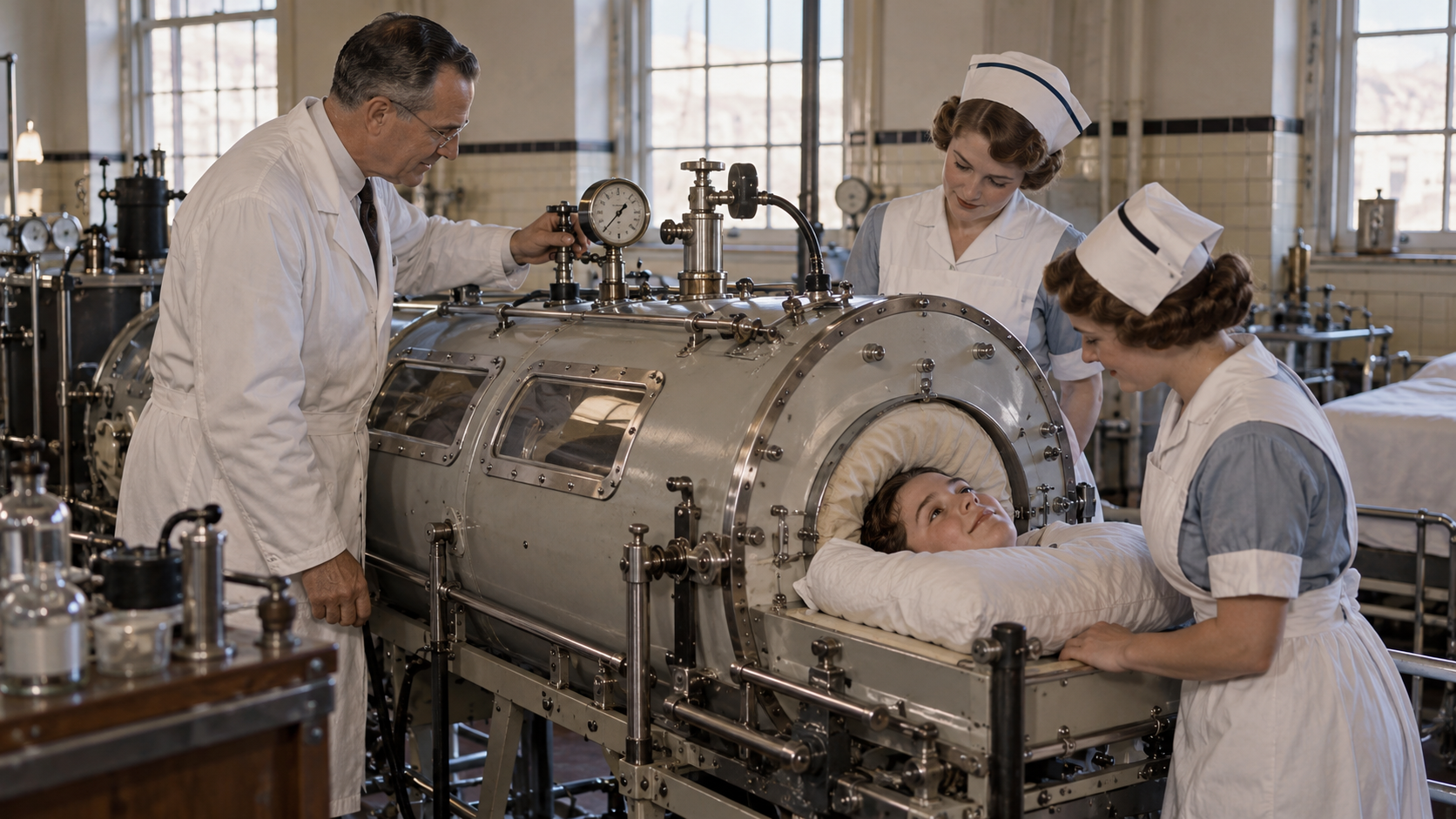
On October 19, 1972, engineer and industrial hygienist Philip Drinker died in Massachusetts. He had co-developed the tank respirator widely known as the iron lung, which supported breathing when paralysis weakened respiratory muscles. This date matters because it fixes a broad medical story to a specific moment, place, and group of people. It also shows how health history is shaped by institutions and practical choices as well as laboratory discoveries.
The background was already developing before that day. Polio, poisoning, and other illnesses could leave a patient awake but unable to ventilate. Manual methods were exhausting and inconsistent, while earlier mechanical devices had not become dependable clinical tools. Those conditions defined what participants could attempt and what patients or communities could reasonably expect. The available tools, social expectations, and professional structures all shaped the result. Change also depended on cooperation among people whose roles were not always recorded equally. They also explain why later accounts sometimes compress years of preparation into a single anniversary. Looking at that preparation keeps credit broad and makes the turning point easier to understand without turning it into a miracle story.
What happened on the date was consequential but limited. Working with Louis Agassiz Shaw at Harvard, Drinker built a chamber that enclosed the body and alternated air pressure around the chest. In 1928 the device successfully supported a child with respiratory paralysis at Boston Children's Hospital. Tank ventilators were large, expensive, claustrophobic, and demanding to staff. They did not treat the infection or reverse paralysis, and access was unequal during epidemics. Later positive-pressure ventilation introduced its own risks and required airway expertise. The distinction is important: the event did not instantly solve the underlying health problem, and later progress depended on follow-up research, training, policy, funding, and public trust. Contemporary evidence also helps separate what participants knew then from interpretations added after the result became famous.
Its longer legacy reaches beyond the original setting. The respirator saved lives, accelerated respiratory-care services, and made prolonged mechanical ventilation a visible part of twentieth-century medicine. Modern ventilators are smaller and far more controllable, while noninvasive ventilation and home devices have broadened support; the same ethical questions about triage, staffing, dependence, and rehabilitation still recur. Seen in context, the anniversary is useful because it connects a concrete historical episode with continuing questions about evidence, access, safety, and responsibility in health care. That connection is stronger when the people affected, the limits of the achievement, and the work still unfinished remain part of the account.
Working with Louis Agassiz Shaw at Harvard, Drinker built a chamber that enclosed the body and alternated air pressure around the chest. In 1928 the device successfully supported a child with respiratory paralysis at Boston Children's Hospital.
Tank ventilators were large, expensive, claustrophobic, and demanding to staff. They did not treat the infection or reverse paralysis, and access was unequal during epidemics. Later positive-pressure ventilation introduced its own risks and required airway expertise.
The respirator saved lives, accelerated respiratory-care services, and made prolonged mechanical ventilation a visible part of twentieth-century medicine.
Polio, poisoning, and other illnesses could leave a patient awake but unable to ventilate. Manual methods were exhausting and inconsistent, while earlier mechanical devices had not become dependable clinical tools.
engineer and industrial hygienist Philip Drinker died in Massachusetts. He had co-developed the tank respirator widely known as the iron lung, which supported breathing when paralysis weakened respiratory muscles.
Modern ventilators are smaller and far more controllable, while noninvasive ventilation and home devices have broadened support; the same ethical questions about triage, staffing, dependence, and rehabilitation still recur.
Explore more of "On This Day ..."
Discover more events from the same date across news, politics, technology, sports, and other fields. Each link highlights significant moments that shaped history on different fronts.