

On This Day in Health: October 30, 1895
On October 30, 1895, Dickinson Woodruff Richards Jr. was born in Orange, New Jersey. He became a physician and physiologist who helped make cardiac catheterization a powerful method for studying the human circulation. This date matters because it fixes a broad medical story to a specific moment, place, and group of people. It also shows how health history is shaped by institutions and practical choices as well as laboratory discoveries.
The background was already developing before that day. Werner Forssmann had shown that a catheter could reach the heart, but the technique needed careful validation before it could become a dependable research and clinical tool. Measuring pressure, oxygen, and blood flow inside the circulation posed technical and safety challenges. Those conditions defined what participants could attempt and what patients or communities could reasonably expect. The available tools, social expectations, and professional structures all shaped the result. Change also depended on cooperation among people whose roles were not always recorded equally. They also explain why later accounts sometimes compress years of preparation into a single anniversary. Looking at that preparation keeps credit broad and makes the turning point easier to understand without turning it into a miracle story.
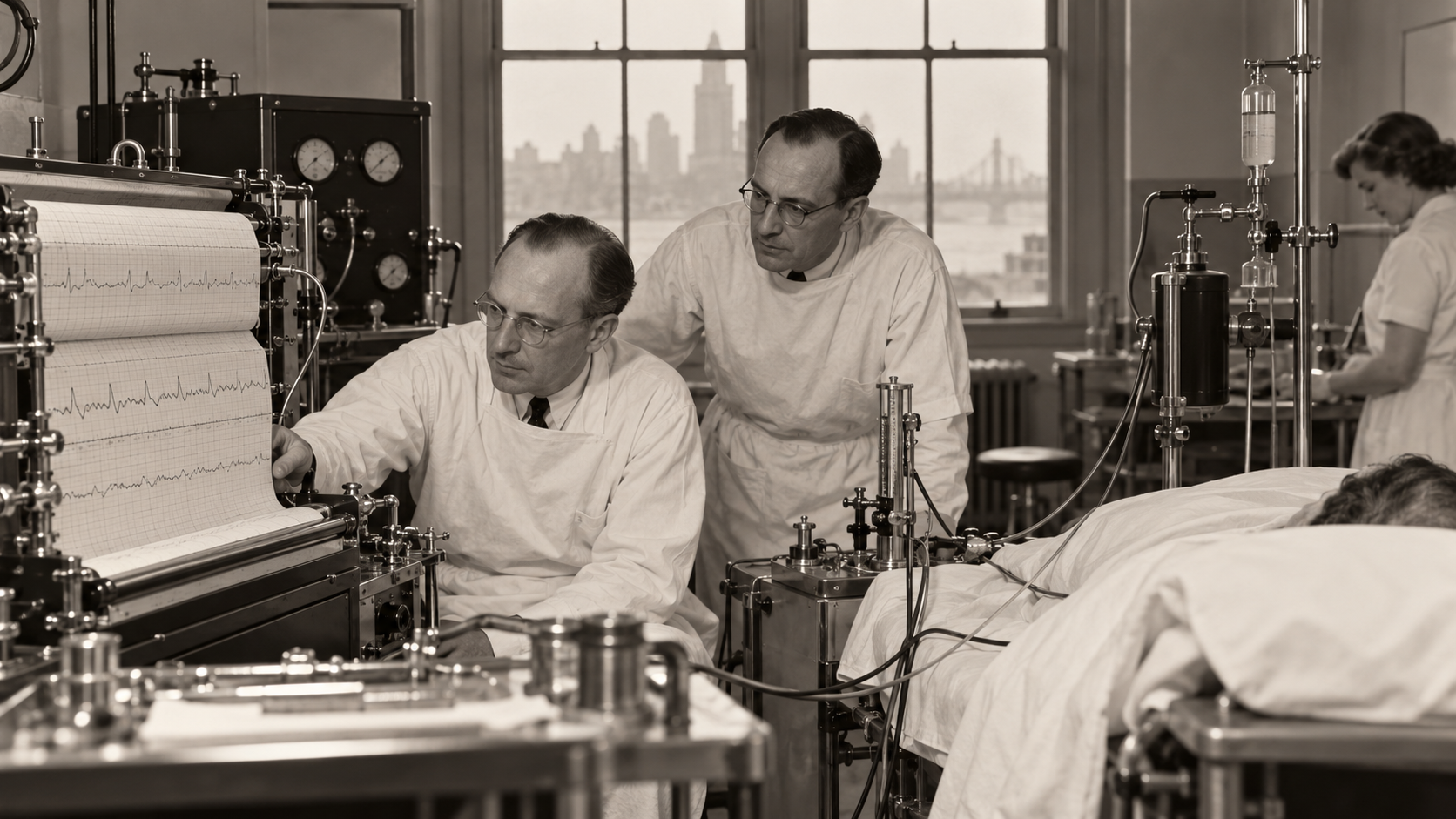
What happened on the date was consequential but limited. At Bellevue Hospital and Columbia University, Richards worked with André Cournand to refine right-heart catheterization and use it systematically in people with heart and lung disease. Their measurements connected bedside symptoms with hemodynamic mechanisms. Early catheterization was invasive, labor intensive, and limited to specialized teams. It could cause bleeding, infection, arrhythmia, or vascular injury, and physiological measurements still required interpretation rather than serving as automatic diagnoses. The distinction is important: the event did not instantly solve the underlying health problem, and later progress depended on follow-up research, training, policy, funding, and public trust. Contemporary evidence also helps separate what participants knew then from interpretations added after the result became famous.
Its longer legacy reaches beyond the original setting. Richards, Cournand, and Forssmann shared the 1956 Nobel Prize. Their work helped establish modern cardiopulmonary physiology and opened paths to diagnostic catheterization and interventional cardiology. Catheters now measure, image, repair, and replace structures through blood vessels, while clinicians continually weigh procedural information and treatment benefit against radiation, contrast, cost, and complication risk. Seen in context, the anniversary is useful because it connects a concrete historical episode with continuing questions about evidence, access, safety, and responsibility in health care. That connection is stronger when the people affected, the limits of the achievement, and the work still unfinished remain part of the account.
At Bellevue Hospital and Columbia University, Richards worked with André Cournand to refine right-heart catheterization and use it systematically in people with heart and lung disease. Their measurements connected bedside symptoms with hemodynamic mechanisms.
Early catheterization was invasive, labor intensive, and limited to specialized teams. It could cause bleeding, infection, arrhythmia, or vascular injury, and physiological measurements still required interpretation rather than serving as automatic diagnoses.
Richards, Cournand, and Forssmann shared the 1956 Nobel Prize. Their work helped establish modern cardiopulmonary physiology and opened paths to diagnostic catheterization and interventional cardiology.
Werner Forssmann had shown that a catheter could reach the heart, but the technique needed careful validation before it could become a dependable research and clinical tool. Measuring pressure, oxygen, and blood flow inside the circulation posed technical and safety challenges.
Dickinson Woodruff Richards Jr. was born in Orange, New Jersey. He became a physician and physiologist who helped make cardiac catheterization a powerful method for studying the human circulation.
Catheters now measure, image, repair, and replace structures through blood vessels, while clinicians continually weigh procedural information and treatment benefit against radiation, contrast, cost, and complication risk.
Explore more of "On This Day ..."
Discover more events from the same date across news, politics, technology, sports, and other fields. Each link highlights significant moments that shaped history on different fronts.